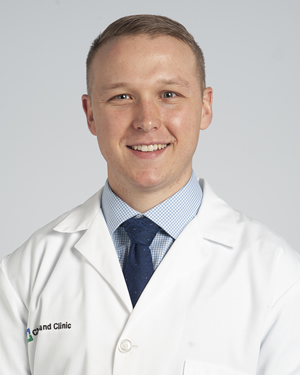
Tyler Alban, PhD
Assistant Staff
Director, Translational and Correlative Sciences Service
Email: [email protected]
Location: Cleveland Clinic Main Campus
Research
The human immune system is our body’s natural defense, but cancer cells often find complex ways to hide from it. In the Alban Lab, our goal is to understand exactly how this happens and how we can stop it. We sit at the intersection of computer science and medicine, applying advanced computational methods to clinical trials. By decoding the intricate biological interactions between tumors and the immune system, we work to identify new ways that cancer evades detection. Ultimately, our data-driven approach translates complex biological information into actionable insights, driving the discovery and development of the next generation of immunotherapies that empower a patient's own immune system to effectively fight cancer.
Biography
Tyler Alban, PhD, is an Assistant Staff member in the Department of Cancer Sciences at Cleveland Clinic Research and an Assistant Professor of Molecular Medicine at Cleveland Clinic Lerner College of Medicine. He is also the Director of the Translational and Correlative Sciences Program, an initiative he built at Cleveland Clinic to enhance translational research and streamline computational and multi-omics access for clinical trials. He directs a translational research laboratory focused on immuno-oncology, cancer data science, and advanced computational biology. At its core, the Alban Lab operates as a team science laboratory dedicated to driving translational efforts across the institute. They serve as a vital informatics engine for precision oncology, leading high-dimensional multi-omic analyses for institutional clinical trials while actively developing novel computational methods, AI foundation models, and custom analytical pipelines to continuously advance translational discovery.
Dr. Alban trained initially in biology, earning a BS from Baldwin Wallace University. He subsequently earned his PhD in Molecular Medicine from Case Western Reserve University, where his doctoral work investigated targeting myeloid driven immune suppression in glioblastoma. He completed his postdoctoral training at the Cleveland Clinic Lerner Research Institute, focusing on immunogenomics and neoantigen recognition.
His research focuses on applying advanced computational biology and bioinformatics to translational immuno-oncology datasets. By integrating multi-omics data, immune profiling, and clinical trial data, his laboratory strives to decode the immunologic recognition of cancer to drive the development of next-generation, targeted immunotherapies. A major focus of his lab involves leveraging AI and quantum computing algorithms to understand neoantigen immunogenicity and predict patient responses to immunotherapy.
He is an active member of the American Association of Cancer Research and the Society for Neuro-Oncology, and he is highly engaged in mentoring trainees and advancing the field of computational oncology through extensive curriculum development and teaching.
Education & Professional Highlights
Appointed
2026
Education and Fellowships
Project Staff - Cleveland Clinic Lerner Research Institute
Precision Immuno-Oncology
Cleveland, OH
2023-2026
Postdoctoral Fellowship - Cleveland Clinic Lerner Research Institute
Precision Immuno-Oncology
Cleveland, OH
2023
Graduate School - Case Western Reserve University
Molecular Medicine
Cleveland, OH
2014-2020
Undergraduate - Baldwin Wallace University
Biology
Berea, OH
2010-2013
Awards & Honors
-
Award for Excellence, Lerner Research Institute (2019, 2022)
-
Doctoral Excellence Award, Case Western Reserve University (2020)
-
F31 Ruth L. Kirschstein National Research Service Award (NRSA), NIH (2017)
Memberships
-
American Association of Cancer Research (2018-present)
-
Society for Neuro-Oncology (2016-present)
Research
Overview

The Alban Laboratory operates at the intersection of computational biology, data science, and translational immuno-oncology. Our laboratory functions as a collaborative team science hub focused on driving translational efforts across the institute, managing and supporting the informatics and quantitative pipelines for complex clinical trials. Our overarching mission is to decrypt the immunologic recognition of cancer and overcome mechanisms of tumor mediated immune evasion. By integrating high-dimensional multi-omics data with artificial intelligence and advanced computational algorithms, we aim to identify actionable biomarkers, decode neoantigen immunogenicity, and translate these computational insights into next-generation precision immunotherapies.
Neoantigen Discovery & Quantum AI

A major focus of our laboratory is the application of advanced artificial intelligence and emerging quantum computing frameworks to model tumor-immune interactions. The accurate prediction of neoantigen presentation and subsequent T-cell receptor (TCR) engagement remains a significant computational challenge. To address this, we developed a comprehensive neoantigen immunogenicity atlas (highlighted in our recent Nature Medicine publication PMID: 39349627) which provides a critical foundation for understanding the rules of tumor recognition.

Building upon this atlas, we are pushing the limits of computational methods to unravel one of immunology's most complex problems: how immune cells recognize and ultimately kill cancer cells. Our goal is to model and mimic this biological phenomenon to drive the discovery of novel therapeutics. To achieve this, we developed Q-CHIPP (Quantum Convolutional HLA Immunogenic Peptide Prediction), a first of its kind quantum convolutional neural network designed to predict immunogencity. This research is part of a broader quantum initiative at the Cleveland Clinic through the Discovery Accelerator partnership with IBM, where we leverage the first commercially deployed onsite quantum computer.

We are actively expanding upon these computational foundations to translate these insights into clinical applications. As highlighted in our recent collaborative with IBM, we are also utilizing advanced AI frameworks to rationally design novel T cell receptors, laying the groundwork for highly personalized cancer vaccines and engineered cellular therapies.

Multi-Omics & The Tumor Microbiome
Tumor-mediated immune suppression is a highly dynamic process driven by complex cellular and microbial networks. Our lab utilizes high-throughput methodologies including single-cell RNA sequencing (scRNA-seq), spatial transcriptomics, and comprehensive immune profiling to comprehensively interrogate the tumor immune microenvironment (TIME). Crucially, our profiling efforts extend beyond host immune cells to include the impact of the intra-tumoral microbiome. In two recent Nature Cancer publications (highlighted here and here), we integrated comprehensive multi-omics profiling from a large phase 3 clinical trial to identify how intra-tumoral bacterial burden is a primary driver of resistance to immunotherapy.
Building on these findings, our current research seeks to delineate the specific neutrophil and polymorphonuclear myeloid (PMN) subsets that are primarily driven by this intra-tumoral bacterial presence. By characterizing these bacteria-driven immune phenotypes, we aim to identify novel therapeutic targets to disrupt this suppressive axis. To rapidly translate these discoveries into clinical impact, we are collaborating with Dr. Natalie Silver, who has initiated pioneering clinical trials utilizing antibiotics in head and neck (HN) cancer patients. Our laboratory leads the correlative genomic and multi-omic analyses for these trials, directly investigating how the therapeutic reduction of bacterial load reshapes the microenvironment to restore immune activation and enhance anti-tumor recognition.
Translational Correlative Science
Translating complex computational biology into actionable clinical insights requires robust infrastructure and novel predictive tools. Through our leadership of the Translational and Correlative Sciences Service, the Alban Lab develops bioinformatics pipelines that directly support early-phase and ongoing clinical trials. Building directly on our multi-omics discoveries, we are actively developing advanced artificial intelligence and machine learning models designed to predict various biomarkers such as intra-tumoral bacterial burden non-invasively using H&E images. By bridging these predictive AI workflows with clinical outcomes and large-scale trial data, we systematically identify novel biomarkers of immunotherapy response and toxicity, facilitating real-time correlative analyses that directly impact patient care and future trial design.
Our Team
Selected Publications
Ryan Peters, Kahn Rhrissorrakrai, Prerana Bangalore Parthasarathy, Vadim Ratner, Tanvi P. Gujarati, Meltem Tolunay, Jie Shi, Jeffrey K. Weber, Timothy A. Chan, Laxmi Parida, Capponi, Filippo Utro, Alban TJ, Quantum Convolutional HLA Immunogenic Peptide Prediction (Q-CHIPP): Next-Generation Neoantigen Prediction with Quantum Neural Networks, Accepted, Science Advances, 2026
Weber JK, Parajuli G, Wang S, Ratner V, Ma X, Shoshan Y, Zhang L, Morrone JA, Raboh M, Hexter E, Parthasarathy P, Pavicic P, Gaughan C, Makarov V, Chu L, Hasgur S, Juric I, Diaz-Montero CM, Srivastava R, Knauf JA, Hassan KA, Cornell WD, Alban TJ, Chan TA., Engineering Endogenous T Cell Receptors to Recognize Cancer Neoantigens Using a Hybrid Physics-AI Approach., Under Review, Advanced Science, 2026
Weber JK, Morrone JA, Kang SG, Zhang L, Lang L, Chowell D, Krishna C, Huynh T, Parthasarathy P, Luan B, Alban TJ, Cornell WD, Chan TA. Unsupervised and supervised AI on molecular dynamics simulations reveals complex characteristics of HLA-A2-peptide immunogenicity. Brief Bioinformatics. 2023, PMID: 38233090
Alban TJ, Alvarado AG, Sorensen MD, Bayik D, Volovetz J, Serbinowski E, Mulkearns-Hubert EE, Sinyuk M, Hale JS, Onzi GR, McGraw M, Huang P, Grabowski MM, Walthen CA, Ahluwalia MS, Radivoyevitch T, Kornblum HI, Kristensen BW, Vogelbaum MA+, Lathia JD+: Global immune fingerprinting in glioblastoma patient peripheral blood reveals immune-suppression signatures associated with prognosis. JCI Insight. 2018. Nov 2; 3(21): PMCID: PMC6238746.
Alban, TJ*, Riaz N*, Parthasarathy P, Makarov V, Kendall S, Yoo SK, Shah R, Weinhold N, Srivastava R, Ma X, Krishna C, Mok JY, Esch WJ, Garon E, Akerley W, Creelan B, Aanuren N, Chowell D, Geese WJ, Rizvi NA, and Chan TA. Neoantigen Immunogenicity Landscapes and Evolution of Tumor Ecosystems During Immunotherapy with Nivolumab, Nature Medicine, 2024, PMID: 39349627
Riaz N*, Alban, TJ*, Haddad R, Saul M, Makarov V, Cohen E, Ferris R, Chang PM, Lin JC, Pyrri A, Parthasarathy P, Novaj A, Gawali M, Hoen D, Hamilton F, Silver NL, Juric I, Chawla D, Gradissimo A, Ko J, McGrail DJ, Davis C, Lee NY, Chan TA, Genetic and Tumor Microbiome Features and Outcomes from Avelumab plus Chemoradiotherapy in a Phase III Randomized Trial, Nature Cancer, 2026, PMID: 41482527
Careers
Join the Alban Lab
The Alban Lab brings together computational biology, immunogenomics, cancer immunology, spatial biology, machine learning, Quantum Computing, and clinical data science to address a central goal in precision oncology: how can we harness complex biological data to predict immunotherapy response and design next-generation cancer treatments?
We are committed to a collaborative, multidisciplinary training environment where quantitative data science, high-dimensional multi-omic profiling, and clinical trial science continuously inform one another.
Trainees may work with single-cell RNA-sequencing, spatial transcriptomics, whole-exome/RNA sequencing, cell-free DNA, proteomic, microbiome, and clinical trial datasets across diverse cancer types. Projects range from machine learning and quantum computing applications for neoantigen immunogenicity prediction to spatial neighborhood modeling, biomarker discovery, and translational clinical applications.
We welcome trainees from diverse scientific and quantitative backgrounds, including bioinformatics, computational biology, immunology, computer science, statistics, biomedical engineering, cancer biology, and data science. Prior experience in every domain is not expected; intellectual curiosity, scientific rigor, cross-disciplinary collaboration, and an enthusiasm for learning are especially valued.
The lab has a strong commitment to mentorship and works with postdoctoral fellows, graduate and medical students, undergraduate students, and computational research trainees. Having directed institutional courses in single-cell RNA-seq, bulk sequencing, and computational biology, our goal is to help each trainee cultivate scientific independence, rigorous quantitative expertise, and a research trajectory aligned with their long-term career goals.
Current formal openings are listed through the Cleveland Clinic careers website.