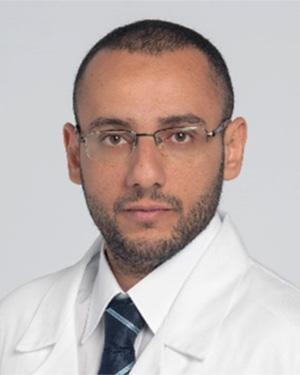
Mohammed Dwidar, PhD
Assistant Staff
Assistant Professor
Email: [email protected]
Location: Cleveland Clinic Main Campus
Research
My overarching research goal is to define and engineer microbial functions that shape metabolism, cancer progression, and other human diseases. My laboratory integrates microbial genetics, synthetic biology, biochemistry, and host–microbe metabolic interaction studies to both develop microbes as therapeutics and uncover the molecular mechanisms by which microbial metabolic pathways influence disease. A major focus of this work is the development of programmable Salmonella enterica platforms that selectively accumulate within tumors and remodel the tumor immune and metabolic microenvironment to enhance anti-tumor immunity.
Biography
Dr. Dwidar leads a research lab at the Cleveland Clinic Research. He is an assistant professor of Molecular Medicine at the Cleveland Clinic Lerner College of Medicine and a Case Comprehensive Cancer Center member. He also serves as the scientific director for the Microbial Culturing and Engineering Facility within the Center for Microbiome and Human Health. Dr. Dwidar’s area of expertise is broadly related to microbiology, but specifically, to bacterial synthetic biology.
Dr. Dwidar obtained his BSc in Pharmacy in Egypt. He then moved to South Korea to start his MSc course work, during which he focused on studying short chain fatty acids production including butyric and acetic acids in obligate anaerobic bacteria and mainly clostridia strains. For his PhD, he studied predatory bacteria and their capabilities to eradicate pathogenic bacteria and their biofilms, with an eye toward using them as living antibiotics against multi-drug resistant infections. He then moved to Okinawa Institute of Science and Technology in Japan for his postdoctoral training which focused on bacterial synthetic biology, and more specifically, engineering bacteria through RNA aptamers and synthetic riboswitches to respond to user specified stimuli or disease cues in a controlled defined manner.
His current work combines microbial genetics, synthetic biology, metabolism, and immunology to understand how microbes influence health and disease and to develop new microbial-based therapeutic strategies. A major focus of his laboratory is the development of programmable Salmonella enterica platforms as living therapeutics for cancer. He recently engineered a kynurenine-dependent S. enterica strain with markedly enhanced tumor specificity, enabling robust tumor colonization while minimizing persistence in normal tissues (Science Advances, 2025). Building on this platform, he is developing next-generation strains that deplete immunosuppressive metabolites, remodel the tumor microenvironment, and enhance anti-tumor immunity.
Over the past decade, Dr. Dwidar has authored more than 37 original research publications in addition to several patents, and his work has been supported by competitive funding from the NIH, including NCI and NIGMS, as well as the Department of Defense.
Education & Professional Highlights
Cleveland Clinic Research
Cleveland, Ohio
Assistant Staff, 8/2024 - Present
Cleveland Clinic Lerner Research Institute
Cleveland, Ohio
Project Staff, 6/2019 - 7/2024
Okinawa Institute of Science and Technology
Onna-son, Okinawa, Japan
Postdoctoral Fellow, Bacterial Synthetic Biology, 5/2019
Ulsan National Institute of Science and Technology, School of Life Sciences
Ulsan, S Korea
PhD, Biological Sciences, 2/2015
Korea Institute of Science and Technology
Seoul, S Korea
MSc, Green Chemistry and Environmental Biotechnology, 2/2011
Ain Shams University Faculty of Pharmacy
Cairo, Egypt
BSc, Pharmaceutical Sciences, 5/2006
Research
Research
The Dwidar lab studies involvement of the microbiome and specific microbial genes in biochemical pathways and the effects on the host, with specific focus on the role of the microbiome in the progression of cardiovascular diseases and cancer. An emerging focus of our research is the use of engineered microbes and bacterial components for treatment of solid tumors. The lab collaborates often with other investigators within the Lerner Research Institute.
Ongoing projects in the Dwidar lab include:
Engineering bacteria as cancer therapeutics:
Bacterial-based cancer therapy could be a promising treatment option for solid tumors, especially for those cases in which traditional therapies are inadequate. This therapy is based on using attenuated strains of certain bacteria such as Salmonella enterica, and others with high natural tendency to grow preferentially within solid tumors compared to normal tissues — causing both direct cytotoxic effects and activation of the immune system to better eradicate the tumor. Our research in this area is focusing on two main directions:
1. We aim to enhance the specificity of anti-cancer bacteria towards solid tumors and specifically ovarian and breast cancer. Specifically, we engineer cancer-specific strains of Escherichia coli and Salmonella enterica to rely on cancer-specific metabolites for growth. This modification enables the engineered bacteria to target solid tumors with precision. Additionally, we utilize these mutants to deliver toxins, immunomodulatory agents and chemotherapeutics directly to the tumor site.
2. Another focus is on augmenting the immunostimulatory effects of anti-cancer bacteria. We engineer Salmonella enterica and Escherichia coli to alter the immunosuppressive metabolic microenvironment that promote tumor growth. Collaborating with experts from LRI who specialize in targeted solid tumor models, we investigate the efficacy of these engineered bacteria in murine models of various cancers, including breast and ovarian cancers. Ultimately, our goal is to enhance the tumor's responsiveness to immune checkpoint inhibitors using these engineered bacteria.
Developing Synthetic biology tools to enable engineered theragnostic bacteria to respond to disease cues:
A longstanding objective in bacterial synthetic biology is to create therapeutic and diagnostic (theragnostic) bacteria capable of delivering personalized medicine. A critical initial step in many theragnostic applications is enabling engineered bacteria to detect specific biological molecules or disease cues. However, natural biosensing systems in bacteria often cannot detect these molecules or do so at insufficient physiological concentrations to function as reliable ON/OFF switches. To address this challenge, we are exploring the development of RNA aptamers, synthetic riboswitches and other sensory modules to construct biological circuits that sense and act within the engineered theragnostic bacteria. In parallel, we are integrating quorum sensing-based genetic circuits with signal amplification strategies. This combination aims to enable precise responses to target biological molecules by the theragnostic bacteria.
Our Team
Selected Publications
View publications for Mohammed Dwidar, PhD
(Disclaimer: This search is powered by PubMed, a service of the U.S. National Library of Medicine. PubMed is a third-party website with no affiliation with Cleveland Clinic.)
Dutta S, Mahen KK, Massey WJ, Varadharajan V, Burrows AC, Horak AJ, Mrdjen M, Mouannes N, Orabi D, Osborn LJ, Grubb T, Hohe R, Banerjee R, Uppin V, Laungani D, Hamilton GE, Ye X, Sangwan N, Dwidar M , Hajjar AM, Willard B, Martin M, Guetschow E, Westcott P, Wang Z, Hazen SL, Brown JM, Gut Microbe-Derived N-Acyl Serinol Lipids Shape Host Postprandial Metabolic Homeostasis. PNAS. 2026 Mar 24;123(12):e2517314123. doi: 10.1073/pnas.2517314123.
Varsha KK, Dwidar M*, Engineering Salmonella as an immune-metabolic modulator of the tumor microenvironment, Trends in Biotechnology. 2026 Mar 11:S0167-7799(26)00010-7.
Overstreet A-M, Anderson B, Burge M, Zhu X, Tao Y, Cham CM, Michaud B, Horam S, Sangwan N, Dwidar M, Liu X, Santos A, Finney C, Dai Z, Leone VA, and Messer JS*. HMGB1 acts as an agent of host defense at the gut mucosal barrier. Cell Host & Microbe. 2026 Feb 11;34(2):230-244.e13. doi: 10.1016/j.chom.2026.01.008.
Silver NL*, Dai J, Kerr TD, Altemus J, Garg R, Simmons H, Alban T, Noel-Romas L, Makarov V, Kumar SV, Santos A, Akbani R, Burgener A, Dwidar M, Sayour E, Stacy AR, JobinC, Chan TA, McGrail DJ “Intratumoral bacteria are immunosuppressive and promote immunotherapy resistance”. Nature Cancer. 2026 Jan;7(1):80-97. doi: 10.1038/s43018-025-01067-1.
Mahen KK, Massey WJ, Orabi D, Brown AL, Jaramillo TC, Burrows AC, Horak AJ, Dutta S, Mrdjen M, Mouannes N, Varadharajan V, Osborn LJ, Ye X, Yarbrough DM, Grubb T, Zajczenko N, Hohe R, Banerjee R, Linga P, Laungani D, Hajjar AM, Sangwan N, Dwidar M, Jennifer A Buffa JA, Swanson GR, Wang Z, Brown JM, 2025, Gut Microbe-Derived Trimethylamine Shapes Circadian Rhythms Through the Host Receptor TAAR5, eLife14:RP107037. https://doi.org/10.7554/eLife.107037.2
Santos A, Wang Z, Bharti R, Dey G, Sangwan N, Baldwin W, Zalavadia A, Myers A, Huffman OG, Lathia JD, Hazen SL Reizes O*, and Dwidar M*. Leveraging Dysregulated Tumor Metabolism for Targeting Anti-Cancer Bacteria. Science Advances. In press. *Corresponding author.
Lu Q, Hitch T, Dwidar M, Sangwan N, Lawrence D, Baldridge M, Clavel T, and Stappenbeck T*. A host-adapted auxotrophic gut symbiont induces mucosal immunodeficiency. Science. 2024 Sep 27;385(6716):eadk2536.
Luo W, Zhao M, Dwidar M, Xiang L, Gao Y, Wu X, Medema MH, Xu S, Li X, Schaefer H, Chen M*, Feng R*, Zhu Y*. Microbial assimilatory sulfur reduction is associated with Crohn's disease and exacerbates colitis in mouse model. BMC Microbiome. 2024 Aug 16;12(1):152.
Bharti R, Dey G, Khan D, Myers A, Huffman OG, Saygin C, Braley C, Richards E, Sangwan N, Willard B, Lathia JD, Fox PL, Lin F, Jha BK, Brown JM, Yu JS, Dwidar M, Joehlin-Price A, Vargas R, Michener CM, Longworth MS, Reizes O. Cell surface CD55 traffics to the nucleus leading to cisplatin resistance and stemness by inducing PRC2 and H3K27 trimethylation on chromatin in ovarian cancer. Mol Cancer. 2024, 23: 121.
Nemet I, Funabashi M, Li X, Dwidar M, Sangwan N, Skye S, Romano K, Cajka T, Needham B, Mazmanian S, Hajjar A, Rey F, Fiehn O, Tang W, Fischbach M, and Hazen SL. Microbe-derived uremic solutes enhance thrombosis potential in the host. mBio. 2023 Nov 10;14(6):e0133123.
Zhang S±, Han Y±, Schofield W, Nicosia M, Karell P, Newhall K, Zhou J, Musich R, Pan S, Valujskikh A, Sangwan N, Dwidar M, Lu Q, Stappenbeck TS*. Select symbionts drive high IgA levels in the mouse intestine. Cell Host & Microbe. 2023 October 11;31 (1-19)
Dwidar M*, Buffa JA, Wang Z, Santos A, Title AN, Fu X, Hajjar AM, DiDonato JA, and Hazen SL. Assembling the anaerobic gamma-butyrobetaine to TMA metabolic pathway in Escherichia fergusonii and confirming its role in TMA production from dietary L-carnitine in murine models. mBio. 2023 Sep 22;e0093723
Zhu Y±, Dwidar M±, Nemet I, Buffa JA, Sangwan N, Li XS, Anderson JT, Romano KA, Fu X, Funabashi M, Wang Z, Keranahalli P, Battle S, Tittle AN, Hajjar AM, Gogonea V, Fischbach MA, DiDonato JA, Hazen SL. Two distinct gut microbial pathways contribute to meta-organismal production of phenylacetylglutamine. Cell Host & Microbe. 2023 Jan 11;31(1):18-32.e9.
Mun W, Upatissa S, Lim S, Dwidar M*, Mitchell RJ*. Outer Membrane Porin F in E. coli Is Critical for Effective Predation by Bdellovibrio. Microbiology Spectr. 2022 Nov 29;e0309422.
Chambers L, Esakov E, Bharti R, Braley C, Tewari S, Trestan L, Alali Z, Bayik D, Lathia J, Sangwan N, Bazeley P, Joehlin-Price A, Wang Z, Dutta S, Dwidar M, Hajjar A, Ahern P, Claesen J, Rose P, Vargas R, Brown J, Michener C, and Reizes O (2022) Disruption of the gut microbiota attenuates epithelial ovarian cancer sensitivity to cisplatin therapy, Cancer Res. 2022 Dec 16;82(24):4654-4669.
Buffa JA, Romano KA, Copeland MF, Cody DB, Zhu W, Galvez R, Fu X, Ward K, Ferrell M, Dai HJ, Skye S, Hu P, Li L, Parlov M, McMillan A, Wei X, Nemet I, Koeth RA, Li XS, Wang Z, Sangwan N, Hajjar AM, Dwidar M, Weeks TL, Bergeron N, Krauss RM, Tang WHW, Rey FE, DiDonato JA, Gogonea V, Gerberick GF, Garcia-Garcia JC, Hazen SL*. 2022. The microbial gbu gene cluster links cardiovascular disease risk associated with red meat consumption to microbiota L-carnitine catabolism. Nat Microbiol. 7(1):73-86.
Watson DC*, Johnson S, Santos A, Yin M, Bayik D, Lathia JD, Dwidar M*. 2021. Scalable Isolation and Purification of Extracellular Vesicles from Escherichia coli and Other Bacteria. J Vis Exp. 13; 176.
Dwidar M*, Jang H, Sangwan N, Mun W, Im H, Yoon S, Choi S, Nam D*, Mitchell RJ*. 2020. Diffusible Signaling Factor, a Quorum-Sensing Molecule, interferes with and is Toxic towards Bdellovibrio bacteriovorus 109J. Microb. Ecol. 81(2):347-356.
Dwidar M, Yokobayashi Y. 2019. Development of RNA aptamer-based histamine biosensor. Sci. Rep. 9:16659.
Dwidar M, Seike Y, Kobori S, Whitaker C, Matsuura T, Yokobayashi Y. 2019. Programmable Artificial Cells Using Histamine Responsive Synthetic Riboswitch. Journal of American Chemical Society (JACS) 141, 28, 11103-11114.
Dwidar M, Yokobayashi Y. 2019. Riboswitch Signal Amplification by Controlling Plasmid Copy Number. ACS Synth. Biol. 8 (2), pp 245–250. doi: 10.1021/acssynbio.8b00454.
Dhamodharan V, Nomura Y, Dwidar M, and Yokobayashi Y. 2018. Optochemical Control of Gene Expression by Photocaged Guanine and Riboswitches. Chem. Comm. 54, 6181.
Im H±, Dwidar M±*, Mitchell RJ*. Bdellovibrio bacteriovorus HD100 Benefits Energetically from Gram-Positive Biofilms without Predation.2018. International Society for Microbial Ecology Journal (ISME). doi: 10.1038/s41396-018-0154-5.
Dwidar M, Yokobayashi Y. 2017. Controlling Bdellovibrio bacteriovorus Gene Expression and Predation Using Synthetic Riboswitches. ACS Synth. Biol. doi: 10.1021/acssynbio.7b00171.
Dwidar M±*, Im H±, Seo JK, Mitchell RJ*. 2017. Attack-Phase Bdellovibrio bacteriovorus Responses to Extracellular Nutrients Are Analogous to Those Seen during Late Intraperiplasmic Growth. Microb Ecol. doi: 10.1007/s00248-017-1003-1.
Dwidar M, Nam D, Mitchell RJ. 2015. Indole Negatively Impacts Predation by Bdellovibrio Bacteriovorus and Its Release from the Bdelloplast. Environ Microbiol. (4):1009-22.
Monnappa A. K. ±, Dwidar M. ±, Seo J.K.,HurJH., Mitchell RJ. 2014. Bdellovibrio bacteriovorus Inhibits Staphylococcus aureus Biofilm Formation and Invasion into Human Epithelial Cells. Sci. Rep. 4, 3811.
Kim E-H±, Dwidar M±, Kwon YN, Mitchell RJ. 2014. Pretreatment with alum or powdered activated carbon reduces bacterial predation-associated irreversible fouling of membranes, Biofouling. 30(10):1225–1233.
Dwidar M, Takayama S, Mitchell RJ. 2014. Aqueous Two-Phase System Technology for Patterning Bacterial Communities and Biofilms: Methods in Molecular Biology, Microbial Biofilms 1147, 23-32.
Dwidar M, Leung B, Yaguchi T, Takayama S, Mitchell RJ. 2013. Patterning Bacterial Communities on Epithelial Cells. PLoS One 8(6): e67165.
Dwidar M, Kim S, Jeon BS, Um Y, Mitchell RJ, Sang, B-I. 2013. Co-Culturing a Novel Bacillus Strain with Clostridium tyrobutyricum ATCC 25755 to Produce Butyric Acid from Sucrose. Biotechnol Biofuels, 6:35.
Kim E-H±, Dwidar M±, Mitchell RJ, Kwon YN. 2013. Assessing the Effects of Bacterial Predation on Membrane Biofouling. Water Res.47 (16):6024-6032. (±Co-First Author)
Monnappa AK±, Dwidar M±, Mitchell RJ. 2013. Application of Bacterial Predation to Mitigate Recombinant Bacterial Populations and Their DNA. Soil Biol. Biochem. 57:427-435.
Yaguchi T±, Dwidar M±, Byun CK, Leung B, Lee S, Cho YK, Mitchell RJ, Takayama S. 2012. Aqueous Two-Phase System-Derived Biofilms for Bacterial Interaction Studies. Biomacromolecules. 13(9):2655−2661.
Dwidar M±, Lee, S±, Mitchell RJ. 2012. The Production of Biofuels from Carbonated Beverages. Applied Energy. 100:47–51.
Dwidar M±, Hong S±, Cha M, Jang J, Mitchell RJ. 2012. Combined Application of Bacterial Predation and Carbon Dioxide Aerosols to Effectively Remove Biofilms. Biofouling. 28(7):671–680.
Dwidar M±, Monnappa, AK±, Mitchell RJ. 2012. The Dual Probiotic and Antibiotic Nature of Bdellovibrio bacteriovorus. BMB Reports 45(2):71-78.
Dwidar M, Park, JY, Mitchell RJ, Sang, B-I. 2012. The Future of Butyric Acid in Industry. The Scientific World Journal. doi:10.1100/2012/471417.
Careers
Research News

The study addresses a long-standing hurdle to using genetically engineered bacteria in cancer treatment: precision.