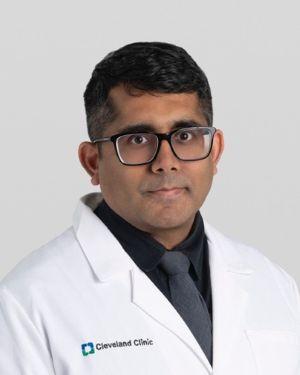
Madhav Menon, MD
Staff
Eugene Shvidler Endowed Chair in Kidney Medicine
Director of Kidney Precision Genomics
Staff, Kidney Medicine
Staff, Heart, Blood & Kidney Research
Location: Cleveland Clinic Main Campus
Research
Dr. Menon's lab researches the effects of certain genetic variants on kidney scarring (fibrosis), excessive protein loss in urine and kidney function. His lab focuses on mechanisms by which kidney transplants undergo sustained and irreversible damage from the recipient's immune system leading to reduced graft survival. Using bedside-to-bench approaches, the lab aims to identify potential diagnostic and therapeutic strategies to improve kidney transplant outcomes.
Dr. Menon's lab researches the effects of certain genetic variants on kidney scarring (fibrosis), excessive protein loss in urine and kidney function. His lab focuses on mechanisms by which kidney transplants undergo sustained and irreversible damage from the recipient's immune system leading to reduced graft survival. Using bedside-to-bench approaches, the lab aims to identify potential diagnostic and therapeutic strategies to improve kidney transplant outcomes.
Biography
Dr. Menon is a physician-scientist appointed as Staff in Kidney Medicine and Heart, Blood & Kidney Research at Cleveland Clinic, and Adjunct Associate Professor at Yale School of Medicine, where he previously served as Director of Research in Kidney Transplantation. He earned his medical degree at Calicut Medical College and completed internal medicine training at PGIMER, Chandigarh and SUNY Upstate Medical University, followed by fellowships in nephrology, transplant nephrology and molecular nephrology research at Mount Sinai. Continuously funded since 2012 by the ASN, AHA, NIH and Department of Defense, his research integrates human genomics with mechanistic studies to understand kidney injury, proteinuria and fibrosis. His contributions include defining the effects of donor–recipient non-HLA genetic mismatches on transplant outcomes, uncovering a novel T-cell role for APOL1 risk variants and elucidating SHROOM3 signaling in kidney disease. Elected to the American Society for Clinical Investigation in 2024, he also serves as a standing member of the NIH/NIAID Transplantation and Autoimmunity study section.
Education & Professional Highlights
Appointed
2026
Education & Fellowships
Fellowship – Mount Sinai
Molecular Nephrology
Mount Sinai, NY USA
2014
Fellowship – Mount Sinai
Transplant Nephrology
Mount Sinai, NY USA
2013
Fellowship – Mount Sinai
Nephrology
Mount Sinai, NY USA
2012
Residency – State University of New York
Internal Medicine
Syracuse, NY USA
2010
Residency – Post-Graduate Institute of Medical Education and Research (PGIMER)
Internal Medicine
Chandigarh, India
2005
Undergraduate Education – University of Calicut
Bachelor of Medicine, Bachelor of Surgery
Calicut, India
2002
Honors and Recognition
2026: Distinguished Researcher Award, American Society of Nephrology, 2026 – https://www.kidneynews.org/view/journals/kidney-news/18/10/11/article-p32_35.xml
2025: Inducted into the Interurban clinical club (Physician scientist club founded by William Osler in 1905)
2024: Inducted into the American Society of Clinical Investigation (ASCI) – https://data.the-asci.org/controllers/asci/DirectoryController.php?action=profile&entryId=504253
2023: Young Investigator Award, World Transplant Congress (AST/ASTS)
2021: Early Career Researcher Award, International Society of Nephrology, World Congress of Nephrology, Brussels, EU
2020: Basic Science Achievement Award (Career Development), American Society of Transplantation (AST) – https://www.myast.org/blog/2020-achievement-awards-and-research-grant-recipients
2019: Harold and Lamport Golden Clinical Research Award, for tenure track Assistant Professors with “exceptional potential for making significant contributions in their field.” Icahn School of Medicine at Mount Sinai
2017: New Investigator, American Heart Association (AHA) – Council on Kidney and Cardiovascular Disease, Hypertension-Scientific Sessions
2016: Young Investigator, American Heart Association (AHA) – Council on Kidney and Cardiovascular disease, Hypertension-Scientific Sessions
2014: Young Investigator Award, World Transplant Congress (AST+ TTS congress)
2012-14: Ben J. Lipps Fellowship Award, American Society of Nephrology, (ASN Research Fellowship)
2012: Travel Award, American Society of Nephrology
2009: Williams J. Williams Award for “clinical acumen, professionalism and teaching ability” – State University of New York, Syracuse
2009: Best Graduating Resident Award PGY-3, State University of New York, Syracuse, NY
2009: Excellence in Teaching Award PGY-3, University of New York, Syracuse, NY
2008: Excellence in Teaching Award PGY-2, University of New York, Syracuse, NY
2007: Excellence in Teaching Award PGY-1, University of New York, Syracuse, NY
2006: Awarded Medal (first order) by His Excellency, the Vice President of India for #1 ranking in PGIMER Internal Medicine residency program
2003: Ranked #5 in India in the National Postgraduate Medical entrance exam for PGIMER. 5,000 licensed physicians
2001: Ashoka Medal, Department of Surgery, Calicut Medical College, Calicut, India
2000: Dr. T. K. Komalan Nair Memorial Award, Social and Preventative Medicine, Calicut Medical College, Calicut, India
2000: Dr. Vasanthi Menon Memorial Award, Community Medicine, Calicut Medical College, Calicut India
2000: Winner of 13th Indian Association of Pediatrics (IAP) Quiz, Calicut Medical College, Calicut India
Professional Memberships
Member, Scientific Review Committee, Basic Science – The Transplantation Society
Member, Transplantation, Autoimmunity Study Section – NIH Center for Scientific Review
Member – American Society of Transplantation
Member – American Society of Nephrology
Member – Indian Society of Nephrology
Fellow, American College of Physicians
Research
Research Overview
Our research investigates how genetic variation drives kidney injury, proteinuria and fibrosis, integrating human discoveries with mechanistic models and clinical translation. We defined distinct, cell-specific roles for SHROOM3: promoting tubular profibrotic signaling while preserving the podocyte filtration barrier through interactions with FYN that regulate nephrin phosphorylation and the actin cytoskeleton. By dissecting the protein domains responsible for these effects, we aim to target fibrosis while preserving glomerular function. Related studies identified AMPK activation as a podocyte survival mechanism, motivating a randomized clinical trial of metformin in FSGS and investigations into downstream protective pathways, including autophagy. In parallel, human studies and mice expressing human APOL1 risk variants support a previously unrecognized role for variant-carrying T cells in kidney injury and transplant rejection, complementing established kidney–cell mechanisms.
Our transplant genomics program examines how donor–recipient genetic differences beyond HLA influence long-term allograft survival. We demonstrated that genome-wide non-HLA mismatches associate independently with graft loss through early allograft fibrosis, particularly vascular intimal injury. We combine bioinformatic mapping, functional genomics and mouse models of non-MHC mismatches to identify implicated loci and establish their mechanisms. A major focus is the LIMS1–GCC2 region on chromosome 2, where differences in gene regulation may explain associations between donor–recipient mismatches and graft failure. These studies aim to improve transplant risk stratification, inform organ allocation and identify targets for therapies that preserve long-term graft function.
Ongoing Research Areas
Our overall program uses bedside-to-bench methodology to understand the mechanisms underlying slow kidney graft damage and failure.
- SHROOM3 mutations and kidney failure: Chronic kidney disease (CKD) is characterized by renal interstitial fibrosis (scarring), vascular fibrosis and glomerulosclerosis, reflecting damage to different renal compartments. We showed that a CKD-associated SHROOM3 SNP - Rs17319721, in the donor kidney increased SHROOM3 expression (by TCF7L2-dependent transcription) and promoted renal allograft fibrosis (IF/TA), through TGF-β1 signaling. These data contrast with evidence of a protective role for SHROOM3 in glomerular development and association of this SNP with reduced albuminuria. To study mechanisms of these dichotomous effects, we have developed inducible SHROOM3 knockdown mice and observed reduced renal fibrosis with non-glomerular SHROOM3 knockdown. Conversely, knocking down glomerular-, but not tubular-SHROOM3 induced albuminuria with diffuse podocyte foot process effacement without podocyte loss. In podocytes, we identified a new interaction of SHROOM3 with FYN (a Src kinase) via a critical Src homology-3 binding domain, distinct from its established domains. In vitro and in vivo, SHROOM3-Fyn interaction was required for activation of Fyn kinase and downstream nephrin phosphorylation and actin cytoskeleton in podocytes and explains the protective effect of SHROOM3 on proteinuria. We are testing the dichotomous roles of SHROOM3 in renal tubular cells and podocytes, which are mediated by distinct protein motifs. We identified the ASD2 domain of SHROOM3 as a profibrotic and developed new small molecules to target this region (with our collaborators) and reduce CKD progression. Continuous work is refining these agents to move them along to translation. We also developed urine SHROOM3 assays for application in human CKD. This work is focused on targeting SHROOM3 in patients at risk for progressive CKD.
- Podocyte AMPK-signaling – Translating discoveries to humans: The phenotype of SHROOM3 knockdown is similar to human minimal change disease (MCD) which has good prognosis versus FSGS (podocyte loss and suboptimal prognosis). Since impaired Fyn activation is associated with human MCD, and SHROOM3 knockdown inhibited Fyn, we evaluated whether collateral signaling mechanisms downstream of Fyn promoted podocyte survival. We identified enhanced AMP-activated protein kinase (AMPK) activation downstream of SHROOM3-Fyn as a key prosurvival mechanism. Based on the widely used and safe AMPK-activator metformin, our group has designed a clinical trial to test utility of metformin to promote podocyte survival in FSGS (enrolling). Analogously unique mouse models have been developed to understand mechanisms of podocyte survival downstream of AMPK, including autophagy. These are revealing new roles for podocyte AMPK in kidney aging.
- APOL1 mutations and mechanisms of kidney injury: While Americans of African ancestry make up 13% of the United States, they account for 35% of kidney failure. This is attributed to the carriage of risk alleles in APOL1 (referred to G1/G2 risk alleles). Unfortunately, those with APOL1 risk variants manifest with focal segmental glomerulosclerosis (FSGS), which is the most common form of nephrotic syndrome. However, limited mechanistic understanding of this disease process has hindered novel treatments, especially due to the lack of suitable animal models for study. We have a mouse model that expresses human APOL1 risk alleles. Upon stimulation with an inflammatory agent, these mice develop excessive protein loss in the urine resembling human FSGS. Using data in humans, we identified for the first time that immune cells, in addition to kidney cells, may play a profound role in disease processes including kidney transplant rejection. We propose that specific immune cells in individuals with G1/G2 APOL1 damage the kidney filtration barrier (in native kidneys) or promote rejection (in transplants). We focus on studying APOL1-variant carrying T-cells using in vivo/in vitro tools to understand their role as upstream effectors of kidney disease, autoimmunity and alloimmunity.
- Non-HLA mismatches and renal allograft failure: Recent work from our team and others shows that focal or global non-HLA donor-recipient mismatches associate with renal allograft outcomes. We showed that such a “mismatch score” independently associates with allograft survival via the development of early allograft fibrosis, especially vascular fibrosis or CV score. Based on these data, (a) we are applying bioinformatic approaches to dissect loci and regions of interest; (b) identify potential implicated mechanisms based on genetic architecture; and (c) validate using a murine model of global non-MHC mismatches. This work has significant implications for allocation, risk stratification and potential targeted therapeutics. We also identified novel mechanisms by which specific donor-recipient "mismatches" impact transplant outcomes. One such leading candidate is the region of LIMS1-GCC2 on chromosome 2, where complex mechanisms involving gene expression regulation underlie association of specific loci with graft loss. We have now developed in vitro and murine tools to study this locus mismatch.
Additional Research and Team Members
Dr. Menon also maintains an active lab in Nephrology at the Yale School of Medicine.
His lab team at Yale includes:
- Gabriel Barsotti, MD, Associate Research Scientist
- Ashwani Kumar, PhD, Associate Research Scientist
Our Team
Selected Publications
View publications for Madhav Menon, MD
(Disclaimer: This search is powered by PubMed, a service of the U.S. National Library of Medicine. PubMed is a third-party website with no affiliation with Cleveland Clinic.)