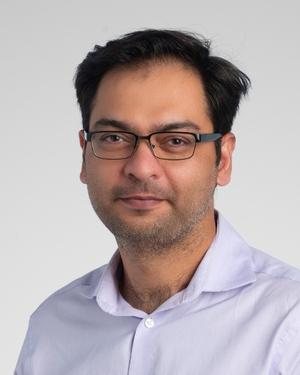
Naseer Sangwan, PhD
Associate Staff
Core Director
Email: [email protected]
Location: Cleveland Clinic Main Campus
Research
Dr. Sangwan, PhD, leads the Sangwan Lab, specializing in microbial systems biology, focusing on the complex metabolic interactions between microbes and their host organisms in the context of cancer. The lab explores how these microbial interactions affect cancer development and progression by using advanced in vitro models, such as co-culturing in mucin hydrogel carriers, and in vivo models, such as mouse genetic systems. By applying sophisticated computational methods to multi-omics data from these models, Dr. Sangwan's team uncovers the compositional and functional dynamics of microbial communities and their impact on the tumor microenvironment in both health and disease contexts. The Sangwan lab is pioneering in understanding the vital roles intratumoral microbiomes play in cancer. They have identified unique microbial compositions associated with age-related differences in cancer onset, demonstrating that the microbiome can influence tumor characteristics and patient outcomes. Key publications, such as "Distinct Intratumoral Microbiome of Young-Onset and Average-Onset Colorectal Cancer" (Barot et al., EBioMedicine, 2024) and "Multi-omics Machine Learning to Study Host-Microbiome Interactions in Early-Onset Colorectal Cancer" (Jayakrishnan et al., NPJ Precision Oncology, 2024), highlight the lab's innovative use of multi-omics and machine learning to deeply examine the interactions between host factors, microbiomes, and cancer progression.
Biography
I am a biologist interested in microbial system biology across different human microbiome sites, e.g., gut and oral cavity. Currently, I am an Associate Staff at the Department of Cardiovascular and Metabolic Sciences at the Lerner Research Institute at Cleveland Clinic; I am also serving as the Director of the Microbial Sequencing and Analytics Resource (MSAAR) Facility at the Center for Microbiome & Human Health at the Cleveland Clinic. I am also an Assistant Professor of Molecular Medicine at the Cleveland Clinic Lerner College of Medicine. I obtained my Ph.D. from the University of Delhi, where my research focused on studying physiology and metabolic biochemistry of arsenic-rich microbial mats, water, and sediments from Himalayan hot springs in Manikaran, India. Subsequently, I explored a deltaproteobacterium known as Bdellovibrio bacteriovorus, focusing on its predator/prey dynamics (ISME J, 398–408 (2014), Environmental Microbiology Reports, 812-823 (2015). PLOS ONE, e46219 (2012). My postdoctoral work was performed at the Argonne National Laboratory and the University of Chicago under the guidance of Prof. Jack A. Gilbert, developing computational methods for large-scale multi-omics analysis across the gut microbiota in various human diseases, such as migraines, Parkinson’s, asthma, and cow’s milk allergies (Science 158-162 (2016). Sci. Transl. Med. eaah6500 (2017), The ISME Journal 742–750 (2016), Microbiome 8 (2016), Journal of Allergy and Clinical Immunology, 1398-1405.e3 (2016)). Leveraging my background in molecular microbiology, bioinformatics, and systems biology, I continue investigating metabolic signatures of disease-associated dysbiosis and identifying metabolic targets for microbiome-based disease intervention. Because of this background and experience,
Education & Professional Highlights
2024-present : Associate Staff, Cardiovascular and Metabolic Sciences, Lerner Research Institute, Cleveland Clinic, Cleveland, OH, USA.
2019-2024 : Assistant Staff, Cardiovascular and Metabolic Sciences, Lerner Research Institute, Cleveland Clinic, Cleveland, OH, USA.
2019-present : Assistant Professor, Cleveland Clinic Lerner College of Medicine of Case Western Reserve University Clinic, OH, USA
2017-2019 : Research Associate, Argonne National Lab, Chicago, IL, USA.
2015-2017 : Post-doc, University of Chicago/Argonne National Lab, Chicago, IL, USA.
2010-2015 : Ph.D. in Molecular Microbiology, University of Delhi, Delhi, India.
Research
Development of high throughput de-novo microbial population genome reconstruction workflow:
Assembly of metagenomic sequence data into microbial genomes is of fundamental value to improving our understanding of microbial ecology and metabolism across disease-associated dysbiosis by elucidating the functional potential of hard-to-culture microorganisms. Our work highlighted the importance of computational methods for binning metagenomic contigs into species/strain-level groups.
a. Lundy SD, Sangwan N*, Parekh NV, Selvam MKP, Gupta S, McCaffrey P, Bessoff K, Vala A, Agarwal A, Sabanegh ES, Vij SC, Eng C. Functional and Taxonomic Dysbiosis of the Gut, Urine, and Semen Microbiomes in Male Infertility. Eur Urol. 2021 Jun;79(6):826-836. PubMed PMID: 33573862.
b. Sangwan N, Lambert C, Sharma A, Gupta V, Khurana P, Khurana J, Sockett R, Gilbert J, Lal R. Arsenic rich Himalayan hot spring metagenomics reveal genetically novel predator–prey genotypes. Environmental Microbiology Reports. 2015 July; 7(6):812-823. Available from: https://sfamjournals.onlinelibrary.wiley.com/doi/10.1111/1758-2229.12297 DOI: 10.1111/1758-2229.1229.
c. Sangwan N, Zarraonaindia I, Hampton-Marcell J, Ssegane H, Eshoo T, Rijal G, Negri M, Gilbert J. Differential Functional Constraints Cause Strain-Level Endemism in Polynucleobacter Populations. mSystems. 2016 June 28; 1(3):-. Available from: https://journals.asm.org/doi/10.1128/mSystems.00003-16 DOI: 10.1128/mSystems.00003-16.
d. Sangwan N, Xia F, Gilbert J. Recovering complete and draft population genomes from metagenome datasets. Microbiome. 2016; 4(1):-. Available from: http://www.microbiomejournal.com/content/4/1/8 DOI: 10.1186/s40168-016-0154-5
Application of large-scale microbiome data integration for understanding the host-microbiome interactions:
Amplicon gene sequencing analysis often fails to resolve the metabolic potential of in situ microbial communities. Therefore, to overcome these difficulties, I employed metagenomic sequencing to predict the metabolic potential of the community of organisms without the need for prior cultivation. With the judicious use of metagenome assembly and contig binning methods, it is also possible to reconstruct the genomes of individual or closely related pools of microorganisms (strains) found in the in-situ community. My work allowed insights into ecological adaptation, trophic interactions, and metabolic versatility of uncultured and eco-genetically adapted organisms.
a. Denner D, Sangwan N*, Becker J, Hogarth D, Oldham J, Castillo J, Sperling A, Solway J, Naureckas E, Gilbert J, White S. Corticosteroid therapy and airflow obstruction influence the bronchial microbiome, which is distinct from that of bronchoalveolar lavage in asthmatic airways. Journal of Allergy and Clinical Immunology. 2016 May; 137(5):1398-1405.e3. Available from: https://linkinghub.elsevier.com/retrieve/pii/S0091674915015638 DOI: 10.1016/j.jaci.2015.10.017
b. Kayani M, Doyle S, Sangwan N, Wang G, Gilbert J, Christner B, Zhu T. Metagenomic analysis of basal ice from an Alaskan glacier. Microbiome. 2018; 6(1):-. Available from: https://microbiomejournal.biomedcentral.com/articles/10.1186/s40168-018-0505-5 DOI: 10.1186/s40168-018-0505-5 c. Wang H, Sangwan N*, Li HY, Su JQ, Oyang WY, Zhang ZJ, Gilbert JA, Zhu YG, Ping F, Zhang HL. The antibiotic resistome of swine manure is significantly altered by association with the Musca domestica larvae gut microbiome. ISME J. 2017 Jan;11(1):100-111. PubMed Central PMCID: PMC5315468.
d. Sangwan N, Lata P, Dwivedi V, Singh A, Niharika N, Kaur J, Anand S, Malhotra J, Jindal S, Nigam A, Lal D, Dua A, Saxena A, Garg N, Verma M, Kaur J, Mukherjee U, Gilbert JA, Dowd SE, Raman R, Khurana P, Khurana JP, Lal R. Comparative metagenomic analysis of soil microbial communities across three hexachlorocyclohexane contamination levels. PLoS One. 2012;7(9):e46219. PubMed Central PMCID: PMC3460827.
Unraveling the Impact of the Intratumoral Microbiome on Colorectal Cancer
In recent studies, I have contributed to the understanding of the distinct roles that intratumoral microbiomes play in colorectal cancer, particularly focusing on age-related differences in onset. In our publication titled "Distinct intratumoral microbiome of young-onset and average-onset colorectal cancer" (Barot et al., EBioMedicine, 2024), we identified unique microbiome compositions associated with young-onset colorectal cancer, revealing significant differences in the microbial landscape that may influence tumor behavior and patient outcomes. Building on this foundation, I co-authored "Multi-omics machine learning to study host-microbiome Interactions in early-onset colorectal cancer" (Jayakrishnan et al., NPJ Precision Oncology, 2024). This work employed a multi-omics approach coupled with machine learning techniques to delve deeper into the complex interactions between host factors and the microbiome in early-onset cases. By integrating genomic, transcriptomic, and microbiomic data, we aim to provide a comprehensive view of how these interactions contribute to disease progression, offering potential avenues for targeted therapeutic strategies. Together, these contributions highlight the critical role of the microbiome in colorectal cancer, paving the way for future research that may lead to novel diagnostic and treatment approaches tailored to specific patient populations.
a. Jayakrishnan TT, Sangwan N, Barot SV, Farha N, Mariam A, Xiang S, Aucejo F, Conces M, Nair KG, Krishnamurthi SS, Schmit SL, Liska D, Rotroff DM, Khorana AA, Kamath SD. Multi-omics machine learning to study host-microbiome interactions in early-onset colorectal cancer. NPJ Precis Oncol. 2024 Jul 17;8(1):146. PubMed Central PMCID: PMC11255257.
b. Barot SV, Sangwan N, Nair KG, Schmit SL, Xiang S, Kamath S, Liska D, Khorana AA. Distinct intratumoral microbiome of young-onset and average-onset colorectal cancer. EBioMedicine. 2024 Feb;100:104980. PubMed Central PMCID: PMC10850116.
Our Team
Selected Publications
Liu Chin-Chih, Li Lin, Liepold Ruth, Wolf Matthew, Sangwan Naseer, Grobmyer Stephen R, Al-Hilli Zahraa, Sciallis Andrew P, Ni Ying, Eng Charis. Breast tumor microbiome regulates anti-tumor immunity and T cell-associated metabolites. bioRxiv. 2024. 39554133.
Nandakumar Vanishree, Kollikonda Swapna, Karnati Sreenivas, Sangwan Naseer, Aly Hany. Maternal and infant microbiome and birth anthropometry. iScience. 2024. 39386758.
Lu Qiuhe, Zhou Julie Y, Dwidar Mohammed, Sangwan Naseer, Espenschied Scott T, Newhall Kevin P, Han Yi, Karell Paul E, Salazar Vanessa, Stappenbeck Thaddeus S. A host-adapted auxotrophic gut symbiont induces mucosal immunodeficiency. Science. 2024. 39325906.
Taylor Sara, Darling Sandra, Arrotta Kayela, Gallagher Lisa, Supan Alexis, Shipta Gabrielle, Perko Jim, Bar Judi, James Joe, Petschek Iris, Lioi Anthony, Kundu Suman, Ellison Lisa, Bekris Lynn M, Willard Belinda, Sangwan Naseer, Mata Ignacio, Fernandez Hubert, Katzan Irene, Conway Devon, Pillai Jagan, Leverenz James, Busch Robyn M, Floden Darlene, Saper Robert, Barnard John, Machado Andre, Najm Imad, Punia Vineet. Multidisciplinary lifestyle interventions for neurological disorders during the Silent phase (MINDS) study: a multi-omics randomized controlled trial protocol. Neurol Res Pract. 2024. 39085927.
Jayakrishnan Thejus T, Sangwan Naseer, Barot Shimoli V, Farha Nicole, Mariam Arshiya, Xiang Shao, Aucejo Federico, Conces Madison, Nair Kanika G, Krishnamurthi Smitha S, Schmit Stephanie L, Liska David, Rotroff Daniel M, Khorana Alok A, Kamath Suneel D. Multi-omics machine learning to study host-microbiome interactions in early-onset colorectal cancer. NPJ Precis Oncol. 2024. 39020083.
Scalise Alliefair, Aggarwal Anu, Sangwan Naseer, Hamer Annelise, Guntupalli Suman, Park Huijun Edelyn, Cameron Scott J. A Divergent Platelet Transcriptome in Patients with Lipedema and Lymphedema. Genes (Basel). 2024. 38927673.
Bharti Rashmi, Dey Goutam, Khan Debjit, Myers Alex, Huffman Olivia G, Saygin Caner, Braley Chad, Richards Elliott, Sangwan Naseer, Willard Belinda, Lathia Justin D, Fox Paul L, Lin Feng, Jha Babal Kant, Brown J Mark, Yu Jennifer S, Dwidar Mohammed, Joehlin-Price Amy, Vargas Roberto, Michener Chad M, Longworth Michelle S, Reizes Ofer. Cell surface CD55 traffics to the nucleus leading to cisplatin resistance and stemness by inducing PRC2 and H3K27 trimethylation on chromatin in ovarian cancer. Mol Cancer. 2024. 38853277.
Santilli Anthony, Shapiro David, Han Yingchun, Sangwan Naseer, Cresci Gail A M. Tributyrin Supplementation Rescues Chronic-Binge Ethanol-Induced Oxidative Stress in the Gut-Lung Axis in Mice. Antioxidants (Basel). 2024. 38671919.
Ferrell Marc, Wang Zeneng, Anderson James T, Li Xinmin S, Witkowski Marco, DiDonato Joseph A, Sangwan Naseer, Tang W H Wilson, Hazen Stanley L. Publisher Correction: A terminal metabolite of niacin promotes vascular inflammation and contributes to cardiovascular disease risk. Nat Med. 2024. 38448791.
Ferrell Marc, Wang Zeneng, Anderson James T, Li Xinmin S, Witkowski Marco, DiDonato Joseph A, Sangwan Naseer, Tang W H Wilson, Hazen Stanley L. A terminal metabolite of niacin promotes vascular inflammation and contributes to cardiovascular disease risk. Nat Med. 2024. 38374343.
Barot Shimoli V, Sangwan Naseer, Nair Kanika G, Schmit Stephanie L, Xiang Shao, Kamath Suneel, Liska David, Khorana Alok A. Distinct intratumoral microbiome of young-onset and average-onset colorectal cancer. EBioMedicine. 2024. 38306898.
Pearlmutter Basya S, Carlisle Matthew G, Wilson Brigid M, Sangwan Naseer, Donskey Curtis J. Pulsed dosing and extended daily dosing of oral vancomycin do not facilitate clearance of colonization in mice. Antimicrob Agents Chemother. 2024. 38095427.
Nemet Ina, Li Xinmin S, Dwidar Mohammed, Sangwan Naseer, Skye Sarah M, Romano Kymberleigh A, Hajjar Adeline M, Tang W H Wilson, Hazen Stanley L. Microbe-derived uremic solutes enhance thrombosis potential in the host. mBio. 2023. 37947418.
Hamidi Maryam. Maternal Vertical Microbial Transmission During Skin-to-Skin Care. Adv Neonatal Care. 2023. 37850917.
Zhang Shanshan, Han Yi, Nicosia Michael, Karell Paul E, Newhall Kevin P, Zhou Julie Y, Musich Ryan J, Valujskikh Anna, Sangwan Naseer, Dwidar Mohammed, Lu Qiuhe, Stappenbeck Thaddeus S. Select symbionts drive high IgA levels in the mouse intestine. Cell Host Microbe. 2023. 37776865.
Kaur Navdeep, LaForce Geneva, Mallela Deepthi P, Saha Prasenjit Prasad, Buffa Jennifer, Li Xinmin S, Sangwan Naseer, Rothenberg Kasia, Zhu Weifei. Exploratory Transcriptomic Profiling Reveals the Role of Gut Microbiota in Vascular Dementia. Int J Mol Sci. 2023. 37175797.
Traughber C Alicia, Iacano Amanda J, Neupane Kalash, Khan Mariam R, Opoku Emmanuel, Nunn Tina, Prince Ashutosh, Sangwan Naseer, Hazen Stanley L, Smith Jonathan D, Gulshan Kailash. Impavido attenuates inflammation, reduces atherosclerosis, and alters gut microbiota in hyperlipidemic mice. iScience. 2023. 37020959.
Li Xinmin S, Wang Zeneng, Helsley Robert N, Schugar Rebecca C, Buffa Jennifer A, Sangwan Naseer, Bhandari Rohan, Ademoya Akiirayi, Pascual Crystal, Tang W H Wilson, Cameron Scott J, Brown J Mark, Hazen Stanley L. Gut Microbiota-Derived Trimethylamine N-Oxide Contributes to Abdominal Aortic Aneurysm Through Inflammatory and Apoptotic Mechanisms. Circulation. 2023. 37011073.
Zhu Yijun, Dwidar Mohammed, Nemet Ina, Buffa Jennifer A, Sangwan Naseer, Li Xinmin S, Anderson James T, Romano Kymberleigh A, Fu Xiaoming, Wang Zeneng, Keranahalli Pooja, Battle Shawna, Tittle Aaron N, Hajjar Adeline M, Gogonea Valentin, DiDonato Joseph A, Hazen Stanley L. Two distinct gut microbial pathways contribute to meta-organismal production of phenylacetylglutamine with links to cardiovascular disease. Cell Host Microbe. 2023. 36549300.
Osborn Lucas J, Schultz Karlee, Massey William, DeLucia Beckey, Choucair Ibrahim, Varadharajan Venkateshwari, Banerjee Rakhee, Fung Kevin, Horak Anthony J, Orabi Danny, Nemet Ina, Nagy Laura E, Wang Zeneng, Allende Daniela S, Willard Belinda B, Sangwan Naseer, Hajjar Adeline M, McDonald Christine, Ahern Philip P, Hazen Stanley L, Brown J Mark, Claesen Jan. A gut microbial metabolite of dietary polyphenols reverses obesity-driven hepatic steatosis. Proc Natl Acad Sci U S A. 2022. 36417437.
Chambers Laura M, Esakov Rhoades Emily L, Bharti Rashmi, Braley Chad, Tewari Surabhi, Trestan Lexie, Alali Zahraa, Bayik Defne, Lathia Justin D, Sangwan Naseer, Bazeley Peter, Joehlin-Price Amy S, Wang Zeneng, Dutta Sumita, Dwidar Mohammed, Hajjar Adeline, Ahern Philip P, Claesen Jan, Rose Peter, Vargas Roberto, Brown J Mark, Michener Chad M, Reizes Ofer. Disruption of the Gut Microbiota Confers Cisplatin Resistance in Epithelial Ovarian Cancer. Cancer Res. 2022. 36206317.
Xu Dongyan, Mana Thriveen S C, Cadnum Jennifer L, Deshpande Abhishek, Afsari Faezeh, Sangwan Naseer, Donskey Curtis J. Why Does Doxycycline Pose a Relatively Low Risk for Promotion of Infection? Pathog Immun. 2022. 35800258.
Massey William, Osborn Lucas J, Banerjee Rakhee, Horak Anthony, Fung Kevin K, Orabi Danny, Chan E Ricky, Sangwan Naseer, Wang Zeneng, Brown J Mark. Flavin-Containing Monooxygenase 3 (FMO3) Is Critical for Dioxin-Induced Reorganization of the Gut Microbiome and Host Insulin Sensitivity. Metabolites. 2022. 35448550.
Zangara Megan T, Ponti András K, Miller Noah D, Engelhart Morgan J, Ahern Philip P, Sangwan Naseer, McDonald Christine. Maltodextrin Consumption Impairs the Intestinal Mucus Barrier and Accelerates Colitis Through Direct Actions on the Epithelium. Front Immunol. 2022. 35359925.
Rotz Seth J, Sangwan Naseer, Nagy Matthew, Tzeng Alice, Jia Margaret, Majhail Navneet S, Eng Charis. Fecal microbiota of adolescent and young adult cancer survivors and metabolic syndrome: an exploratory study. Pediatr Hematol Oncol. 2022. 35271405.
Helsley Robert N, Miyata Tatsunori, Kadam Anagha, Varadharajan Venkateshwari, Sangwan Naseer, Huang Emily C, Banerjee Rakhee, Brown Amanda L, Fung Kevin K, Massey William J, Neumann Chase, Orabi Danny, Osborn Lucas J, Schugar Rebecca C, McMullen Megan R, Bellar Annette, Poulsen Kyle L, Kim Adam, Pathak Vai, Mrdjen Marko, Anderson James T, Willard Belinda, McCullough Arthur J, Dasarathy Srinivasan, Rotroff Daniel M, Allende Daniela S, Wang Zeneng, Hazen Stanley L, Nagy Laura E, Brown Jonathan Mark. Gut microbial trimethylamine is elevated in alcohol-associated hepatitis and contributes to ethanol-induced liver injury in mice. Elife. 2022. 35084335.
Schugar Rebecca C, Gliniak Christy M, Osborn Lucas J, Massey William, Sangwan Naseer, Horak Anthony, Banerjee Rakhee, Orabi Danny, Helsley Robert N, Brown Amanda L, Burrows Amy, Finney Chelsea, Fung Kevin K, Allen Frederick M, Ferguson Daniel, Gromovsky Anthony D, Neumann Chase, Cook Kendall, McMillan Amy, Buffa Jennifer A, Anderson James T, Goudarzi Maryam, Willard Belinda, Wang Zeneng, Hazen Stanley L, Brown Jonathan Mark. Gut microbe-targeted choline trimethylamine lyase inhibition improves obesity via rewiring of host circadian rhythms. Elife. 2022. 35072627.
Buffa Jennifer A, Romano Kymberleigh A, Zhu Weifei, Fu Xiaoming, Ferrell Marc, Skye Sarah, Li Lin, McMillan Amy, Nemet Ina, Koeth Robert A, Li Xinmin S, Wang Zeneng, Sangwan Naseer, Hajjar Adeline M, Dwidar Mohammed, Weeks Taylor L, Tang W H Wilson, DiDonato Joseph A, Gogonea Valentin, Hazen Stanley L. The microbial gbu gene cluster links cardiovascular disease risk associated with red meat consumption to microbiota L-carnitine catabolism. Nat Microbiol. 2022. 34949826.
Osborn Lucas J, Orabi Danny, Goudzari Maryam, Sangwan Naseer, Banerjee Rakhee, Brown Amanda L, Kadam Anagha, Gromovsky Anthony D, Linga Pranavi, Cresci Gail A M, Willard Belinda B, Claesen Jan, Brown J Mark. A Single Human-Relevant Fast Food Meal Rapidly Reorganizes Metabolomic and Transcriptomic Signatures in a Gut Microbiota-Dependent Manner. Immunometabolism. 2021. 34804604.
Witkowski Marco, Buffa Jennifer A, Li Xinmin S, Wang Zeneng, Sangwan Naseer, Li Lin, DiDonato Joseph A, Tang W H Wilson, Hazen Stanley L. Vascular endothelial tissue factor contributes to trimethylamine N-oxide-enhanced arterial thrombosis. Cardiovasc Res. 2022. 34352109.
Jia Margaret, Sangwan Naseer, Tzeng Alice, Eng Charis. Interplay Between Class II HLA Genotypes and the Microbiome and Immune Phenotypes in Individuals With PTEN Hamartoma Tumor Syndrome. JCO Precis Oncol. 2021. 34250407.
Zhu Weifei, Romano Kymberleigh A, Li Lin, Buffa Jennifer A, Sangwan Naseer, Prakash Prem, Tittle Aaron N, Li Xinmin S, Fu Xiaoming, Androjna Charlie, DiDonato Anthony J, Brinson Kimberly, Trapp Bruce D, Hajjar Adeline M, DiDonato Joseph A, Hazen Stanley L. Gut microbes impact stroke severity via the trimethylamine N-oxide pathway. Cell Host Microbe. 2021. 34139173.
Roopkumar Joanna, Swaidani Shadi, Kim Ann S, Thapa Bicky, Gervaso Lorenzo, Hobbs Brian P, Wei Wei, Alban Tyler J, Funchain Pauline, Kundu Suman, Sangwan Naseer, Rayman Patricia, Pavicic Paul G, Diaz-Montero C Marcela, Barnard John, McCrae Keith R, Khorana Alok A. Increased Incidence of Venous Thromboembolism with Cancer Immunotherapy. Med. 2021. 34036293.
Tzeng Alice, Sangwan Naseer, Jia Margaret, Liu Chin-Chih, Keslar Karen S, Downs-Kelly Erinn, Fairchild Robert L, Al-Hilli Zahraa, Grobmyer Stephen R, Eng Charis. Human breast microbiome correlates with prognostic features and immunological signatures in breast cancer. Genome Med. 2021. 33863341.
. Patient Acceptance of Routine Serial Postoperative Endoscopy Following Low Anterior Resection (LAR) and Its Ability to Detect Biomarkers in Anastomotic Lavage Fluid. World J Surg. 2021. 33742231.
Lundy Scott D, Sangwan Naseer, Parekh Neel V, Selvam Manesh Kumar Panner, Gupta Sajal, Agarwal Ashok, Sabanegh Edmund S, Vij Sarah C, Eng Charis. Functional and Taxonomic Dysbiosis of the Gut, Urine, and Semen Microbiomes in Male Infertility. Eur Urol. 2021. 33573862.
Weiss Kelly, Wanner Nicholas, Queisser Kimberly, Frimel Matthew, Nunn Tina, Myshrall Timothy, Sangwan Naseer, Erzurum Serpil, Asosingh Kewal. Barrier Housing and Gender Effects on Allergic Airway Disease in a Murine House Dust Mite Model. Immunohorizons. 2021. 33478982.
Dwidar Mohammed, Sangwan Naseer. Diffusible Signaling Factor, a Quorum-Sensing Molecule, Interferes with and Is Toxic Towards Bdellovibrio bacteriovorus 109J. Microb Ecol. 2021. 32892232.
Shay Elizabeth, Sangwan Naseer, Padmanabhan Roshan, Lundy Scott, Burkey Brian, Eng Charis. Bacteriome and mycobiome and bacteriome-mycobiome interactions in head and neck squamous cell carcinoma. Oncotarget. 2020. 32637029.
Vangoitsenhoven Roman, Wilson Rickesha, Sharma Gautam, Punchai Suriya, Corcelles Ricard, Froylich Dvir, Mulya Anny, Sangwan Naseer, Brown J Mark, Aminian Ali. Metabolic effects of duodenojejunal bypass surgery in a rat model of type 1 diabetes. Surg Endosc. 2021. 32607903.
Sangwan Naseer. Detecting personal microbiota signatures at artificial crime scenes. Forensic Sci Int. 2020. 32559614.
Sangwan Naseer. Spatial Compartmentalization of the Microbiome between the Lumen and Crypts Is Lost in the Murine Cecum following the Process of Surgery, Including Overnight Fasting and Exposure to Antibiotics. mSystems. 2020. 32518197.
Pathak Preeti, Helsley Robert N, Brown Amanda L, Buffa Jennifer A, Choucair Ibrahim, Nemet Ina, Gogonea Camelia Baleanu, Gogonea Valentin, Wang Zeneng, Sangwan Naseer, Hazen Stanley L, Brown J Mark. Small molecule inhibition of gut microbial choline trimethylamine lyase activity alters host cholesterol and bile acid metabolism. Am J Physiol Heart Circ Physiol. 2020. 32330092.
Gupta Nilaksh, Buffa Jennifer A, Roberts Adam B, Sangwan Naseer, Skye Sarah M, Li Lin, DiDonato Joseph A, Tang W H Wilson, Hazen Stanley L. Targeted Inhibition of Gut Microbial Trimethylamine N-Oxide Production Reduces Renal Tubulointerstitial Fibrosis and Functional Impairment in a Murine Model of Chronic Kidney Disease. Arterioscler Thromb Vasc Biol. 2020. 32212854.
Sangwan Naseer. CFTR dysregulation drives active selection of the gut microbiome. PLoS Pathog. 2020. 31961914.
2024
*Denotes co-first authorship **Denotes co-corresponding authorship
1. Barot, S. V., Sangwan, N*., Nair, K. G., Schmit, S. L., Xiang, S., Kamath, S., Liska, D., & Khorana, A. A. (2024). Distinct intratumoral microbiome of young-onset and average-onset colorectal cancer. eBioMedicine, 100, 104980. https://doi.org/10.1016/j.ebiom.2024.104980
2. Bharti, R., Dey, G., Khan, D., Myers, A., Huffman, O. G., Saygin, C., Braley, C., Richards, E., Sangwan, N., Willard, B., Lathia, J. D., Fox, P. L., Lin, F., Jha, B. K., Brown, J. M., Yu, J. S., Dwidar, M., Joehlin-Price, A., Vargas, R.,…Reizes, O. (2024). Cell surface CD55 traffics to the nucleus leading to cisplatin resistance and stemness by inducing PRC2 and H3K27 trimethylation on chromatin in ovarian cancer. Mol Cancer, 23(1), 121. https://doi.org/10.1186/s12943-024-02028-5.
3. Cavanaugh, G., Bai, J., Tartar, J. L., Lin, J., Nunn, T., Sangwan, N., Patel, D., Stanis, S., Patel, R. K., Rrukiqi, D., & Murphy, H. (2024). Enteric Dysbiosis in Children With Autism Spectrum Disorder and Associated Response to Stress. Cureus, 16(1), e53305. https://doi.org/10.7759/cureus.53305.
4. Ferrell, M., Wang, Z., Anderson, J. T., Li, X. S., Witkowski, M., DiDonato, J. A., Hilser, J. R., Hartiala, J. A., Haghikia, A., Cajka, T., Fiehn, O., Sangwan, N., Demuth, I., König, M., Steinhagen-Thiessen, E., Landmesser, U., Tang, W. H. W., Allayee, H., & Hazen, S. L. (2024). A terminal metabolite of niacin promotes vascular inflammation and contributes to cardiovascular disease risk. Nat Med, 30(2), 424-434. https://doi.org/10.1038/s41591-023-02793-8.
5. Jayakrishnan, T. T., Sangwan, N*., Barot, S. V., Farha, N., Mariam, A., Xiang, S., Aucejo, F., Conces, M., Nair, K. G., Krishnamurthi, S. S., Schmit, S. L., Liska, D., Rotroff, D. M., Khorana, A. A., & Kamath, S. D. (2024). Multi-omics machine learning to study host-microbiome interactions in early-onset colorectal cancer. NPJ Precis Oncol, 8(1), 146. https://doi.org/10.1038/s41698-024-00647-1.
6. Liu, C. C., Grencewicz, D., Chakravarthy, K., Li, L., Liepold, R., Wolf, M., Sangwan, N., Tzeng, A., Hoyd, R., Jhawar, S. R., Grobmyer, S. R., Al-Hilli, Z., Sciallis, A. P., Spakowicz, D., Ni, Y., & Eng, C. (2024). Breast tumor microbiome regulates anti-tumor immunity and T cell-associated metabolites. bioRxiv. https://doi.org/10.1101/2024.10.29.620864.
7. Lu, Q., Hitch, T. C. A., Zhou, J. Y., Dwidar, M., Sangwan, N*., Lawrence, D., Nolan, L. S., Espenschied, S. T., Newhall, K. P., Han, Y., Karell, P. E., Salazar, V., Baldridge, M. T., Clavel, T., & Stappenbeck, T. S. (2024). A host-adapted auxotrophic gut symbiont induces mucosal immunodeficiency. Science, 385(6716), eadk2536. https://doi.org/10.1126/science.adk2536.
8. Padiyar, S., Nandakumar, V., Kollikonda, S., Karnati, S., Sangwan, N**., & Aly, H. (2024). Maternal and infant microbiome and birth anthropometry. iScience, 27(10), 110312. https://doi.org/10.1016/j.isci.2024.110312.
9. Pearlmutter, B. S., Carlisle, M. G., Wilson, B. M., Sangwan, N., & Donskey, C. J. (2024). Pulsed dosing and extended daily dosing of oral vancomycin do not facilitate clearance of Clostridioides difficile colonization in mice. Antimicrob Agents Chemother, 68(1), e0090323. https://doi.org/10.1128/aac.00903-23.
10. Santilli, A., Shapiro, D., Han, Y., Sangwan, N., & Cresci, G. A. M. (2024). Tributyrin Supplementation Rescues Chronic-Binge Ethanol-Induced Oxidative Stress in the Gut-Lung Axis in Mice. Antioxidants (Basel), 13(4). https://doi.org/10.3390/antiox13040472.
11. Scalise, A., Aggarwal, A., Sangwan, N., Hamer, A., Guntupalli, S., Park, H. E., Aleman, J. O., & Cameron, S. J. (2024). A Divergent Platelet Transcriptome in Patients with Lipedema and Lymphedema. Genes (Basel), 15(6). https://doi.org/10.3390/genes15060737.
12. Taylor, S., Sachdeva, S., Darling, S., Arrotta, K., Gallagher, L., Supan, A., Shipta, G., Perko, J., Bar, J., James, J., Petschek, I., Lioi, A., Kundu, S., Ellison, L., Bekris, L. M., Willard, B., Sangwan, N., Mata, I., Fernandez, H.,…Punia, V. (2024). Multidisciplinary lifestyle interventions for neurological disorders during the Silent phase (MINDS) study: a multi-omics randomized controlled trial protocol. Neurol Res Pract, 6(1), 39. https://doi.org/10.1186/s42466-024-00334-3.
13. Elgharably H, Claesen J, Sangwan N, Etiwy M, Houghtaling P, Procop GW, Shrestha NK, Griffin B, Navia JL, Svensson LG, et al. In-vivo Virulence of Staphylococcus aureus in Native versus Prosthetic Left-sided Valve Endocarditis. JTCVS Open. 2024. doi: https://doi.org/10.1016/j.xjon.2024.12.004
14. Mojica, F, M., Hausman, S, B., Pearlmutter, S, B., Zink, G.E., Wilson, M, B., Villamil, V., Saiz, C., Mahler, G., Vila, A, A., Sangwan, N., Donskey, J, C., Bonomo, A, R. Impact of tebipenem-pivoxil on the intestinal microbiota and on establishment of colonization with carbapenem-resistant klebsiella pneumoniae in mice. 2024. Microbiology Spectrum (In press).
15. Santilli, A.; Han, Y.; Yan, H.; Sangwan, N.; Cresci, G.A.M. The Gut–Lung Axis During Ethanol Exposure and a Pseudomonas aeruginosa Bacterial Challenge. Biomedicines 2024, 12, 2757. https://doi.org/10.3390/biomedicines12122757.
Careers
Research News

AI analyses of metabolite and microbiome datasets suggest it may be more impactful to address diet in younger adults to prevent colon cancer.