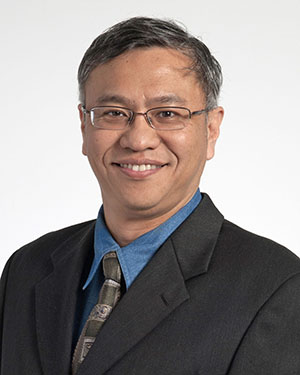
Yu-Shang Lee, PhD
Associate Staff
Associate Professor, Medicine, CCLCM-CWRU
Email: [email protected]
Location: Cleveland Clinic Main Campus
Research
Spinal cord injury (SCI) is one of the most damaging, immobilizing and irreversible injuries that a patient can survive. There are over 1,275,000 SCI patients living in the United States, yet no cure exists to date. My research focus is on the potential treatment and its mechasim of action following SCI that results in a change, either temporary or permanent, in its normal motor, sensory, or autonomic function. We use the nerve bridging technique and novel protein degrader technology to repair the injured site and neurorehabilitation approaches to restore lost function.
Biography
Coming soon.
Education & Professional Highlights
Appointed
2008
Medical Education - University of California at Irvine
Anatomy and Neurobiology
Irvine, CA USA
2004
Graduate School - National Chung-Hsing University
Veterinary Medicine
1995
Undergraduate - National Chung-Hsing University
Veterinary Medicine
1993
Research
The research goals of my lab are to investigate underlying mechanisms of trauma to the central nervous system, with an emphasis on spinal cord injury (SCI), and to develop novel repair strategies to promote anatomical plasticity and functional regeneration such as locomotion and lower urinary tract (LUT) control in experimental models of SCI. My lab also has expertise in studying LUT dysfunctions in preclinical rodent models with neurotrauma (SCI and traumatic brain injury) and neurodegenerative disease such as amyotrophic lateral sclerosis (ALS). In addition, we were the first to demonstrate LUT dysfunction in a preclinical ALS model, supporting that neurogenic bladder problems existed in patients with ALS.
Our long-term goal is to translate effective treatments from experimental animal research to humans with SCI. One of the research topics in my lab is to study an auto-peripheral nerve graft (PNG) repair strategy combined with other favorable factors to facilitate nerve regeneration and functional recovery in complete SCI models. The PNG has re-emerged as an extremely useful biological conduit to guide axon re-growth. In order to further advance the technique to repair SCI, we are investigating neuroplasticity and chondroitin sulfate proteoglycans (CSPGs), the major inhibitory extracellular matrix (ECM) deposited in glial scars that prevent injured nerves from regeneration following SCI. We have demonstrated that a repair strategy using peripheral nerve bridging combined with a strategy to reduce CSPGs can enhance regeneration of certain populations of nerve fibers and improve LUT dysfunction. In addition to the nerve regeneration and inhibitory ECM study, our team also investigates a neuroprotection strategy to repair SCI. We discovered that pathologically upregulated suppressor of cytokine signaling 3 (SOCS3) contributes to neuronal death and secondary injury events after SCI, and that decreasing SOCS3 is neuroprotective and can modulate neuroinflammatory responses after SCI.
To advance the spectrum of translational research, our team has developed an innovative targeted protein degradation platform (peptide-based) to reduce pathologically upregulated proteins, such as CSPGs in SCI. Our team has demonstrated the treatment efficacy and mechanisms of action in preclinical animal models. With the same platform, we have innovated more peptides to specifically reduce different disease-driving proteins. Our goals are to develop them as potential therapeutics to treat many clinical disorders including SCI, chronic pain, peripheral nerve injury, ischemia stroke, ALS, Alzheimer’s disease, and fibrotic disorders in transplantation of solid organs.
Our Team
Selected Publications
View publications for Yu-Shang Lee, PhD
(Disclaimer: This search is powered by PubMed, a service of the U.S. National Library of Medicine. PubMed is a third-party website with no affiliation with Cleveland Clinic.)
Lin CY, Chan HH, Lin J, Trent D, Baker KB, Lee YS. Neuroinflammation and upregulation of chondroitin sulfate proteoglycans in both brain and spinal cord after chronic ischemic stroke. Brain Res Bull. 2026 Aug 19;245:112091. doi: 10.1016/j.brainresbull.2026.112091. Epub ahead of print. PMID: 42617923.
Lin CY, Nelson A, Lee W, Feng Z, Lee YS (2025). Characterization of lower urinary tract dysfunction in a mouse model of amyotrophic lateral sclerosis. Sci Rep. Aug 9;15(1):29190. PMID: 40783639; PMCID: PMC12335534
Lin CY, Li K, Gitchell T, Lee YS (2024). Long-Term 5-HT1A Receptor Agonist NLX-112 Treatment Improves Functional Recovery After Spinal Cord Injury. Int J Mol Sci. Dec 30;26(1):239. PMID: 39796094; PMCID: PMC11719485
Lin CY, Vanoverbeke V, Trent D, Willey K, Lee YS (2024). The spatiotemporal expression of SOCS3 in the brainstem and spinal cord of amyotrophic lateral sclerosis mice. Brain Sci. May 31;14(6):564. PMID: 38928564; PMCID: PMC11201580
Lin CY, Li K, Thalluri R, Lee YS (2023). Upregulated 5-HT Receptors Regulate Lower Urinary Tract Function in Rats after Complete Spinal Cord Injury. J Neurotrauma. 40(9-10):845-861. PMID: 36762948; PMCID: PMC10162122
Lin CY, Sparks A, Lee YS (2020). Improvement of lower urinary tract function by a selective serotonin 5-HT receptor agonist, NLX-112, after chronic spinal cord injury. Exp Neurol. Oct;332:113395.
Sun K, Li X, Chen X, Bai Y, Zhou G, Kokiko-Cochran ON, Lamb B, Hamilton TA, Lin CY, Lee YS, Herjan T. (2018) Neuron-Specific HuR-Deficient Mice Spontaneously Develop Motor Neuron Disease. J Immunol. 201(1):157-166. PMID: 29760195; PMCID: PMC6008238
Lin CY, Androjna C, Rozic R, Nguyen B, Parsons B, Midura RJ, Lee YS. (2018) Differential Adaptations of the Musculoskeletal System after Spinal Cord Contusion and Transection in Rats. J Neurotrauma 35(15):1737-1744. PMID: 29402167; PMCID: PMC6033305
Kokiko-Cochran ON, Saber M, Puntambekar S, Bemiller SM, Katsumoto A, Lee YS, Bhaskar K, Ransohoff RM, Lamb BT. (2018) Traumatic Brain Injury in hTau Model Mice: Enhanced Acute Macrophage Response and Altered Long-Term Recovery. J Neurotrauma 35(1):73-84. PMID: 28859549; PMCID: PMC5757085
DePaul MA, Lin CY, Silver J, Lee YS. (2017) Combinatory repair strategy to promote axon regeneration and functional recovery after chronic spinal cord injury. Sci Rep. 7(1):9018. PMID: 28827771; PMCID: PMC5567101
Park KW, Lin CY, Benveniste EN, Lee YS. (2016) Mitochondrial STAT3 is negatively regulated by SOCS3 and upregulated after spinal cord injury. Exp Neurol. 284(Pt A):98-105. PMID: 27502766; PMCID: PMC5035219
DePaul MA, Lin CY, Silver J, Lee YS. (2015) Peripheral Nerve Transplantation Combined with Acidic Fibroblast Growth Factor and Chondroitinase Induces Regeneration and Improves Urinary Function in Complete Spinal Cord Transected Adult Mice. PLoS One 10(10):e0139335. PMID: 26426529; PMCID: PMC4591338
Kokiko-Cochran O, Ransohoff L, Veenstra M, Lee S, Saber M, Sikora M, Teknipp R, Xu G, Bemiller S, Wilson G, Crish S, Bhaskar K, Lee YS, Ransohoff RM, Lamb BT. (2015) Altered Neuroinflammation and Behavior after Traumatic Brain Injury in a Mouse Model of Alzheimer's Disease. J Neurotrauma 33(7):625-40. PMID: 26414955; PMCID: PMC4971425
Park KW, Lin CY, Li K, Lee YS. (2015) Effects of Reducing Suppressors of Cytokine Signaling-3 (SOCS3) Expression on Dendritic Outgrowth and Demyelination after Spinal Cord Injury. PLoS One 10(9):e0138301. PMID: 26384335; PMCID: PMC4575181
Lin CY, Huang WJ, Li K, Swanson R, Cheung B, Lin VW, Lee YS. (2015) Differential intensity-dependent effects of magnetic stimulation on the longest neurites and shorter dendrites in neuroscreen-1 cells. J Neural Eng. 12(2):026013. PMID: 25769013; PMCID: PMC4400261
Park KW, Lin CY, Lee YS. (2014) Expression of suppressor of cytokine signaling-3 (SOCS3) and its role in neuronal death after complete spinal cord injury. Exp Neurol. 261:65-75. PMID: 24959867; PMCID: PMC4194224
Lin CY, Li K, Franic L, Gonzalez-Martinez J, Lin VW, Najm I, Lee YS. (2014) Frequency-dependent effects of contralateral repetitive transcranial magnetic stimulation on penicillin-induced seizures. Brain Res. 1581:103-16. PMID: 24937795