Cleveland Clinic Research Logo
  • About
  • Science
    • Laboratories
    • Office of Research Development
    • Clinical Research
      Participating in Research
    • Departments
      Biomedical Engineering Cancer Sciences Computational Life Sciences Florida Research & Innovation Center Genomic Sciences & Systems Biology
      Heart, Blood & Kidney Research Inflammation & Immunity Microbial Sciences in Health Neurosciences Ophthalmic Research Quantitative Health Sciences
    • Centers & Programs
      Advanced Musculoskeletal Imaging Angiogenesis Center Cardiovascular Diagnostics & Prevention Cell Therapy & Immunoengineering Program Consortium for Pain Genitourinary Malignancies Research Genome Center Global Center for Immunotherapy & Precision Immuno-Oncology Microbiome & Human Health
      Musculoskeletal ResearchNeuro-Oncology ProgramNorthern Ohio Alcohol Center Pathogen & Human Health Research Populations Health Research Quantitative Metabolic Research Therapeutics Discovery Translational and Correlative Sciences Service Tumor Pathophysiology & Evolution Program Women's Cancers Program
  • Core Services
    • Ohio
      3D Printing Bioimage AnalysisBioRobotics & Mechanical Testing Cell Culture Cleveland Clinic BioRepository Computational Oncology Platform Discovery Lab Electron Microscopy Electronics Engineering
      Flow CytometryGenomic Medicine Institute Biorepository Genomics Glassware Histology Hybridoma Immunohistochemistry Immunomonitoring Lab Instrument Refurbishing & Repair Laboratory Diagnostic
      Lerner Research Institute BioRepository Light MicroscopyMechanical Prototyping Microbial Culturing & Engineering Microbial Sequencing & Analytics Media Preparation Molecular Biotechnology Nitinol Polymer Proteomics & Metabolomics SomaScan & Biomarker
    • Florida
      Flow Cytometry
      Imaging
  • Education & Training
    • Graduate Programs Molecular Medicine PhD Program Postdoctoral Program
      Global Research Education Research Intensive Summer Experience (RISE) Undergraduate & High School Programs
  • News
  • Careers
    • Faculty Positions Research Associate & Project Staff Postdoctoral Positions Technical & Administrative Engagement
  • Donate
  • Contact
  • About
  • Science
    • Scientific Programs
    • Laboratories
    • Office of Research Development
    • Clinical Research
      Participating in Research
    • Departments
      Biomedical Engineering Cancer Sciences Computational Life Sciences Florida Research & Innovation Center Genomic Sciences & Systems Biology
      Heart, Blood & Kidney Research Inflammation & Immunity Microbial Sciences in Health Neurosciences Ophthalmic Research Quantitative Health Sciences
    • Centers & Programs
      Advanced Musculoskeletal Imaging Angiogenesis Center Cardiovascular Diagnostics & Prevention Cell Therapy & Immunoengineering Program Consortium for Pain Genitourinary Malignancies Research Genome Center Global Center for Immunotherapy & Precision Immuno-Oncology Microbiome & Human Health
      Musculoskeletal Research Neuro-Oncology ProgramNorthern Ohio Alcohol Center Pathogen & Human Health Research Populations Health Research Quantitative Metabolic Research Therapeutics Discovery Translational and Correlative Sciences Service Tumor Pathophysiology & Evolution Program Women's Cancers Program
  • Core Services
    • All Cores
    • Ohio
      3D Printing Bioimage Analysis BioRobotics & Mechanical Testing Cell Culture Cleveland Clinic BioRepository Computational Oncology Platform Discovery Lab Electron Microscopy Electronics Engineering
      Flow CytometryGenomic Medicine Institute BiorepositoryGenomics Glassware Histology Hybridoma Immunohistochemistry Immunomonitoring Lab Instrument Refurbishing & Repair Laboratory Diagnostic
      Lerner Research Institute BioRepository Light MicroscopyMechanical Prototyping Microbial Culturing & Engineering Microbial Sequencing & Analytics Media Preparation Molecular Biotechnology Nitinol Polymer Proteomics SomaScan & Biomarker
    • Florida
      Flow Cytometry
      Imaging
  • Education & Training
    • Research Education & Training Center
    • Graduate Programs Molecular Medicine PhD Program Postdoctoral Program
      Global Research Education Research Intensive Summer Experience (RISE) Undergraduate & High School Programs
  • News
  • Careers
    • Faculty Positions Research Associate & Project Staff Postdoctoral Positions Technical & AdministrativeEngagement
  • Donate
  • Contact
  • Search

Research News

❮News How patients shape this lab’s exploration of understudied vascular diseases

11/06/2026

How patients shape this lab’s exploration of understudied vascular diseases

The Cameron Lab’s exploration of fibromuscular dysplasia and other diseases is raising awareness for scientists, physicians and patients.

Five individuals in white lab coats smiling for the camera. Two are seated in front, and three are standing behind.
From left to right: Fahad Alkhalfan, MD; Scott Cameron, MD, PhD; Anu Aggarwal, PhD; Mariya Ali; Edelyn Park.

Many factors shape the trajectory of a lab’s research, including curiosity, mistakes, technology and team members. The work of Scott Cameron, MD, PhD, and his team, who study platelets and vascular diseases, is shaped by an additional factor: the curiosity of his patients.

“I see patients with vascular diseases that are often marginalized or misunderstood, including fibromuscular dysplasia and lipedema,” says Dr. Cameron, who is also the section head of Vascular Medicine. “My research has developed organically because they tell me what they want me to study – and volunteer to be in patient cohorts.”

Dr. Cameron credits those patients for contributing to advances in his research, alongside Cleveland Clinic’s research assets and his team members’ dedication. He believes the team’s presentations and publications are raising awareness and visibility for other scientists, physicians and patients on vascular conditions that otherwise may be overlooked.

Focusing on rare, but distinct, vascular conditions

The Cameron Lab is currently examining four vascular diseases that are misunderstood and sometimes misdiagnosed. These diseases present differently in males and females, and disproportionately affect females:

  • Fibromuscular dysplasia (FMD) involves abnormal changes to the artery walls and can be associated with high blood pressure and increased stroke risk.
  • Spontaneous coronary artery dissection (SCAD) happens when the wall of a coronary artery tears or separates.
  • Varicose veins are enlarged and often visible under the surface of the skin; this is caused by changes in the walls of the vein, which lead to abnormal blood flow.
  • Lipedema is characterized by abnormal accumulation of fatty tissue, especially around the thighs and buttocks, and is sometimes mischaracterized as obesity.

Sex differences and platelets

Team members’ areas of interest and study have expanded the lab’s focus on platelets in vascular diseases over the years – and their work is being recognized by national organizations.

Research associate Anu Aggarwal, PhD, first studied abdominal aortic aneurysms. While working on a project with nitric oxide and platelets, she noticed sex differences in the platelets’ characteristics. She has led the development of multiple articles on the team’s discoveries in this area, including a review recently published in Circulation Research. Earlier this year, Dr. Aggarwal won the Kenneth M. Brinkhous Early Career Investigator prize from the American Heart Association.

“I’ve been working on FMD for about four years and want to understand how it and other vascular diseases, like varicose veins, affect men and women differently,” Dr. Aggarwal says. “Our ongoing study is possible because patients with the disease are actually enthusiastic to donate blood.”

Graduate student Edelyn Park has worked alongside Dr. Aggarwal on research into FMD since she joined the lab and is now studying SCAD. Park, a fifth-year student in Cleveland Clinic’s Molecular Medicine PhD program, has spent time shadowing clinicians (including Natalia Fendrikova Mahlay, MD) and ultrasound technicians to augment her lab research. Leslie Cho, MD, has also been instrumental to Park’s SCAD research by helping the team obtain patient samples.

“Cleveland Clinic cares for the largest population of patients with these conditions, which allows us to form connections with them and really understand what they experience,” Park says. “They’re so eager to contribute to our research that they’ll sometimes send thank-you notes with their blood samples.”

Made possible by proximity and geography

Dr. Cameron says that more patients with FMD and SCAD are seeking care at Cleveland Clinic – because of the organization’s reputation, as well as what they hear about the team’s research at meetings and through word of mouth. Some even come from other states like New York and Washington.

As more patients (and samples) come in, researchers discover more nuances and microscopic signals that distinguish the conditions. For instance, FMD is often accompanied by pulsatile tinnitus – a hissing or whooshing sound in the ears that can occur when abnormal blood vessels cause turbulent blood flow.

“In 2020, Cleveland Clinic treated around 900 patients with FMD. Last year, that number was around 2,200,” Dr. Cameron says. “With this threshold of patient access, as well as the fact that we can process samples within 90 minutes of retrieval, our team can produce research almost fully based on human data. This is truly an illustration of how advancing medicine and science can be a collaborative effort.”
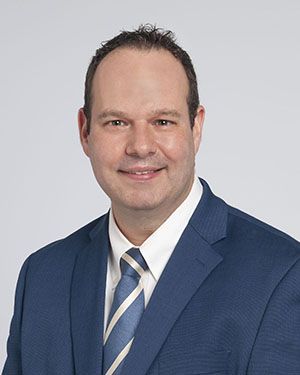
Featured Experts
Scott Cameron Headshot
Scott
Cameron, MD, PhD, RPVI
News Category
Lab feature
Related News
Collaborative platelet research identifies new therapeutic strategyResearchers to Study Link Between Platelets and Asymptomatic Abdominal Aortic AneurysmsTumors release particles that reprogram platelets and trigger clots

Research areas

Heart, Blood & Kidney Research

Want To Support Ground-Breaking Research at Cleveland Clinic?

Discover how you can help Cleveland Clinic save lives and continue to lead the transformation of healthcare.

Give to Cleveland Clinic

About Cleveland Clinic Research

About Us Careers Contact Us Donate People Directory

Science

Clinical & Translational Research Core Services Departments, Centers & Programs Laboratories Research News

Education & Training

Graduate Programs Global Research Education Molecular Medicine PhD Program Postdoctoral Program RISE Program Undergraduate & High School Programs

Site Information & Policies

Privacy Policy Search Site Site Map Social Media Policy

9500 Euclid Avenue, Cleveland, Ohio 44195 | © 2026 Cleveland Clinic Research