Cleveland Clinic Research Logo
  • About
  • Science
    • Laboratories
    • Office of Research Development
    • Clinical Research
      Participating in Research
    • Departments
      Biomedical Engineering Cancer Biology Computational Life Sciences Florida Research & Innovation Center Genomic Sciences & Systems Biology Heart, Blood & Kidney Research Immunotherapy & Precision Immuno-Oncology
      Inflammation & Immunity Microbial Sciences in Health Neurosciences Ophthalmic Research Quantitative Health Sciences Translational Hematology & Oncology Research
    • Centers & Programs
      Advanced Musculoskeletal Imaging Angiogenesis Center Cardiovascular Diagnostics & Prevention Consortium for Pain Genitourinary Malignancies Research Genome Center Microbiome & Human Health
      Musculoskeletal Research Northern Ohio Alcohol Center Pathogen & Human Health Research Populations Health Research Quantitative Metabolic Research Therapeutics Discovery
  • Core Services
    • Ohio
      3D Printing Bioimage AnalysisBioRobotics & Mechanical Testing Cell Culture Cleveland Clinic BioRepository Computational Oncology Platform Discovery Lab Electron Microscopy Electronics Engineering
      Flow CytometryGenomic Medicine Institute Biorepository Genomics Glassware Histology Hybridoma Immunohistochemistry Immunomonitoring Lab Instrument Refurbishing & Repair Laboratory Diagnostic
      Lerner Research Institute BioRepository Light MicroscopyMechanical Prototyping Microbial Culturing & Engineering Microbial Sequencing & Analytics Media Preparation Molecular Biotechnology Nitinol Polymer Proteomics & Metabolomics SomaScan & Biomarker Therapeutics Discovery
    • Florida
      Flow Cytometry
      Imaging
  • Education & Training
    • Graduate Programs Molecular Medicine PhD Program Postdoctoral Program
      Global Research Education Research Intensive Summer Experience (RISE) Undergraduate & High School Programs
  • News
  • Careers
    • Faculty Positions Research Associate & Project Staff Postdoctoral Positions Technical & Administrative Engagement
  • Donate
  • Contact
  • About
  • Science
    • Scientific Programs
    • Laboratories
    • Office of Research Development
    • Clinical Research
      Participating in Research
    • Departments
      Biomedical Engineering Cancer Biology Computational Life Sciences Florida Research & Innovation Center Genomic Sciences & Systems BiologyHeart, Blood & Kidney Research Immunotherapy & Precision Immuno-Oncology
      Inflammation & Immunity Microbial Sciences in Health Neurosciences Ophthalmic Research Quantitative Health Sciences Translational Hematology & Oncology Research
    • Centers & Programs
      Advanced Musculoskeletal Imaging Angiogenesis Center Cardiovascular Diagnostics & Prevention Consortium for Pain Genitourinary Malignancies Research Genome Center Microbiome & Human Health
      Musculoskeletal Research Northern Ohio Alcohol Center Pathogen & Human Health Research Populations Health Research Quantitative Metabolic Research Therapeutics Discovery
  • Core Services
    • All Cores
    • Ohio
      3D Printing Bioimage Analysis BioRobotics & Mechanical Testing Cell Culture Cleveland Clinic BioRepository Computational Oncology Platform Discovery Lab Electron Microscopy Electronics Engineering
      Flow CytometryGenomic Medicine Institute BiorepositoryGenomics Glassware Histology Hybridoma Immunohistochemistry Immunomonitoring Lab Instrument Refurbishing & Repair Laboratory Diagnostic
      Lerner Research Institute BioRepository Light MicroscopyMechanical Prototyping Microbial Culturing & Engineering Microbial Sequencing & Analytics Media Preparation Molecular Biotechnology Nitinol Polymer Proteomics SomaScan & Biomarker Therapeutics Discovery
    • Florida
      Flow Cytometry
      Imaging
  • Education & Training
    • Research Education & Training Center
    • Graduate Programs Molecular Medicine PhD Program Postdoctoral Program
      Global Research Education Research Intensive Summer Experience (RISE) Undergraduate & High School Programs
  • News
  • Careers
    • Faculty Positions Research Associate & Project Staff Postdoctoral Positions Technical & AdministrativeEngagement
  • Donate
  • Contact
  • Search

Research News

❮News Electrophysiology testing reveals a gut microbe and atrial fibrillation connection

07/24/2026

Electrophysiology testing reveals a gut microbe and atrial fibrillation connection

Researchers discover that gut microbe-produced TMAO changes the heart’s electrical environment, increases susceptibility to abnormal rhythms.

A human torso divided in half vertically. The left side is blue and over the torso is a normal sinus rhythm line. The right side is red, and the sinus rhythm line shows cardiac distress with longer, more rapid waves.

A team of researchers led by Robert Koeth, MD, PhD, have discovered how the gut microbial pathway trimethylamine N-oxide (TMAO), a compound produced by the gut microbiome from nutrients found in a western diet, is associated with atrial fibrillation (AFib).

While previous research in the field established a connection between the two, Cleveland Clinic researchers’ article, published in the Journal of Clinical Investigation, uses electrophysiology to pinpoint the reason TMAO may increase the potential for an individual to develop this common type of arrhythmia. The answer, Dr. Koeth believes, may be interference with receptors involved in the body’s “fight-or-flight” response.

This latest research is part of a multiyear study into AFib funded by the National Institutes of Health.

A known connection to heart health

Cleveland Clinic researchers have already identified links between TMAO and a higher risk for heart failure and other cardiovascular diseases. There was no clear answer about its role in AFib, an irregular heart rhythm condition that affects the function of the heart’s electrical system.

Dr. Koeth leads a lab in Cleveland Clinic Research and is a staff physician in the Cardiac Electrophysiology and Pacing section of Cleveland Clinic’s Heart, Vascular & Thoracic Institute. He decided to approach this gap in research through his specialty: analyzing the heart’s electrical signals, the branch of cardiology known as electrophysiology.

Electrophysiology testing in the lab

Dr. Koeth and his team designed and performed preclinical experiments to determine if the presence of TMAO creates conditions where the heart can more easily go off rhythm. To answer these questions, researchers measured the following using electrocardiogram monitoring, electrophysiology testing and optical mapping:

  • How easily AFib could be triggered
  • How quickly AFib developed on its own
  • How fast electrical signals travel
  • How quickly the heart cells reset after firing
Two electrocardiograms that show the difference between a normal sinus rhythm (top) and a rhythm impacted by TMAO (bottom), which includes atrial fibrillation. The normal rhythm shows beats that are evenly spaced, while the TMAO-induced rhythm shows beats that are rapid and more erratic.
Two electrocardiograms that show the difference between a normal sinus rhythm (top) and a rhythm impacted by TMAO (bottom), which includes atrial fibrillation.

The results suggested that exposure to TMAO does increase the risk for AFib to be triggered and develop on its own.

“We discovered through our electrophysiology testing that TMAO makes the heart’s electrical system more unstable,” Dr. Koeth says. “One effect is a shortened recovery time after each electrical signal the heart sends out. This is problematic because cells firing again too soon increases the chance for abnormal signals characteristic of AFib.”

Tissues that are too excitable

The researchers also calculated cardiac wavelength, which measures how much physical space an electrical signal occupies as it moves through the heart. TMAO shortened this wavelength, which results in tissues becoming more excitable — a characteristic of AFib.

This is also where the body’s fight-or-flight response comes in. That stress response is part of the autonomic nervous system, which controls many body functions automatically. The autonomic nervous system has two, normally balanced branches: the sympathetic nervous system (the fight-or-flight response) and the parasympathetic nervous system (a more regulated, calming type of response).

When those branches are imbalanced and the sympathetic nervous system is more active, the heart can become more electrically unstable. The researchers’ findings suggest that TMAO may contribute to this imbalance, creating conditions that make AFib more likely to develop.

Implications for the future

A better understanding of the heart’s electrical system could help identify people who are at greater risk of developing AFib. Dr. Koeth also believes that it may also help physicians determine stroke risk for people who already have AFib.

“Our study is the first that puts the connection between TMAO and AFib together from a bench-to-bedside approach, and we fulfilled our goal to establish a clear, probable mechanism,” Dr. Koeth says. “Further study will help refine an effective therapeutic approach, but our results from this electrophysiology testing add important insight about a too-common cardiac condition.”
Featured Experts
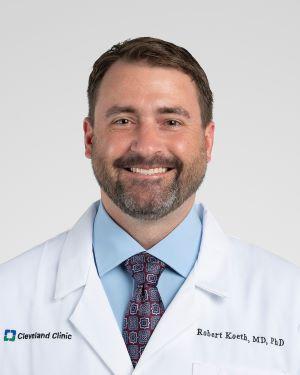
Robert Koeth Headshot
Robert
Koeth, MD, PhD
News Category
Related News
Cleveland Clinic Announces New Global Center for Pathogen Research & Human HealthCleveland Clinic unveils next phase of Cleveland Innovation DistrictOne Cleveland Clinic Research, infinite possibilities

Research areas

Heart, Blood & Kidney Research

Want To Support Ground-Breaking Research at Cleveland Clinic?

Discover how you can help Cleveland Clinic save lives and continue to lead the transformation of healthcare.

Give to Cleveland Clinic

About Cleveland Clinic Research

About Us Careers Contact Us Donate People Directory

Science

Clinical & Translational Research Core Services Departments, Centers & Programs Laboratories Research News

Education & Training

Graduate Programs Global Research Education Molecular Medicine PhD Program Postdoctoral Program RISE Program Undergraduate & High School Programs

Site Information & Policies

Privacy Policy Search Site Site Map Social Media Policy

9500 Euclid Avenue, Cleveland, Ohio 44195 | © 2026 Cleveland Clinic Research