Cleveland Clinic Research Logo
  • About
  • Science
    • Laboratories
    • Office of Research Development
    • Clinical Research
      Participating in Research
    • Departments
      Biomedical Engineering Cancer Sciences Computational Life Sciences Florida Research & Innovation Center Genomic Sciences & Systems Biology
      Heart, Blood & Kidney Research Inflammation & Immunity Microbial Sciences in Health Neurosciences Ophthalmic Research Quantitative Health Sciences
    • Centers & Programs
      Advanced Musculoskeletal Imaging Angiogenesis Center Cardiovascular Diagnostics & Prevention Cell Therapy & Immunoengineering Program Consortium for Pain Genitourinary Malignancies Research Genome Center Global Center for Immunotherapy & Precision Immuno-Oncology Microbiome & Human Health
      Musculoskeletal ResearchNeuro-Oncology ProgramNorthern Ohio Alcohol Center Pathogen & Human Health Research Populations Health Research Quantitative Metabolic Research Therapeutics Discovery Translational and Correlative Sciences Service Tumor Pathophysiology & Evolution Program Women's Cancers Program
  • Core Services
    • Ohio
      3D Printing Bioimage AnalysisBioRobotics & Mechanical Testing Cell Culture Cleveland Clinic BioRepository Computational Oncology Platform Discovery Lab Electron Microscopy Electronics Engineering
      Flow CytometryGenomic Medicine Institute Biorepository Genomics Glassware Histology Hybridoma Immunohistochemistry Immunomonitoring Lab Instrument Refurbishing & Repair Laboratory Diagnostic
      Lerner Research Institute BioRepository Light MicroscopyMechanical Prototyping Microbial Culturing & Engineering Microbial Sequencing & Analytics Media Preparation Molecular Biotechnology Nitinol Polymer Proteomics & Metabolomics SomaScan & Biomarker
    • Florida
      Flow Cytometry
      Imaging
  • Education & Training
    • Graduate Programs Molecular Medicine PhD Program Postdoctoral Program
      Global Research Education Research Intensive Summer Experience (RISE) Undergraduate & High School Programs
  • News
  • Careers
    • Faculty Positions Research Associate & Project Staff Postdoctoral Positions Technical & Administrative Engagement
  • Donate
  • Contact
  • About
  • Science
    • Scientific Programs
    • Laboratories
    • Office of Research Development
    • Clinical Research
      Participating in Research
    • Departments
      Biomedical Engineering Cancer Sciences Computational Life Sciences Florida Research & Innovation Center Genomic Sciences & Systems Biology
      Heart, Blood & Kidney Research Inflammation & Immunity Microbial Sciences in Health Neurosciences Ophthalmic Research Quantitative Health Sciences
    • Centers & Programs
      Advanced Musculoskeletal Imaging Angiogenesis Center Cardiovascular Diagnostics & Prevention Cell Therapy & Immunoengineering Program Consortium for Pain Genitourinary Malignancies Research Genome Center Global Center for Immunotherapy & Precision Immuno-Oncology Microbiome & Human Health
      Musculoskeletal Research Neuro-Oncology ProgramNorthern Ohio Alcohol Center Pathogen & Human Health Research Populations Health Research Quantitative Metabolic Research Therapeutics Discovery Translational and Correlative Sciences Service Tumor Pathophysiology & Evolution Program Women's Cancers Program
  • Core Services
    • All Cores
    • Ohio
      3D Printing Bioimage Analysis BioRobotics & Mechanical Testing Cell Culture Cleveland Clinic BioRepository Computational Oncology Platform Discovery Lab Electron Microscopy Electronics Engineering
      Flow CytometryGenomic Medicine Institute BiorepositoryGenomics Glassware Histology Hybridoma Immunohistochemistry Immunomonitoring Lab Instrument Refurbishing & Repair Laboratory Diagnostic
      Lerner Research Institute BioRepository Light MicroscopyMechanical Prototyping Microbial Culturing & Engineering Microbial Sequencing & Analytics Media Preparation Molecular Biotechnology Nitinol Polymer Proteomics SomaScan & Biomarker
    • Florida
      Flow Cytometry
      Imaging
  • Education & Training
    • Research Education & Training Center
    • Graduate Programs Molecular Medicine PhD Program Postdoctoral Program
      Global Research Education Research Intensive Summer Experience (RISE) Undergraduate & High School Programs
  • News
  • Careers
    • Faculty Positions Research Associate & Project Staff Postdoctoral Positions Technical & AdministrativeEngagement
  • Donate
  • Contact
  • Search

Research News

❮News Mechanical Signaling Cascade Central to Fibrotic Scar Tissue Development Defined

11/13/2019

Mechanical Signaling Cascade Central to Fibrotic Scar Tissue Development Defined

Findings suggest that blocking TRPV4 and PI3Kγ binding may be an unexplored avenue for treating or preventing fibrotic conditions of many major organs.

microscopic image of scar tissue cells

In a new study published in Science Signaling, Cleveland Clinic researchers have identified a novel target for new therapies that may help to treat or prevent a host of fibrotic conditions, which contribute to nearly half of overall mortality in the United States.

Fibrotic diseases are characterized by the overproduction of extracellular matrix (ECM), with resultant formation of scar tissue. Cells called myofibroblasts are thought to be the major producers of the scar tissue. Two key signals are needed to generate these myofibroblasts—active TGF-β (transforming growth factor-β) and a mechanical signal.

Previous research (published in the Journal of Clinical Investigation, 2014) led by Mitchell Olman, MD, a Cleveland Clinic physician-scientist and senior author of the current study, identified an ion channel called TRPV4 (transient receptor potential vanilloid) as the key transducer of the mechanical signal that leads to myofibroblast generation.  

In the current study, research teams led by Dr. Olman and S.V. Naga Prasad, PhD, discovered that TRPV4 selectively binds to a kinase called PI3Kγ (phosphoinositide 3-kinase γ) to form an intracellular protein complex. This TRPV4-PI3Kγ complex—which is recruited by TGF-β—migrates from inside the cell to the plasma membrane and subsequently amplifies the actions of each individual protein, ultimately resulting in the differentiation of fibroblasts to myofibroblasts.  Myofibroblasts produce and expel ECM outside of the cell, and contract the ECM to generate scar tissue—the hallmark of fibrotic diseases.

Taken together, these findings suggest that blocking TRPV4 and PI3Kγ binding may be an unexplored avenue for treating or preventing fibrotic conditions of many major organs. While additional research is necessary, this study provides promising support and rationale for a new treatment approach.

Lisa Grove, PhD, a postdoctoral fellow in Dr. Olman’s laboratory, is first author on the study, which was supported by the National Heart, Lung, and Blood Institute (part of the National Institutes of Health). Dr. Olman is a researcher in the Department of Inflammation & Immunity and a practicing pulmonologist. Dr. Prasad is a researcher in the Department of Cardiovascular & Metabolic Sciences.

Photo: Lung fibroblasts isolated from a preclinical model were stimulated with TGF-β to induce myofibroblast differentiation. The presence of yellow/orange in stress fibers indicates colocalization of phalloidin (F-actin, red) and alpha smooth muscle actin (αSMA, green), indicating incorporation of αSMA into stress fibers, which is a hallmark of myofibroblasts.
 

Featured Experts
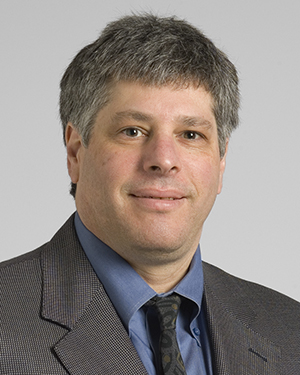
Mitchell Olman Headshot
Mitchell
Olman, MA, MD
News Category
Related News
Large $12M Grant to Support Team Science into the Biology of Cardiovascular DiseaseDecades of Research Bring New Understanding of Integrin linked kinase (ILK)NIH Grant to Study Mechanism of Blood Clotting Factor Secretion Renewed

Research areas

Inflammation & Immunity

Want To Support Ground-Breaking Research at Cleveland Clinic?

Discover how you can help Cleveland Clinic save lives and continue to lead the transformation of healthcare.

Give to Cleveland Clinic

About Cleveland Clinic Research

About Us Careers Contact Us Donate People Directory

Science

Clinical & Translational Research Core Services Departments, Centers & Programs Laboratories Research News

Education & Training

Graduate Programs Global Research Education Molecular Medicine PhD Program Postdoctoral Program RISE Program Undergraduate & High School Programs

Site Information & Policies

Privacy Policy Search Site Site Map Social Media Policy

9500 Euclid Avenue, Cleveland, Ohio 44195 | © 2026 Cleveland Clinic Research