Cleveland Clinic Research Logo
  • About
  • Science
    • Laboratories
    • Office of Research Development
    • Clinical Research
      Participating in Research
    • Departments
      Biomedical Engineering Cancer Sciences Computational Life Sciences Florida Research & Innovation Center Genomic Sciences & Systems Biology
      Heart, Blood & Kidney Research Inflammation & Immunity Microbial Sciences in Health Neurosciences Ophthalmic Research Quantitative Health Sciences
    • Centers & Programs
      Advanced Musculoskeletal Imaging Angiogenesis Center Cardiovascular Diagnostics & Prevention Cell Therapy & Immunoengineering Program Consortium for Pain Genitourinary Malignancies Research Genome Center Global Center for Immunotherapy & Precision Immuno-Oncology Microbiome & Human Health
      Musculoskeletal ResearchNeuro-Oncology ProgramNorthern Ohio Alcohol Center Pathogen & Human Health Research Populations Health Research Quantitative Metabolic Research Therapeutics Discovery Translational and Correlative Sciences Service Tumor Pathophysiology & Evolution Program Women's Cancers Program
  • Core Services
    • Ohio
      3D Printing Bioimage AnalysisBioRobotics & Mechanical Testing Cell Culture Cleveland Clinic BioRepository Computational Oncology Platform Discovery Lab Electron Microscopy Electronics Engineering
      Flow CytometryGenomic Medicine Institute Biorepository Genomics Glassware Histology Hybridoma Immunohistochemistry Immunomonitoring Lab Instrument Refurbishing & Repair Laboratory Diagnostic
      Lerner Research Institute BioRepository Light MicroscopyMechanical Prototyping Microbial Culturing & Engineering Microbial Sequencing & Analytics Media Preparation Molecular Biotechnology Nitinol Polymer Proteomics & Metabolomics SomaScan & Biomarker
    • Florida
      Flow Cytometry
      Imaging
  • Education & Training
    • Graduate Programs Molecular Medicine PhD Program Postdoctoral Program
      Global Research Education Research Intensive Summer Experience (RISE) Undergraduate & High School Programs
  • News
  • Careers
    • Faculty Positions Research Associate & Project Staff Postdoctoral Positions Technical & Administrative Engagement
  • Donate
  • Contact
  • About
  • Science
    • Scientific Programs
    • Laboratories
    • Office of Research Development
    • Clinical Research
      Participating in Research
    • Departments
      Biomedical Engineering Cancer Sciences Computational Life Sciences Florida Research & Innovation Center Genomic Sciences & Systems Biology
      Heart, Blood & Kidney Research Inflammation & Immunity Microbial Sciences in Health Neurosciences Ophthalmic Research Quantitative Health Sciences
    • Centers & Programs
      Advanced Musculoskeletal Imaging Angiogenesis Center Cardiovascular Diagnostics & Prevention Cell Therapy & Immunoengineering Program Consortium for Pain Genitourinary Malignancies Research Genome Center Global Center for Immunotherapy & Precision Immuno-Oncology Microbiome & Human Health
      Musculoskeletal Research Neuro-Oncology ProgramNorthern Ohio Alcohol Center Pathogen & Human Health Research Populations Health Research Quantitative Metabolic Research Therapeutics Discovery Translational and Correlative Sciences Service Tumor Pathophysiology & Evolution Program Women's Cancers Program
  • Core Services
    • All Cores
    • Ohio
      3D Printing Bioimage Analysis BioRobotics & Mechanical Testing Cell Culture Cleveland Clinic BioRepository Computational Oncology Platform Discovery Lab Electron Microscopy Electronics Engineering
      Flow CytometryGenomic Medicine Institute BiorepositoryGenomics Glassware Histology Hybridoma Immunohistochemistry Immunomonitoring Lab Instrument Refurbishing & Repair Laboratory Diagnostic
      Lerner Research Institute BioRepository Light MicroscopyMechanical Prototyping Microbial Culturing & Engineering Microbial Sequencing & Analytics Media Preparation Molecular Biotechnology Nitinol Polymer Proteomics SomaScan & Biomarker
    • Florida
      Flow Cytometry
      Imaging
  • Education & Training
    • Research Education & Training Center
    • Graduate Programs Molecular Medicine PhD Program Postdoctoral Program
      Global Research Education Research Intensive Summer Experience (RISE) Undergraduate & High School Programs
  • News
  • Careers
    • Faculty Positions Research Associate & Project Staff Postdoctoral Positions Technical & AdministrativeEngagement
  • Donate
  • Contact
  • Search

Research News

❮News Platelets may play an unexpected role in glioblastoma progression

10/29/2026

Platelets may play an unexpected role in glioblastoma progression

New research reveals that the PAR4 receptor is connected to sex-specific immune responses.

Brain tumor tissue sample that shows multiple types of cells illuminated in different colors.
Brain tumor tissue sample showing tumor cells (GFP, green), vascular-associated extracellular matrix (COL6A1, white), reactive astrocytes (yellow), cytotoxic T cells (CD8+, magenta) and nuclei (DAPI, blue). The tumor displays high vascular density alongside robust CD8⁺ T cell infiltration, with immune cells concentrated in and around COL6A1-rich regions.

New Cleveland Clinic research published in Cancer Cell shows that people with glioblastoma have more active platelets, which are cells involved in blood clotting. Platelets also communicate with other cells and can influence immune activity. The overactive platelets in people with glioblastoma slow the activity of cancer-fighting T cells, which can contribute to tumor growth and cancer progression.

Researchers from the lab of Justin Lathia, PhD, continue to investigate the unknowns around sex differences associated with glioblastoma (GBM), including why they are more common in males and are associated with shorter survival in males than females. Led by postdoctoral fellow Anthony Sloan, PhD, the team found in preclinical models that blocking a specific receptor disrupts the decreased platelet activity – but only in females.

From these early results, the researchers believe that overactive platelets likely drive disease progression and could be an overlooked target for improving the body’s immune response to glioblastoma and other types of tumors. They also believe that hormones likely regulate these mechanisms.

Cancer and blood clots

People with cancers including GBM, lung, kidney and gastrointestinal cancers are known to be at increased risk for blood-clot conditions like pulmonary embolism (PE) and deep vein thrombosis (DVT). These thrombotic events are the second leading cause of death in cancer patients. Patients who develop these conditions have a lower risk of survival, but why is not yet understood.

“The development of events like PE, DVT, stroke and myocardial infarction affects patients directly and indirectly,” says Alok Khorana, MD, a gastrointestinal medical oncologist and contributor to the paper. “They may require urgent hospitalization and care, which could then interrupt or delay their cancer therapy.”

To explore why these clotting events occur, Dr. Sloan and the team looked at activity in the environment around the tumor, which includes platelets and other types of cells.

PAR4 as a platelet “switch”

The team identified platelet hyperactivity through a receptor called protease activated receptor 4 (PAR4), which acts like a light switch for platelets. When the switch is “on” (active), platelets slow the activity of a type of T cell that normally kills cancer cells, which can increase cancer aggression. In preclinical models, the team found that blocking the PAR4 receptor reversed that suppression, but only in females.

“While both male and female preclinical models showed increased platelet reactivity, we were surprised to see that only females showed improved survival when targeting this platelet activation,” Dr. Sloan says. “We believe it is related to hormones – particularly estrogen.”

Dr. Sloan notes that the findings suggest a molecular bridge between the body’s clotting system and its hormonal environment – two systems not previously linked in this context. This link may help explain sex difference in cancer response, as well as why females are more prone to clotting events in some situations.

“In addition to telling us more about the role of platelets in our bodies, this research highlights PAR4 as a key for cancer biology and blood-clotting biology,” Dr. Lathia says. “For cancer biology, targeting the receptor may help the immune system fight glioblastoma, as well as guiding the development of new therapeutics. It may also explain why platelet and clotting risk differ between patients – including in relation to hormonal factors.”

Part of answering a big question

The team that completed this research is part of the Program Project Grant (P01) led by Dr. Lathia and funded by the National Institutes of Health. The P01 encompasses three separate research projects with multiple investigators across institutions working simultaneously to answer big questions around GBM. The P01 was recently renewed for another five-year cycle.

In addition to Dr. Khorana, Drs. Lathia and Sloan note several contributors who were instrumental to the work published by Cancer Cell:

  • Scott Cameron, MD, PhD, and members of his lab, who contributed expertise on platelets and platelet activity.
  • Evi Stavrou, MD, and Marvin Nieman, PhD, from Case Western Reserve University, who provided expertise in coagulation and PAR4 signaling mechanisms.
  • Wendy Goodman, PhD, an immunologist and member of the Immune Oncology Program in Case Western Reserve University’s Comprehensive Cancer Center, who contributed to the work on estrogen receptors.
  • Many other Cleveland Clinic researchers from the departments of Cancer Sciences; Heart, Blood & Kidney Research; Microbial Sciences in Health; and the Sheikha Fatima bint Mubarak Global Center for Pathogen & Human Health Research – including research technicians and undergraduate students mentored by Dr. Sloan.
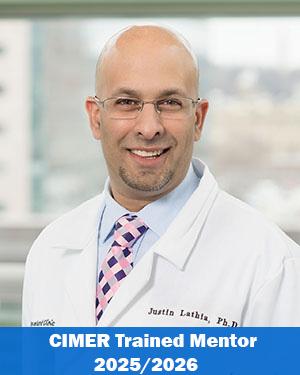
Featured Experts
Justin Lathia Headshot
Justin
Lathia, PhD
Scott Cameron Headshot
Scott
Cameron, MD, PhD, RPVI
News Category
Related News
Collaborative platelet research identifies new therapeutic strategyResearchers to Study Link Between Platelets and Asymptomatic Abdominal Aortic AneurysmsHow science as a team sport shaped this postdoc’s award-winning discovery

Research areas

Cancer Sciences

Want To Support Ground-Breaking Research at Cleveland Clinic?

Discover how you can help Cleveland Clinic save lives and continue to lead the transformation of healthcare.

Give to Cleveland Clinic

About Cleveland Clinic Research

About Us Careers Contact Us Donate People Directory

Science

Clinical & Translational Research Core Services Departments, Centers & Programs Laboratories Research News

Education & Training

Graduate Programs Global Research Education Molecular Medicine PhD Program Postdoctoral Program RISE Program Undergraduate & High School Programs

Site Information & Policies

Privacy Policy Search Site Site Map Social Media Policy

9500 Euclid Avenue, Cleveland, Ohio 44195 | © 2026 Cleveland Clinic Research