10/20/2026
Cleveland Clinic’s 2025 pitch competition winner shares his insight on creating a breakthrough innovation

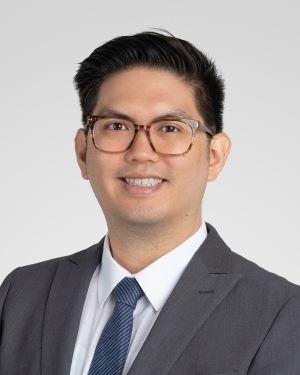
Christopher Nguyen, PhD, founding director of Cleveland Clinic’s Cardiovascular Innovation Research Center, won Cleveland Clinic’s annual Inside Innovation pitch competition last year with a machine designed to make cardiac MRIs easier to capture and more accessible. Now, he and his team are working on the process of commercialization and building a venture company.
Cardiac MRIs are a critical tool for diagnosing and treating heart failure, but the technology is not currently scalable across a large number of hospital systems. Dr. Nguyen’s team presented their idea to nearly 250 attendees, who then voted for them to win the competition. The team won a $100,000 grant funded by Jones Day to help take their invention from a concept to a real-world solution.
In this year’s Shark Tank-style event on October 23, three new finalists will compete for the Jones Day grant. Attendees will also be able to explore Inventors Row, where they can engage with breakthrough technologies and learn from the minds behind them.
Leading up to this year’s event, we spoke with Dr. Nguyen about his experience as an inventor and a winner of the pitch competition.
What is your invention?
My invention is the AutoCMR (automated cardiac MRI). It is a push-button cardiac MRI system designed to make heart imaging faster, more consistent and more accessible using already-existing MRI systems. It automates the scan process to reduce complexity and variability, which helps clinicians deliver accurate results quickly and improves access to advanced cardiac care.
Was your invention successful right away?
No, my first idea wasn’t the right fit for the current state of the field. I first came to Innovations with an idea for a technology that would go beyond the fundamental cardiac MRI exam by measuring the heart’s fiber architecture. The problem is that my technology would require more scan time, when the basic exam was already pressed for time and complex in its delivery. After meeting with clinicians and learning about their experiences, I realized my priority needed to be fixing the problem of how to make fundamental cardiac MRIs more accessible.
What was your experience with Innovations like?
The Innovations team was an incredible support, and I highly advise everyone to work with them as soon as possible. Don’t wait until you already have the complete invention, because they support you through every step of the process.
My team and I started by filling out an Invention Disclosure Form. We then worked with Innovations throughout the process of developing our invention and then navigating the path to commercialization.
What was it like participating in the pitch competition?
It was actually one of our Innovations partners who encouraged me to do the pitch competition. I didn’t even consider applying for it. I went to the previous competition and cheered on inventors, but I didn’t picture myself on that stage. However, I had a strong belief in our invention and its ability to help patients, so I practiced and gave it a shot. My goal was just to participate, not to win, but people realized our invention’s potential.
What is your advice for other inventors?
My advice is to keep trying, even if your first invention doesn’t work. For all the success we have, there have been even more ideas that didn’t work. But eventually you find the one idea that works, and it is just an incredible experience. The journey is hard, but it is worth it to make something that will improve care for patients everywhere.