Cleveland Clinic Research Logo
  • About
  • Science
    • Laboratories
    • Office of Research Development
    • Clinical Research
      Participating in Research
    • Departments
      Biomedical Engineering Cancer Sciences Computational Life Sciences Florida Research & Innovation Center Genomic Sciences & Systems Biology
      Heart, Blood & Kidney Research Inflammation & Immunity Microbial Sciences in Health Neurosciences Ophthalmic Research Quantitative Health Sciences
    • Centers & Programs
      Advanced Musculoskeletal Imaging Angiogenesis Center Cardiovascular Diagnostics & Prevention Cell Therapy & Immunoengineering Program Consortium for Pain Genitourinary Malignancies Research Genome Center Global Center for Immunotherapy & Precision Immuno-Oncology Microbiome & Human Health
      Musculoskeletal ResearchNeuro-Oncology ProgramNorthern Ohio Alcohol Center Pathogen & Human Health Research Populations Health Research Quantitative Metabolic Research Therapeutics Discovery Translational and Correlative Sciences Service Tumor Pathophysiology & Evolution Program Women's Cancers Program
  • Core Services
    • Ohio
      3D Printing Bioimage AnalysisBioRobotics & Mechanical Testing Cell Culture Cleveland Clinic BioRepository Computational Oncology Platform Discovery Lab Electron Microscopy Electronics Engineering
      Flow CytometryGenomic Medicine Institute Biorepository Genomics Glassware Histology Hybridoma Immunohistochemistry Immunomonitoring Lab Instrument Refurbishing & Repair Laboratory Diagnostic
      Lerner Research Institute BioRepository Light MicroscopyMechanical Prototyping Microbial Culturing & Engineering Microbial Sequencing & Analytics Media Preparation Molecular Biotechnology Nitinol Polymer Proteomics & Metabolomics SomaScan & Biomarker
    • Florida
      Flow Cytometry
      Imaging
  • Education & Training
    • Graduate Programs Molecular Medicine PhD Program Postdoctoral Program
      Global Research Education Research Intensive Summer Experience (RISE) Undergraduate & High School Programs
  • News
  • Careers
    • Faculty Positions Research Associate & Project Staff Postdoctoral Positions Technical & Administrative Engagement
  • Donate
  • Contact
  • About
  • Science
    • Scientific Programs
    • Laboratories
    • Office of Research Development
    • Clinical Research
      Participating in Research
    • Departments
      Biomedical Engineering Cancer Sciences Computational Life Sciences Florida Research & Innovation Center Genomic Sciences & Systems Biology
      Heart, Blood & Kidney Research Inflammation & Immunity Microbial Sciences in Health Neurosciences Ophthalmic Research Quantitative Health Sciences
    • Centers & Programs
      Advanced Musculoskeletal Imaging Angiogenesis Center Cardiovascular Diagnostics & Prevention Cell Therapy & Immunoengineering Program Consortium for Pain Genitourinary Malignancies Research Genome Center Global Center for Immunotherapy & Precision Immuno-Oncology Microbiome & Human Health
      Musculoskeletal Research Neuro-Oncology ProgramNorthern Ohio Alcohol Center Pathogen & Human Health Research Populations Health Research Quantitative Metabolic Research Therapeutics Discovery Translational and Correlative Sciences Service Tumor Pathophysiology & Evolution Program Women's Cancers Program
  • Core Services
    • All Cores
    • Ohio
      3D Printing Bioimage Analysis BioRobotics & Mechanical Testing Cell Culture Cleveland Clinic BioRepository Computational Oncology Platform Discovery Lab Electron Microscopy Electronics Engineering
      Flow CytometryGenomic Medicine Institute BiorepositoryGenomics Glassware Histology Hybridoma Immunohistochemistry Immunomonitoring Lab Instrument Refurbishing & Repair Laboratory Diagnostic
      Lerner Research Institute BioRepository Light MicroscopyMechanical Prototyping Microbial Culturing & Engineering Microbial Sequencing & Analytics Media Preparation Molecular Biotechnology Nitinol Polymer Proteomics SomaScan & Biomarker
    • Florida
      Flow Cytometry
      Imaging
  • Education & Training
    • Research Education & Training Center
    • Graduate Programs Molecular Medicine PhD Program Postdoctoral Program
      Global Research Education Research Intensive Summer Experience (RISE) Undergraduate & High School Programs
  • News
  • Careers
    • Faculty Positions Research Associate & Project Staff Postdoctoral Positions Technical & AdministrativeEngagement
  • Donate
  • Contact
  • Search

Cell Therapy & Immunoengineering Program

Research

Home About Research Contact
  • Research
  • What is Car T-cell Therapy
  • What makes us unique

What is CAR T-Cell Therapy?

What is CAR T-cell Therapy?

Some cancers evade recognition by the immune system. CAR T-cell therapy is a personalized form of immunotherapy in which a patient's T cells are genetically reprogrammed to express a chimeric antigen receptor, or CAR, that recognizes a specific target on cancer cells. The engineered T cells can then identify and attack those cancer cells.
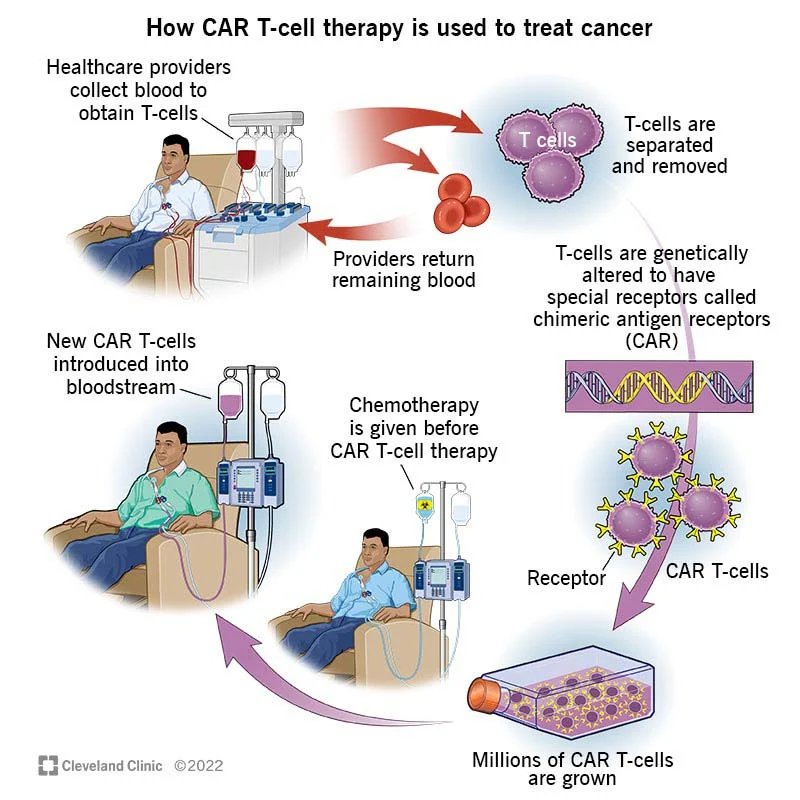
To produce a CAR T-cell therapy, T cells are collected from a patient's blood, genetically engineered to express the CAR and expanded for treatment. Before infusion, patients typically receive lymphodepleting chemotherapy to support the activity of the administered cells. Once returned to the patient, CAR T cells can seek out and attack cancer cells throughout the body.

CAR T-cell therapy has produced durable remissions in some patients with blood cancers. However, many patients do not respond or later relapse, treatment can cause serious toxicities, and effective CAR T-cell therapies have not yet been established for most solid tumors. These limitations define major areas of research within CTIP.

What makes us unique
What makes us unique

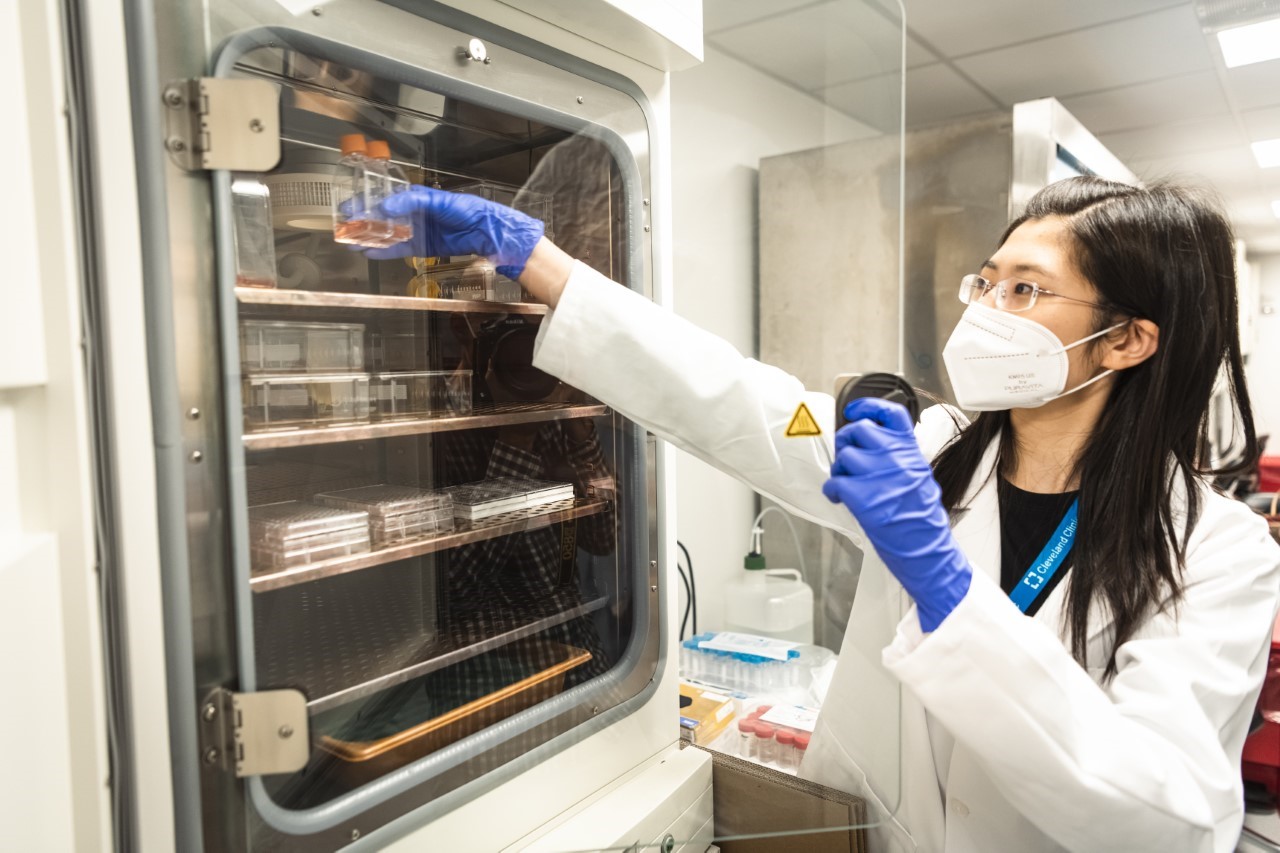
At the heart of CTIP is its translational nature: a true bench-to-bedside-and-back approach. CTIP researchers collaborate with clinicians, surgeons and scientists across Cleveland Clinic, including Taussig Cancer Institute and Cleveland Clinic Research, as well as with partners at Case Western Reserve University and other institutions in Ohio and across the United States and beyond. These collaborations allow us to identify the most important challenges facing patients and clinical teams and to study them directly in the laboratory.

A central part of this work is the analysis of blood, tumor and other specimens from patients treated with FDA-approved or investigational cell therapies. We use these samples to understand why therapies succeed or fail, identify biomarkers of response, relapse and toxicity, and uncover biological mechanisms that can be targeted to improve treatment. This shared learning provides the insight needed to extend the effectiveness and safety of cell therapies beyond their current reach.

We then translate those insights into therapeutic innovation. CTIP investigators design and test new CAR molecules, optimize how T cells are selected and programmed, and evaluate small-molecule, genetic and other engineering approaches to improve T-cell function. Working with disease experts and cell therapy investigators, we test these strategies in rigorous preclinical models and advance the strongest candidates toward phase I clinical trials.

This continuous cycle - from patient observation to mechanistic discovery, therapeutic engineering and clinical testing - is central to how CTIP works. Our work has identified T-cell states and biological programs associated with durable clinical responses, and we use those discoveries to guide the design of next-generation products. Our goal is not simply to create new cell therapies, but to make them safer, more effective, faster to produce and more affordable, so that more patients can benefit.

Explore Clinical Trials

About Cleveland Clinic Research

About Us Careers Contact Us Donate People Directory

Science

Clinical & Translational Research Core Services Departments, Centers & Programs Laboratories Research News

Education & Training

Graduate Programs Global Research Education Molecular Medicine PhD Program Postdoctoral Program RISE Program Undergraduate & High School Programs

Site Information & Policies

Privacy Policy Search Site Site Map Social Media Policy

9500 Euclid Avenue, Cleveland, Ohio 44195 | © 2026 Cleveland Clinic Research