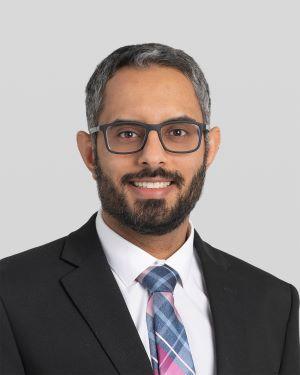
Matheus Araujo, PhD
Project Staff
Joint appointment, Biomedical Engineering
Assistant Professor, Biomedical Engineering, Cleveland Clinic Lerner College of Medicine of Case Western Reserve University
Email: [email protected]
Location: Cleveland Clinic Main Campus
Research
Dr. Araújo conducts applied computer science research in healthcare at Cleveland Clinic. He leads research projects, including NIH-funded work, applying AI to sleep disorders with a focus on cardiovascular risk prediction, hypersomnolence disorders and prodromal biomarkers of neurodegenerative disease.
He enjoys working across the entire scientific pipeline, from grant writing, data collection and cleaning through statistical analysis and modeling. Dr. Araújo also shares research through journal articles, conference presentations and teaching, as well as real-world implementation.
Biography
Matheus Araújo is a computer scientist specializing in artificial intelligence for healthcare, with a research focus on sleep medicine and data-driven clinical modeling. He is Project Staff at Cleveland Clinic’s Sleep Disorders Center, which is part of the Neurological Institute, and holds a faculty appointment as Assistant Professor of Biomedical Engineering at Cleveland Clinic Lerner College of Medicine of Case Western Reserve University.
Dr. Araújo earned his PhD in Computer Science from the University of Minnesota, focusing on solutions using machine learning in real-world medicine challenges. His doctoral research (which included collaboration with industry partners) focused on predicting adherence to medical therapies, including CPAP and upper airway stimulation for obstructive sleep apnea. He also examined ways to improve adherence to growth hormone therapy.
His current research applies AI to sleep disorders, with emphases on cardiovascular risk prediction, hypersomnolence disorders and prodromal biomarkers of neurodegenerative disease.
Recent awards include:
- NIH R21 award for “Applying Innovative Artificial Intelligence Approaches to a Large Sleep Physiologic Biorepository to Integrate Sleep Disruption in Cardiovascular Risk Calculation.”
- Transformative Neuroscience Research Development Award, funded by the Keep Memory Alive Foundation.
Dr. Araújo also serves as a reviewer for top-tier journals, including Nature Biomedical Engineering, NPJ Digital Medicine, ACL, and the American Journal of Respiratory and Critical Care Medicine. He has also served on NIH study sections.
He completed his undergraduate and master’s degrees in computer science at the Federal University of Minas Gerais in Brazil, where his early research focused on sentiment analysis and social media analytics. During a research internship at the Qatar Computing Research Institute, he developed tools for real-time population and census estimation using Facebook Ads data. This work later informed global studies on migration and inequality.
Education & Professional Highlights
Professional
- Project Staff, Cleveland Clinic's Sleep Disorders Center
- Joint appointment at the Biomedical Engineering Department of Cleveland Clinic Research
- Assistant Professor of Biomedical Engineering at Cleveland Clinic Lerner College of Medicine of Case Western Reserve University
Education
- Graduate Education (PhD) – University of Minnesota
Computer Science
Minneapolis, MN USA
2021 - Graduate Education (Master of Science) – Federal University of Minas Gerais
Computer Science
Belo Horizonte, Brazil
2017 - Undergraduate – Federal University of Minas Gerais
Computer Science
Belo Horizonte, Brazil
2015
Memberships
- Sleep Research Society (SRS)
- American Academy of Sleep Medicine (AASM)
Review Sections
- NIH - NHLBI – Mentored Patient-Oriented Study Section (3/2024)
- NIH - Lifestyle and Health Behaviors (LHB) Study Section (1/2026)
Awards
- R21 NIH Grant Award - National Heart Lung and Blood Institute Project Number: 1R21HL170206-01
- Transformative Neuroscience Research Development Award (TRNDA)
Research
STARLIT Registry
Summary: The STARLIT (Sleep Signals, Testing and Reports Linked to Patient Traits) Registry, previously called the Sleep Registry, contains data from more than 275,000 sleep studies and represents a unique resource for translational sleep medicine research. The registry also holds the potential to position Cleveland Clinic’s Sleep Disorders Center among the leading research centers in the country. Data are collected from a uniform Nihon Kohden/Polysmith platform, yielding consistent raw PSG (EEG/EOG/EMG/ECG, respiratory signals), annotations/metadata, actigraphy and structured report metrics. The database is rich in sleep disorder prevalence, complexity and comorbidities compared to population cohorts.
Aim: This project aims to curate, maintain and enrich the existing STARLIT Registry to maximize its long-term scientific and clinical value. Ongoing efforts will focus on data quality, harmonization and expansion to support advanced phenotyping and longitudinal analyses. The registry serves as a foundational resource for research across sleep medicine specialties, including REM sleep behavior disorder, hypersomnia, obstructive sleep apnea and cardiovascular outcomes. Findings will enable discovery, validation and translational impact at scale.
Applying Innovative Artificial Intelligence Approaches to a Large Sleep Physiologic Biorepository to Integrate Sleep Disruption in Cardiovascular Risk Calculation (R21 Award)
Description: This project analyzes detailed, raw data from overnight sleep studies (polysomnograms), including brain waves, breathing, heart rhythm and oxygen levels, to better understand how sleep affects cardiovascular health. Rather than relying only on standard summary scores, we will examine full physiological signals and use artificial intelligence methods to identify meaningful patterns linked to future heart attacks and strokes.
Aims: The goal of this project is to use a very large collection of existing sleep studies to better understand how different aspects of sleep affect heart disease risk. By analyzing detailed sleep signals with advanced computer models, we aim to identify new sleep-related markers that can more accurately predict who is at higher risk for serious cardiovascular events.
Automation of RSWA Scoring to Enable Early Detection of Neurodegenerative Disease (TRNDA award)
Description: This project focuses on improving the detection of REM sleep without atonia (RSWA), a key biomarker of REM sleep behavior disorder and an early indicator of neurodegenerative diseases such as Parkinson’s disease. RSWA often precedes neurological symptoms by years, but current methods rely on labor-intensive manual scoring and vary across sleep centers, limiting consistency and large-scale analysis. Leveraging a large collection of real-world sleep studies (such as our STARLIT Registry), this project applies modern artificial intelligence techniques to raw sleep signals to enable reliable, scalable and standardized RSWA measurement.
Aim: The aim of this project is to develop and validate automated methods to identify REM sleep without atonia (RSWA) from raw polysomnographic data and associate the measurements with neurological outcomes. This work will enable consistent RSWA assessment at scale, overcoming current limitations of manual scoring. Ultimately, the project’s goal is to improve the early identification of individuals at risk for alpha-synucleinopathies and demonstrate a realistic application of AI in sleep medicine research.
Media
Significant media coverage:
- (Sep/2026) Coverage over our Nature Communications paper: A foundation model for sleep-based risk stratification and clinical outcomes:
- (Cleveland Clinic - Consult QD) AI Model Stratifies Sleep-Based Risk and Clinical Outcomes
- (CBS news) Health Watch: Duncan Creek Elementary's sensory wall, A.I. sleep studies and more
- (Reuters) AI finds previously undetected health risks during sleep studies
- (Neuroscience News) AI Analyzes Sleep Data to Predict Cognitive Decline and Health
- (Sleep Review) AI Model Uncovers Hidden Health Risks in Routine Sleep Studies
- (Tech Times) AI Trained on 9,608 Sleep Studies Predicts Mortality; Standard Apnea Score Cannot
- (Labmate) Novel AI model reveals hidden sleep patterns tied to long-term health risks
- (DiagnosticsWorldNews) AI Helps Find ‘Hidden Gems’ Buried in Sleep Study Data
- (Nov/2023) Study links sleep disorder with increased risk of irregular heart rhythm
Selected Publications
A complete list of publications and citations can be found at this Google Scholar page.
Selected publications:
- El Ahdab, Jad, Tyler Bare, Matheus Lima Araujo, James Bena, Delaney Ryan, Madeleine Grigg-Damberger, and Nancy Foldvary-Schaefer. "Performance characteristics of obstructive sleep apnea screening instruments in adults with epilepsy." Epilepsy & Behavior (2026): 111310.
- Ahdab, Jad El, Carlos L. Rodriguez, Madeleine Grigg-Damberger, Matheus Lima Diniz Araujo, Noah D. Andrews, Sikawat Thanaviratananich, and Nancy Foldvary-Schaefer. "Antidepressant medications have differential effects on REM sleep without atonia quantified by chin and upper extremity EMG." Journal of Clinical Sleep Medicine 22, no. 1 (2026): 109.
- Bilal, Erhan, Matheus Lima Diniz Araujo, Kristen L. Beck, Catherine M. Heinzinger, Samer Ghosn, Carl Y. Saab, Nancy Foldvary-Schaefer, Jeffrey L. Rogers, and Reena Mehra. "A foundation model for sleep-based risk stratification and clinical outcomes." Nature Communications 17, no. 1 (2026): 7603.
- Johnson, Jinu, Madeleine Grigg-Damberger, Jad El Ahdab, Matheus Lima Diniz Araujo, Sikawat Thanaviratananich, Christian Mouchati, Laura Mora-Munoz, James Bena, and Nancy Foldvary-Schaefer. "Test–Retest Repeatability of the Multiple Sleep Latency Test in Non-Cataleptic Hypersomnolence Disorders." Sleep Medicine (2026): 108876.
- Araujo, Matheus Lima Diniz, Trevor Winger, Samer Ghosn, Carl Saab, Jaideep Srivastava, Louis Kazaglis, Piyush Mathur, and Reena Mehra. "Status and Opportunities of Machine Learning Applications in Obstructive Sleep Apnea: A Narrative Review." Computational and Structural Biotechnology Journal (2025).
- Heinzinger, Catherine M., Nicolas R. Thompson, Alex Milinovich, Matheus Lima Diniz Araujo, Cinthya Pena Orbea, Nancy Foldvary-Schaefer, Michael Faulx, David R. Van Wagoner, Mina K. Chung, and Reena Mehra. "Polysomnographic Sleep Architectural Disruption Associated with Atrial Fibrillation Development." Sleep (2025): zsaf055.
- Saini, Somesh and Araujo, Matheus Lima Diniz Araujo. "Learning from Leads: A 1D Dilated ResNet for ECG Chagas Disease Screening" (2025). CinC 2025. https://doi.org/10.22489/CinC.2025.408
- Bilal, Erhan, Matheus Araujo, Catherine M. Heinzinger, Samer Ghosn, Nancy F. Schaefer, Carl Y. Saab, Reena Mehra, and Jeff Rogers. "A novel approach for phenotypic characterization of sleep disorders." In IEEE International Conference on Digital Health. 2024.
- Bie, Bihua, Samer Ghosn, Shehryar R. Sheikh, Matheus Lima Diniz Araujo, Reena Mehra, MaryAnn Mays, and Carl Y. Saab. "Electroencephalographic signatures of migraine in small prospective and large retrospective cohorts." Scientific Reports 14, no. 1 (2024): 28673.
- Matheus, Araujo, Ghosn Samer, Wang Lu, Hariadi Nengah, Wells Samantha, Saab Y. Carl, and Mehra Reena. "Machine learning polysomnographically-derived electroencephalography biomarkers predictive of epworth sleepiness scale." Scientific Reports 13, no. 1 (2023): 9120.
- Heinzinger, Catherine M., Nicolas R. Thompson, Alex Milinovich, Matheus Lima Diniz Araujo, Cinthya Pena Orbea, Nancy Foldvary‐Schaefer, Philippe Haouzi et al. "Sleep‐Disordered Breathing, Hypoxia, and Pulmonary Physiologic Influences in Atrial Fibrillation." Journal of the American Heart Association (2023): e031462.