Cleveland Clinic Research Logo
  • About
  • Science
    • Laboratories
    • Office of Research Development
    • Clinical Research
      Participating in Research
    • Departments
      Biomedical Engineering Cancer Biology Cardiovascular & Metabolic Sciences Computational Life Sciences Florida Research & Innovation Center Genomic Medicine Immunotherapy & Precision Immuno-Oncology
      Infection Biology Inflammation & Immunity Neurosciences Ophthalmic Research Quantitative Health Sciences Translational Hematology & Oncology Research
    • Centers & Programs
      Advanced Musculoskeletal Imaging Angiogenesis Center Cardiovascular Diagnostics & Prevention Consortium for Pain Genitourinary Malignancies Research Genome Center Microbiome & Human Health
      Musculoskeletal Research Northern Ohio Alcohol Center Pathogen & Human Health Research Populations Health Research Quantitative Metabolic Research Therapeutics Discovery
  • Core Services
    • Ohio
      3D Printing Bioimage AnalysisBioRobotics & Mechanical Testing Cell Culture Cleveland Clinic BioRepository Computational Oncology Platform Discovery Lab Electron Microscopy Electronics Engineering
      Flow CytometryGenomic Medicine Institute Biorepository Genomics Glassware Histology Hybridoma Immunohistochemistry Immunomonitoring Lab Instrument Refurbishing & Repair Laboratory Diagnostic
      Lerner Research Institute BioRepository Light MicroscopyMechanical Prototyping Microbial Culturing & Engineering Microbial Sequencing & Analytics Media Preparation Molecular Biotechnology Nitinol Polymer Proteomics & Metabolomics SomaScan & Biomarker Therapeutics Discovery
    • Florida
      Flow Cytometry
      Imaging
  • Education & Training
    • Graduate Programs Molecular Medicine PhD Program Postdoctoral Program
      Global Research Education Research Intensive Summer Experience (RISE) Undergraduate & High School Programs
  • News
  • Careers
    • Faculty Positions Research Associate & Project Staff Postdoctoral Positions Technical & Administrative Engagement
  • Donate
  • Contact
  • About
  • Science
    • Scientific Programs
    • Laboratories
    • Office of Research Development
    • Clinical Research
      Participating in Research
    • Departments
      Biomedical Engineering Cancer Biology Cardiovascular & Metabolic Sciences Computational Life Sciences Florida Research & Innovation Center Genomic Medicine Immunotherapy & Precision Immuno-Oncology
      Infection Biology Inflammation & Immunity Neurosciences Ophthalmic Research Quantitative Health Sciences Translational Hematology & Oncology Research
    • Centers & Programs
      Advanced Musculoskeletal Imaging Angiogenesis Center Cardiovascular Diagnostics & Prevention Consortium for Pain Genitourinary Malignancies Research Genome Center Microbiome & Human Health
      Musculoskeletal Research Northern Ohio Alcohol Center Pathogen & Human Health Research Populations Health Research Quantitative Metabolic Research Therapeutics Discovery
  • Core Services
    • All Cores
    • Ohio
      3D Printing Bioimage Analysis BioRobotics & Mechanical Testing Cell Culture Cleveland Clinic BioRepository Computational Oncology Platform Discovery Lab Electron Microscopy Electronics Engineering
      Flow CytometryGenomic Medicine Institute BiorepositoryGenomics Glassware Histology Hybridoma Immunohistochemistry Immunomonitoring Lab Instrument Refurbishing & Repair Laboratory Diagnostic
      Lerner Research Institute BioRepository Light MicroscopyMechanical Prototyping Microbial Culturing & Engineering Microbial Sequencing & Analytics Media Preparation Molecular Biotechnology Nitinol Polymer Proteomics SomaScan & Biomarker Therapeutics Discovery
    • Florida
      Flow Cytometry
      Imaging
  • Education & Training
    • Research Education & Training Center
    • Graduate Programs Molecular Medicine PhD Program Postdoctoral Program
      Global Research Education Research Intensive Summer Experience (RISE) Undergraduate & High School Programs
  • News
  • Careers
    • Faculty Positions Research Associate & Project Staff Postdoctoral Positions Technical & AdministrativeEngagement
  • Donate
  • Contact
  • Search

Olumuyiwa Awoniyi Laboratory

❮Inflammation & Immunity Olumuyiwa Awoniyi Laboratory
  • Olumuyiwa Awoniyi Laboratory
  • Principal Investigator
  • Research
    Overview Research Themes Additional Coverage
  • Our Team
  • Publications
  • Careers

Principal Investigator

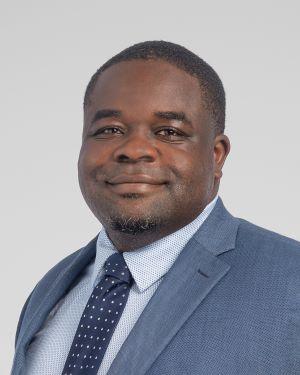
 Olumuyiwa Awoniyi Headshot

Olumuyiwa Awoniyi, MD, PhD

Staff
Email: [email protected]
Location: Cleveland Clinic Main Campus

Research

Innovating Microbial-Based Solutions for Hepatobiliary and Digestive Health

At the forefront of gastroenterology and hepatology, the Olumuyiwa Awoniyi lab endeavors to unlock the microbial mysteries intertwined with primary sclerosing cholangitis (PSC) and inflammatory bowel diseases (IBD). Our goal is to illuminate the microbial-host dialogues and intestinal-hepatobiliary interplay, paving the way for groundbreaking diagnostics and therapies. Fueled by a passion for clinical excellence and scientific discovery, we are committed to refining the management of these challenging conditions, with a vision to attenuate disease progression and enhance patient care. 


Biography

Olu"Muyiwa" Awoniyi, MD/PhD, grew up in Chicago, where Walter Payton was more than a Bears legend. For a generation of kids across the city, "Sweetness" was a model of what discipline and grace could look like. When Payton died in his mid-forties of bile duct cancer, a complication of primary sclerosing cholangitis (PSC), the disease arrived in Awoniyi's world with a name and a face: a relentless, poorly understood illness with no treatment but a liver transplant, and for Payton, not even that. Why medicine still couldn't help patients like Payton became the question that runs through everything Awoniyi does.

That question led through combined MD/PhD training at the University of Washington (PhD in Molecular and Cellular Biology, 2011; MD, 2013), internal medicine residency at the University of Michigan, and fellowships in Gastroenterology & Hepatology and Transplant Hepatology at the University of North Carolina at Chapel Hill. At UNC the science came into focus: in work published as first author in Gut (2023), Awoniyi showed that specific resident gut bacteria and their metabolites can either protect against or aggravate hepatobiliary inflammation and fibrosis in PSC, recasting the fate of the bile ducts as something the microbiome helps decide.

Awoniyi joined Cleveland Clinic in 2022, where he is Staff in the Hepatology Section, and Assistant Professor of Medicine at Case Western Reserve University. He also directs the Awoniyi Lab and a cholestatic liver disease clinic. As first author, he led the development of one of the first preclinical models to reproduce the full arc of human PSC-IBD, the Mdr2/Il10 double-knockout, and paired it with a large patient surveillance cohort to show that transferable, dysbiotic microbiota drive colitis-associated colorectal cancer and a distinctive bile-acid profile. Published in Gut in 2026, it is his second first-author paper in the journal on the microbial roots of cholestatic disease. The lab's program, supported by the American Gastroenterological Association, PSC Partners Seeking a Cure, the Department of Defense, and the NIH, runs from defined bacterial strains and metabolites at the bench to the PSC and PBC clinical trials Awoniyi leads in clinic. He chairs the Education Committee of the Northeast Ohio Liver Alliance and serves on the AGA Hepatobiliary Council and its Center for Gut Microbiome Research & Education.

Awoniyi's work is unfinished by design. A quarter-century after Payton's death, PSC still has no medical therapy that changes its course, and closing that gap is exactly why this lab exists. Trainees here work on questions that reach from a single protective microbe to a patient in clinic, in the conviction that the two belong in the same sentence.


Education & Professional Highlights

Appointed
2022

Education & Fellowships

Fellowship - University of North Carolina
Transplant Hepatology
Chapel Hill, NC USA
2022

Fellowship - University of North Carolina
Gastroenterology/Hepatology
Chapel Hill, NC USA
2021

Residency - The University of Michigan Health System
Internal Medicine
Ann Arbor, MI USA
2016

Internship - The University of Michigan Health System
Internal Medicine
Ann Arbor, MI USA
2014

Medical Education - University of Washington School of Med.
Seattle, WA USA
2013

Graduate School - University of Washington School of Med.
Molecular and Cellular Biology
Seattle, WA USA
2012

Undergraduate - Beloit College
Biochemistry
Beloit, WI USA
2003

Research

Research

Overview

The gut–liver axis in cholestatic disease

The Awoniyi Laboratory studies how the gut microbiome drives, and can restrain, primary sclerosing cholangitis (PSC) and PSC-associated inflammatory bowel disease. We combine gnotobiotic and germ-free mouse models, defined bacterial communities, and microbial and metabolomic profiling to connect specific gut microbes and their metabolites to hepatobiliary and intestinal inflammation and fibrosis. Our aim is to convert these mechanisms into microbe- and metabolite-based diagnostics and therapies for diseases that today have few.


Research Themes

  • Protective and pathogenic resident microbes: We define the gut bacteria that modify cholestatic liver disease; short-chain fatty acid–producing commensals that restrain injury on one hand and translocating pathobionts that worsen it on the other; and the bile-acid and immune pathways through which they act.
  • Microbial and metabolite therapeutics: We test defined strains and microbial metabolites (such as short-chain fatty acids) as interventions to slow biliary inflammation and fibrosis in preclinical PSC models.
  • PSC–IBD and colorectal cancer risk: We built one of the first chronic, spontaneous PSC-IBD models (the Mdr2/Il10 double-knockout) that reproduces colitis, a distinctive bile acid profile, and colitis-associated colorectal cancer alongside biliary disease. We use germ-free and patient-derived microbiota to further dissect. 
  • Bench-to-bedside translation: We pair mechanistic models with large, real-world clinical datasets and clinical trials to test whether microbiome- and metabolite-based strategies change outcomes in PSC and PBC.


Additional Coverage

  • Exploring the Functional Roles of Resident Bacteria in Primary Sclerosing Cholangitis — Cleveland Clinic Consult QD (2025). https://consultqd.clevelandclinic.org/exploring-the-functional-roles-of-resident-bacteria-in-primary-sclerosis-cholangitis

Our Team

Our Team

Publications

Selected Publications

View publications for Olumuyiwa Awoniyi, MD, PhD
(Disclaimer: This search is powered by PubMed, a service of the U.S. National Library of Medicine. PubMed is a third-party website with no affiliation with Cleveland Clinic.)


  1. Dysbiotic microbiota trigger colitis-associated colorectal cancer and imprint a distinctive bile acid profile in a PSC-IBD model. Awoniyi M, El Hag M, Hernandez J, Yang Q, Evans N, Nemet I, Ngo B, Coskuner D, Zhou J, Farmer M, Su L, Zhou H, Roach J, Stappenbeck T, Sartor RB. Gut. 2026. doi:10.1136/gutjnl-2025-336675. Pairs a large human surveillance-colonoscopy cohort (251 PSC-UC vs 8,839 UC-only patients) with the Mdr2/Il10 double-knockout mouse model to show that transferable, dysbiotic microbiota drive colitis-associated colorectal cancer and a distinctive, secondary–bile-acid-depleted profile; germ-free and microbial-transfer experiments separate the microbiome's colitis-promoting effects from its hepatoprotective ones.
  2. Protective and aggressive bacterial subsets and metabolites modify hepatobiliary inflammation and fibrosis in a murine model of PSC. Awoniyi M, Wang J, Ngo B, Meadows V, Tam J, Viswanathan A, Lai Y, Montgomery SA, Farmer M, Kummen M, Thingholm L, Schramm C, Bang C, Franke A, Lu K, Zhou H, Bajaj JS, Hylemon PB, Ting JPY, Popov YV, Hov JR, Francis HL, Sartor RB. Gut. 2023 Apr;72(4):671–685. doi:10.1136/gutjnl-2021-326500.
  3. Giardia antagonizes beneficial functions of indigenous and therapeutic intestinal bacteria during protein deficiency. Bhatt AP, Arnold JW, Awoniyi M, et al. Gut Microbes. 2024;16:2421623.
  4. Protective and aggressive bacterial subsets and metabolites modify hepatobiliary inflammation and fibrosis in a murine model of PSC. Awoniyi M, Wang J, Ngo B, Meadows V, Tam J, Viswanathan A, Lai Y, Montgomery SA, Farmer M, Kummen M, Thingholm L, Schramm C, Bang C, Franke A, Lu K, Zhou H, Bajaj JS, Hylemon PB, Ting JPY, Popov YV, Hov JR, Francis HL, Sartor RB. Gut. 2023 Apr;72(4):671–685. doi:10.1136/gutjnl-2021-326500. PMCID: PMC9751228.
  5. Giardia hinders growth by disrupting nutrient metabolism independent of inflammatory enteropathy. Giallourou N, Arnold J, McQuade ETR, Awoniyi M, et al. Nat Commun. 2023 May 18;14(1):2840. PMCID: PMC10195804.
  6. Rationally designed bacterial consortia to treat chronic immune-mediated colitis and restore intestinal homeostasis. Van der Lelie D, Oka A, Taghavi S, Umeno J, Fan TJ, Merrell KE, Watson SD, Ouellette L, Liu B, Awoniyi M, Lai Y, Chi L, Lu K, Henry CS, Sartor RB. Nat Commun. 2021 May 28;12(1):3105. PMCID: PMC8163890.
  7. Homeostatic regulation of Salmonella-induced mucosal inflammation and injury by IL-23. Awoniyi M, Miller SI, Wilson CB, Hajjar AM, Smith KD. PLoS One. 2012;7(5):e37311. PMCID: PMC3356277.

Careers

Careers

Research Technician Opportunity

Title: Research Technician (Career-Track), Gut–Liver Axis & Microbiome

Overview: The Awoniyi Laboratory in the Department of Inflammation & Immunity at Cleveland Clinic Research seeks a full-time Research Technician for a long-term, career-track position studying how the gut microbiome drives primary sclerosing cholangitis (PSC) and PSC-associated colitis. This is a hands-on, wet-bench role — working with microbes, mice, and molecular assays — and is not a clinical research coordinator position. We invest deeply in our technicians and are looking for someone who wants to grow with the lab over years, not a brief stop before the next step.

Responsibilities: Maintain and breed mouse colonies and collect tissue under approved IACUC protocols; culture and manipulate aerobic and anaerobic bacteria and colonize gnotobiotic mice; perform core molecular assays (DNA/RNA extraction, qPCR, 16S/library prep, histology, immunostaining, flow cytometry); process liver, bile, and intestinal samples; and maintain meticulous records and inventory. Over time, the technician will take on project ownership, train newer members and contribute to publications, with a path toward senior technician and lab manager.

Qualifications: A bachelor's degree in biology, microbiology, biochemistry, immunology or a related field, and a desire to build a long-term research career. At least 1 year of hands-on laboratory experience is preferred; direct experience with molecular techniques, rodent handling and IACUC protocols, or microbial culture — and comfort with sterile or anaerobic technique — is a distinct plus. We train careful, committed people to deepen these skills. What matters most are precision, reliability and genuine care for the animals and the data.

Application: Email a CV and a short note about your interest, and what you are looking for in a long-term role, to [email protected].

Postdoctoral Fellow Opportunity

Title: Postdoctoral Fellow, Host Immunology of the Gut–Liver Axis & Microbial Metabolomics

Overview: The Awoniyi Laboratory studies how the gut microbiome and its metabolites shape host immunity across the gut–liver axis in primary sclerosing cholangitis (PSC) and PSC-associated colitis. We are recruiting a Postdoctoral Fellow to lead a defined line of investigation within our funded program, at the intersection of mucosal and hepatic immunology and microbial metabolomic evaluation. This is a hands-on, wet-bench basic-science position, not a clinical-research or coordinator role, and a PhD (or MD/PhD) in a relevant discipline is required.

Responsibilities: Lead a focused project from hypothesis through publication; apply and extend immunologic approaches, multiparameter flow cytometry and cell sorting, immune-cell isolation and functional assays, immunostaining and gene-expression profiling across intestinal and hepatic compartments; integrate microbial and metabolomic readouts (short-chain fatty acids, bile acids) with host immune phenotypes using germ-free and gnotobiotic models; analyze complex datasets, publish first-author work, contribute to grant applications, and help mentor junior trainees.

Qualifications: A PhD or MD/PhD (completed, or expected within ~6 months) in immunology, microbiology, microbiome science, metabolomics, molecular or cell biology, or a related field, with at least one first-author publication. Hands-on expertise in one or more of: mucosal or hepatic immunology, flow cytometry/cell sorting, mouse models and gnotobiotics, microbial genomics, or metabolomics/mass spectrometry. Scientific rigor, independence, strong communication, and collegiality matter most.

Application: Email a cover letter (research experience and interests), a CV with publications, and contact information for three references to [email protected].


Training at Cleveland Clinic Research

Our education and training programs offer hands-on experience at one of the nationʼs top hospitals. Travel, publish in high impact journals and collaborate with investigators to solve real-world biomedical research questions.

Learn More

About Cleveland Clinic Research

About Us Careers Contact Us Donate People Directory

Science

Clinical & Translational Research Core Services Departments, Centers & Programs Laboratories Research News

Education & Training

Graduate Programs Global Research Education Molecular Medicine PhD Program Postdoctoral Program RISE Program Undergraduate & High School Programs

Site Information & Policies

Privacy Policy Search Site Site Map Social Media Policy

9500 Euclid Avenue, Cleveland, Ohio 44195 | © 2026 Cleveland Clinic Research