12/01/2025
How a decade of patient-reported outcome measures is shaping the future of orthopaedic surgery

The goal of building Cleveland Clinic’s Orthopaedic Outcome Measurement and Evaluation (OME) Program—introduced ten years ago—was to develop a framework that analyzes patient-reported outcome measures (PROMs) and recommends personalized care that will improve outcomes post-surgery. Created by the Department of Orthopaedic Surgery and led by Kurt Spindler, MD, Associate Chief, Clinical Research, the database now includes PROMs from more than 150,000 patients and more than 1 million data points collected across multiple encounters.
These patients underwent elective knee or hip arthroplasty or arthroscopy, among other surgical procedures, across 24 Cleveland Clinic sites in Ohio, Florida and London. That breadth and depth of content make the OME one of the most comprehensive patient databases in the world, both in number of patients and the amount of data collected.
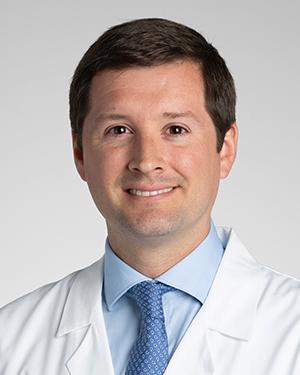
“When the orthopaedics department began collecting patient data back in 2015, we affirmed our dedication to helping patients make their voices heard,” says Nicolas S. Piuzzi, MD, an orthopaedic surgeon; Vice Chair of Research, Department of Orthopaedic Surgery; and co-director of the Musculoskeletal Research Center. Dr. Piuzzi and his research team won the 2025 Kappa Delta Young Investigator Award for their research. “We listen carefully to where they are before surgery, as well as one year after, to ensure that we are providing personalized support and recommendations. Now, with the scale and detail of the OME database, we can better personalize their care and return meaningful, actionable insights to them more quickly.”
Using PROMs to become “partners in care”
PROMs are more than just data points. Collected through questionnaires, most patient-reported outcomes align with the following categories: health-related quality of life, functional status, symptoms and symptom burden, health behaviors and patient experience. The results help physicians learn more about factors influencing health and enable shared decision-making between patient and physician when considering surgery.
Cleveland Clinic physicians also use PROMs to identify patients who might be at a higher risk of complications or dissatisfaction. Some of those results connect to modifiable risk factors like obesity or poor mental health. Another example is smoking, which could cause breathing problems during and after the surgery or potential infection, since smoking reduces blood flow.
This is why it’s important for patients to complete any questionnaires or assessments before appointments—and to answer honestly. Their responses could prompt physicians to bring additional caregivers or resources like physical therapy, smoking cessation programs or mental health counseling into a patient’s care plan with the intent to improve their outcomes.
“PROMs collected at multiple points of our patient encounters, including baseline point of care and one year after surgery, provide a measure of each patient’s whole health directly from their voice,” says Dr. Piuzzi. “The data we are collecting is critical for surgical outcomes.”
Redesigning the future of personalized care
Predictive tools based on the OME can be used by any Cleveland Clinic physician, anywhere, to estimate a patient’s likely recovery after hip replacement or knee replacement surgery and tailor care accordingly. The emphases on team-based care and predictive analytics can help close the projected gap between number of surgeons and higher demand for procedures in the future.
Importantly, the OME infrastructure now enables true multilevel analytics—integrating clinical data, PROMs, imaging, gait and movement metrics, and biospecimens from the Orthopaedic BioRepository. This multiscale dataset is driving advanced patient phenotyping, better risk stratification and more precise disease profiling across the musculoskeletal system. These capabilities directly support Cleveland Clinic’s Center of Excellence in Osteoarthritis and other personalized medicine initiatives, positioning the institution as a global leader in osteoarthritis discovery and innovation.
Dr. Piuzzi believes that the future of orthopaedics will be shaped by advanced data analytics and requires innovative ways to maintain high-quality care while also working efficiently. “The OME database supports that goal by providing a rigorous, cost-effective and scalable system that keeps patients’ voices central,” he says. “This longitudinal resource reinforces our belief that Cleveland Clinic is the leader in personalized medicine and shared decision-making through a PROMs-based approach. I am inspired by what the OME allows us to achieve, as well as the shared dedication of our team members to transform patient care.”