Cleveland Clinic Research Logo
  • About
  • Science
    • Laboratories
    • Office of Research Development
    • Clinical & Translational Research
      Participating in Research
    • Departments
      Biomedical Engineering Cancer Biology Cardiovascular & Metabolic Sciences Florida Research & Innovation Center Genomic Medicine Immunotherapy & Precision Immuno-Oncology
      Infection Biology Inflammation & Immunity Neurosciences Ophthalmic Research Quantitative Health Sciences Translational Hematology & Oncology Research
    • Centers & Programs
      Advanced Musculoskeletal Imaging Angiogenesis Center Cardiovascular Diagnostics & Prevention Computational Life Sciences Consortium for Pain Genitourinary Malignancies Research Genome Center
      Microbiome & Human Health Musculoskeletal Research Northern Ohio Alcohol Center Pathogen & Human Health Research Populations Health Research Quantitative Metabolic Research Therapeutics Discovery
  • Core Services
    • Ohio
      3D Printing Bioimage AnalysisBioRobotics & Mechanical Testing Cell Culture Cleveland Clinic BioRepository Computational Oncology Platform Computing Services Discovery Lab Electron Microscopy Electronics Engineering
      Flow CytometryGenomic Medicine Institute Biorepository Genomics Glassware Histology Hybridoma Immunohistochemistry Immunomonitoring Lab Instrument Refurbishing & Repair Laboratory Diagnostic
      Lerner Research Institute BioRepository Light MicroscopyMechanical Prototyping Microbial Culturing & Engineering Microbial Sequencing & Analytics Resources Media Preparation Molecular Biotechnology Nitinol Polymer Proteomics & Metabolomics SomaScan & Biomarker Therapeutics Discovery
    • Florida
      Bioinformatics & Protein Engineering
      Flow Cytometry
      Imaging
  • Education & Training
    • Graduate Programs Molecular Medicine PhD Program Postdoctoral Program
      Global Research Education Research Intensive Summer Experience (RISE) Undergraduate & High School Programs
  • News
  • Careers
    • Faculty Positions Research Associate & Project Staff Postdoctoral Positions Technical & Administrative Engagement
  • Donate
  • Contact
  • About
  • Science
    • Scientific Programs
    • Laboratories
    • Office of Research Development
    • Clinical & Translational Research
      Participating in Research
    • Departments
      Biomedical Engineering Cancer Biology Cardiovascular & Metabolic Sciences Florida Research & Innovation Center Genomic Medicine Immunotherapy & Precision Immuno-Oncology
      Infection Biology Inflammation & Immunity Neurosciences Ophthalmic Research Quantitative Health Sciences Translational Hematology & Oncology Research
    • Centers & Programs
      Advanced Musculoskeletal Imaging Angiogenesis Center Cardiovascular Diagnostics & Prevention Computational Life Sciences Consortium for Pain Genitourinary Malignancies Research Genome Center
      Microbiome & Human Health Musculoskeletal Research Northern Ohio Alcohol Center Pathogen & Human Health Research Populations Health Research Quantitative Metabolic Research Therapeutics Discovery
  • Core Services
    • All Cores
    • Ohio
      3D Printing Bioimage Analysis BioRobotics & Mechanical Testing Cell Culture Cleveland Clinic BioRepository Computational Oncology Platform Computing Services Discovery Lab Electron Microscopy Electronics Engineering
      Flow CytometryGenomic Medicine Institute BiorepositoryGenomics Glassware Histology Hybridoma Immunohistochemistry Immunomonitoring Lab Instrument Refurbishing & Repair Laboratory Diagnostic
      Lerner Research Institute BioRepository Light MicroscopyMechanical Prototyping Microbial Culturing & Engineering Microbial Sequencing & Analytics Resources Media Preparation Molecular Biotechnology Nitinol Polymer Proteomics SomaScan & Biomarker Therapeutics Discovery
    • Florida
      Bioinformatics & Protein Engineering
      Flow Cytometry
      Imaging
  • Education & Training
    • Research Education & Training Center
    • Graduate Programs Molecular Medicine PhD Program Postdoctoral Program
      Global Research Education Research Intensive Summer Experience (RISE) Undergraduate & High School Programs
  • News
  • Careers
    • Faculty Positions Research Associate & Project Staff Postdoctoral Positions Technical & AdministrativeEngagement
  • Donate
  • Contact
  • Search

Research News

❮News Studying the past of orthopaedic patient-reported outcome measures to improve the future of care

01/16/2026

Studying the past of orthopaedic patient-reported outcome measures to improve the future of care

Two physician-researchers reflect on building a database of patient-reported outcome measures and its contributions to Cleveland Clinic’s standard of care.

A person holding a tablet computer and answering questions on the screen.

For the past decade, Cleveland Clinic orthopaedic surgeons have been collecting patient-reported outcome measures, or PROMs, to act as “partners in care.” Using these responses, they have built Cleveland Clinic’s Orthopaedic Outcome Measurement and Evaluation (OME) program.

By asking patients to answer validated questions before and after surgeries, the OME enables individual surgeons and hospital systems to prospectively examine why outcomes might have differed and make changes as needed. This also shapes how patients choose where they go for care and how outcomes improve over time.

Kurt Spindler, MD, Associate Chief, Clinical Research, and Joseph Iannotti, MD, PhD, Chief Research and Academic Officer of Cleveland Clinic Florida, recounted the origins of and shared growth plans for the OME Program.

Building a system that became the standard of care

When Dr. Iannotti became the chair of orthopaedic surgery in 1999, his strategic plan included the systematic collection of patient-reported clinical and outcome data. These data points were first collected on paper, and one-year follow-up outreach required multiple patient service representatives to call patients. It was difficult to get the system scaled and consistent and ensure the right patient got the right questionnaire at the right time.

“The true innovation to the OME Program happened when Dr. Spindler joined Cleveland Clinic,” says Dr. Iannotti. “Not only did he bring experience collecting PROMs around ACL surgeries through the Multicenter Orthopaedic Outcomes Network (MOON) and a grant funded by the National Institutes of Health, he implemented strategies to create a scalable system. We also improved surgeon participation by stressing accountability. Everyone realized that this data collection was part of the department’s mission and direction.”

Improving that system involved incorporating technology in multiple places in the patient’s journey. Now, patients respond to PROMs questions before their procedure on tablets; data capture tools collect responses that can be viewed and sorted. In addition, a dedicated team of research assistants still follow up by phone one year after surgery. PROMs are also captured before surgery and a year later through patients’ MyChart portals, along with other electronic tools.

Through the eyes of the patient

The OME Program, which includes PROMs from more than 150,000 patients and more than 1 million data points, does more than show surgeons and hospital systems statistics around volume, procedure cost and outcome trends. The information prospectively collected can then be applied to individual patients to help with surgical decision making.

Drs. Spindler and Iannotti believe it illustrates orthopaedic surgery and recovery through the eyes of the patient. By collecting information early on about pain level and modifiable risk factors and measuring activity level and improvement one year after surgery, data points around patients’ lived experiences are used to help improve future outcomes.

“The process of improving outcomes for the next set of patients is all about looking at variations—not only what those variations are, but why they exist,” says Dr. Iannotti. If a variation across surgeon outcomes is identified, the PROMs in the OME database are one resource for determining what that surgeon might be doing differently. Other variation factors could be related to the patient or their treatment.

Both individually and as groups, surgeons regularly review the outcomes data from patient PROMs. The reviews prompt conversation and enhance accountability to ensure that everyone is upholding the objective for Cleveland Clinic to be the best place for care.

Ahead of the curve for making PROMs useful

Data collection for the OME has expanded to include Cleveland Clinic sites in Florida and London. More clinical departments across the enterprise are showing interest in collecting their own PROMs. Outcomes-based evaluation and rankings are becoming more of a norm for payors and rating organizations, which is also prompting others to investigate implementing standardized PROMs.

Most importantly, PROMs help to shape evidence-backed answers to patients who ask, “Where should I go for care?” When it comes to orthopaedic surgery, they want to know who has the best outcomes. And thanks to those ten years of collected PROMs, patients who choose Cleveland Clinic can easily receive personalized recommendations and outcome predictions—while also contributing their own outcome measures along the way.

“Cleveland Clinic analyzes these PROMs at so many intricate levels to ensure optimal surgeon performance and positive patient outcomes,” Dr. Spindler says. “This is the system of care every patient should be in. Why would you go anywhere else?”
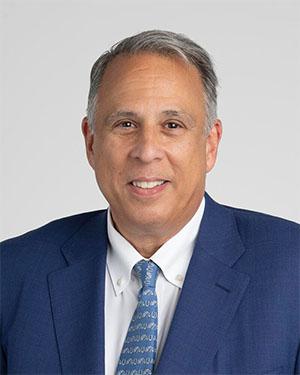
Featured Experts
Joseph Iannotti Headshot
Joseph
Iannotti, MD, PhD
Kurt Spindler Headshot
Kurt
Spindler, MD
News Category
Related News
How a decade of patient-reported outcome measures is shaping the future of orthopaedic surgery Award-winning personalized care for joint replacement research based on decade of dataSinus microbiome may influence surgery response

Research areas

Musculoskeletal Research

Want To Support Ground-Breaking Research at Cleveland Clinic?

Discover how you can help Cleveland Clinic save lives and continue to lead the transformation of healthcare.

Give to Cleveland Clinic

About Cleveland Clinic Research

About Us Careers Contact Us Donate People Directory

Science

Clinical & Translational Research Core Services Departments, Centers & Programs Laboratories Research News

Education & Training

Graduate Programs Global Research Education Molecular Medicine PhD Program Postdoctoral Program RISE Program Undergraduate & High School Programs

Site Information & Policies

Privacy Policy Search Site Site Map Social Media Policy

9500 Euclid Avenue, Cleveland, Ohio 44195 | © 2026 Cleveland Clinic Research