10/01/2024
Researchers explore machine learning algorithms to predict seizure control after brain surgery

More than 20 million people worldwide suffer from uncontrolled seizures caused by Drug Resistant Epilepsy (DRE). Surgical resection of the epileptic brain tissue (resective epilepsy surgery) is the gold standard therapy to permanently stop seizures, but only half of the patients who receive the procedure will be free from seizures in the long-term. Cleveland Clinic researchers are trying to close this gap with a new model published in Nature Scientific Reports, using machine learning to refine their predictions, and target patients with temporal lobe epilepsy, the type of epilepsy most affected by DRE.
DRE negatively impacts quality of life with a 33% injury risk and 1% yearly risk of sudden death. The condition incurs an annual direct cost of $28 billion. Resective epilepsy surgery involves removing a small portion of the brain to end seizures. It is a major procedure that includes risks such as infections or impairments to vision or recall, but these risks are rare and often worth it for those who can be freed from debilitating seizures. Researchers around the world are trying to discover what factors are most likely to predict which patients will remain seizure free after surgery.
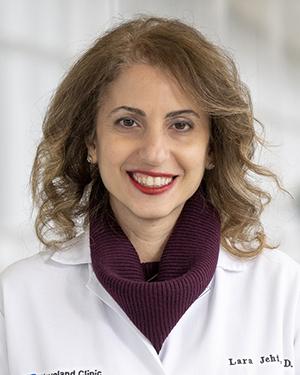
In 2015, the Cleveland Clinic Epilepsy Center created an evidence-based risk prediction model to predict surgical outcomes. The publicly available nomograms, spearheaded by Lara Jehi, MD, an epilepsy specialist, and Cleveland Clinic’s Chief Research and Information Officer and Director of the Center for Computational Life Sciences, uses simple clinical variables that are a standard part of presurgical care and achieves an accuracy rate of around 70%. These online risk calculators are currently used around the world for presurgical decision making and patient counseling.
However, efforts have continued to build more accurate predictive frameworks by incorporating more granular patient-specific data – a task that may be suited to novel artificial intelligence (AI) methods. Success in prediction has been challenging as accuracy even in the best models has generally hovered around 80%, save for some rare exceptions that use data obtained through complex imaging or invasive brain recordings, limiting the potential to translate the research into mainstream clinical practice.
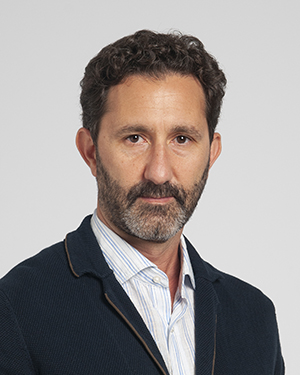
“Undergoing brain surgery for epilepsy is the last option for many patients who suffer from debilitating seizures, so it’s critical to be as informed as possible before the procedure itself,” says Carl Saab, PhD, Founder and Scientific Director of Cleveland Clinic’s Consortium for Pain and an expert in the study of the brain’s electrical activity. “It can be devastating for these patients to face a 50% chance of recurring seizures after they go through all the risks, time and costs of surgery.”
Using machine learning to update clinical prediction methods
As technology evolves, researchers are updating their risk prediction strategies. Shehryar Sheikh, MD, first author and neurosurgery resident physician, had an idea for a risk prediction model using machine learning (ML) and scalp electroencephalography (EEG). Dr. Sheikh says ML is an ideal tool to support physicians because it can recognize patterns in complex datasets that may not be visible to physicians.
Dr. Sheikh collaborated with Dr. Jehi, Dr. Saab, and other researchers in the Cleveland Clinic Epilepsy Center to determine what information to use. The team explored the use of scalp EEG (brain wave recordings obtained through electrodes placed on the patient’s scalp without requiring any invasive or surgical intervention).
“The exciting thing about our model is that scalp EEGs are universal: every single patient who undergoes surgery, no matter where they are in the world, undergoes a scalp EEG,” Dr. Sheikh says. “This means there will be no extra burden to providers and this model can be easily implemented to ensure the right patients are selected for surgery.”
A five-minute window to predict surgical success
To test the accuracy of the model, patients diagnosed with epilepsy who had persistent seizures despite taking two or more anti-seizure medications (i.e. “drug-resistant”) and who underwent evaluation for surgical brain resection at Cleveland Clinic were selected. The Cleveland Clinic Epilepsy Monitoring Unit captured seizure data through video EEGs. Many patients experienced multiple seizures while under observation, so the team randomly selected one seizure from each patient for analysis.
After removing artifacts from the EEG using an ML algorithm and completing additional pre-processing steps, the team ran multiple predictive models to identify which predictive biomarkers from the EEG data were the best indicators of resection success or failure.
The results showed that EEG data taken during a five-minute “peri-ictal” window could reliably predict post-surgery outcomes. In this study, data was collected two minutes before (pre-ictal) and three minutes after (post-ical) the seizure. The AI-based models were able to effectively interpret this data to predict surgical outcomes with over a 90% accuracy rate. Additional clinical variables did not impact the accuracy of the predictions.
The team plans to continue their research to discover why this five-minute peri-ictal window performed as a better indicator than other clinical variables. Dr. Jehi says these findings offer promising news for patients.
“The model uses universally available data so it can be implemented anywhere,” says Dr. Jehi. “Its accuracy surpasses by far the existing AI models that have aimed to predict surgical outcomes, including those that use much more complex inputs from much more invasive and expensive pre-surgical tests.”
The team is looking forward to continuing their research by validating their results in external datasets and in other patient populations.