07/01/2026
Physicians aim to create ‘on-ramp to learning’ to expand researcher pipeline

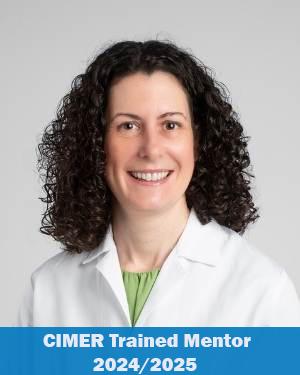
Kayln Howell, MD, has always been interested in research, but she didn’t know a clear pathway toward becoming an investigator. When she began her medical education, she first focused on a clinical track.
She came to Cleveland Clinic as a fellow in the Department of Pulmonary and Critical Care (where she is now the chief fellow) and met Rachel Scheraga, MD, a staff physician in the same department. Dr. Scheraga also runs a lab in the Inflammation & Immunity Department of Cleveland Clinic Research—and became the research mentor Dr. Howell never had.
Now, the two women are beginning an initiative they hope will grow the shrinking population of physicians engaged in research.
Curiosity sparked by case studies
Dr. Howell traces her interest in research to case studies in medical school, particularly involving patients who had complex lung conditions.
“A specific patient I remember had a rapidly progressive interstitial lung disease and required extensive support, including extracorporeal membrane oxygenation, or ECMO. This advanced form of life support that takes over the function of the heart and lungs is a very limited resource in Arkansas, where I’m from,” Dr. Howell says. “This case became a topic of discussion across multiple specialties. That’s where it started for me—wanting to understand why we didn’t know much about that disease.”
She met Dr. Scheraga when they were on a rotation in the medical ICU, and they continue to work together on pulmonary consults. Dr. Howell says that research naturally became part of their conversations along the way—and when this project became known, it was a catalyst for their formal mentor-mentee relationship.
A problem for the pipeline
Even before Dr. Howell arrived at Cleveland Clinic, Dr. Scheraga was aware that the number of physicians engaged in research was declining.
“Some medical students may believe their careers are an either-or scenario if they don’t have mentors or a program that models both, so they think they can be either physicians or researchers,” Dr. Scheraga says. “I believe that MD-only physicians represent a large, underutilized population of people who could (and should) enter research careers.”
Drs. Howell and Scheraga have identified several barriers that may deter medical students and early-career physicians from becoming physician-scientists:
- Limited training around research funding, grant writing and turning clinical observations into research questions.
- Little or no connection with active researchers to see good models.
- An overwhelming clinical training schedule that makes research feel impossible to add.
Their next step, led by Dr. Howell through a project funded by the American Thoracic Society and designed with Dr. Scheraga’s guidance, is to discover how they can boost the pipeline of physician-researchers. They’ll start by looking at the fellows who join programs offered for Pulmonary and Critical Care, as well as Critical Care Medicine at Cleveland Clinic.
Focusing on training transition points
Drs. Howell and Scheraga believe that transitions in training (between medical school and residency, and between residency and fellowship, for example) are major points where interested individuals leave research pathways. Preventing a “leak” in the pipeline requires structured support and mentorship.
Cleveland Clinic now offers new fellows an educational curriculum that covers different types of research and an introduction to funding mechanisms. A hands-on component prompts fellows to develop a research idea, create a project plan, draft a letter of intent and work with a mentor.
“We want to discover how programs like Cleveland Clinic’s can help clinically focused physicians incorporate research into their careers without expecting them to become full-time researchers,” Dr. Howell says. “While similar inquiry projects only rely on quantitative surveys, I’m going to take this research a step further by incorporating interviews with fellows in our program now. I want to find what those surveys miss.”
Dr. Scheraga believes the findings will help Cleveland Clinic strengthen its program and may have global applicability to other clinically oriented fellowship programs.
“This could become a model for similar programs and institutions, and may attract fellows to apply here,” she says. “Ultimately, we believe that when it comes to research considerations before and during medical school, interest alone isn’t enough. Mentorship and support will show that the balance is possible.”