03/03/2026
Glioblastoma researcher shares three career elements that support discovery

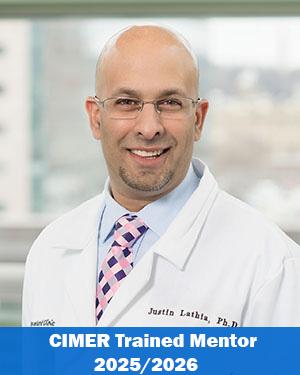
If you ask Justin Lathia, PhD, how grants and awards have helped him advance his groundbreaking research on malignant brain tumors (in particular, glioblastoma), he zooms out to a larger picture. Dr. Lathia recently received the 2025 Discover Award for Research from Ohio Cancer Research. He was also named as a recipient of a 2026 ASPIRE Award from The Mark Foundation for Cancer Research and The Sontag Foundation. In addition to grants and awards, Dr. Lathia attributes his success to the environment he works in and the people who contribute. At Cleveland Clinic, some are in the office next door, but others are across the street or on the other side of an ocean.
Dr. Lathia shared his thoughts on the elements of a supportive research environment and how his colleagues have inspired his research projects.
How have grants and awards supported and advanced your research?
I’m fortunate that my team has received funding from many sources during my career, including grants from the National Institutes of Health and other foundations. In fact, Cleveland Clinic’s own VeloSano program provided the pilot grant for the research that the ASPIRE Award will allow me to continue.
Funding is essential for running a research laboratory, and the grant funding landscape requires persistence and thoughtfulness. But awards and grants can increase access to resources, expand a laboratory team and potentially accelerate research timelines. And in my case, since glioblastoma is the deadliest form of brain cancer, every advance we can make in our research counts.
What other elements have shaped your career?
Making an impact with your work goes beyond grants or awards. The equation also includes publications, your laboratory team’s training and experience, and the translational relevance of your work—its visible connection to human health and what we can do to improve lives.
In addition, I have the opportunity to train the next generation of researchers and help them advance their skills and careers. Some, like Juyeun Lee, PhD, DVM, even start their own research laboratory teams. Dr. Lee will be establishing her team at the Florida Research & Innovation Center this spring.
How has Cleveland Clinic supported your work and helped you succeed?
Three elements come to mind. First, a singular focus on research success. We’re lucky because the majority of our time is dedicated to biomedical research, and the structure of Cleveland Clinic Research allows that.
Second, we’re in an era of team science, and Cleveland Clinic promotes collaboration. We see that evidence in the investments the enterprise has made over the last ten years, including creating centers of excellence and offering seed funding opportunities.
Finally, doing cutting-edge research often requires the involvement of clinical colleagues. That also reinforces our collaborative spirit.
How does access to clinical colleagues add to your research?
The opportunity for physician-scientists to hold dual appointments is beneficial for everyone. They see patients in the main hospital buildings and then come across the street (at Main Campus) to their labs and offices in Cleveland Clinic Research’s space. Scott Cameron, MD, PhD, is right next door to me, which makes it easy to connect and design research together; that research resulted in the ASPIRE Award, in collaboration with Alok A. Khorana, MD. Other physician-scientists are also nearby, or are a video call away at Cleveland Clinic London.
Most importantly, clinical colleagues help PhD-trained scientists who don’t work directly with patients better understand the diseases we’re studying. I see glioblastoma through models in my lab, but clinical colleagues at the Rose Ella Burkhardt Brain Tumor and Neuro-Oncology Center—especially Andrew Dhawan, MD, DPhil; Matthew Grabowski, MD; and David Peereboom, MD—add the dimension of what matters most to patients as we continue our research and look for treatments.
Beyond your research, your impact includes mentoring your lab team and organizing programs for faculty development. How does this dynamic work represent Cleveland Clinic?
I am so lucky to work with so many different groups of people—doctoral students in the Molecular Medicine PhD program at the Case Comprehensive Cancer Center, research students and fellows on my lab team, and colleagues across Cleveland Clinic Research. This is what Cleveland Clinic is good at: providing opportunities for people to work together across departments and specialties with a shared goal of researching for health.