Cleveland Clinic Research Logo
  • About
  • Science
    • Laboratories
    • Office of Research Development
    • Clinical & Translational Research
      Participating in Research
    • Departments
      Biomedical Engineering Cancer Biology Cardiovascular & Metabolic Sciences Florida Research & Innovation Center Genomic Medicine Immunotherapy & Precision Immuno-Oncology
      Infection Biology Inflammation & Immunity Neurosciences Ophthalmic Research Quantitative Health Sciences Translational Hematology & Oncology Research
    • Centers & Programs
      Advanced Musculoskeletal Imaging Angiogenesis Center Cardiovascular Diagnostics & Prevention Computational Life Sciences Consortium for Pain Genitourinary Malignancies Research Genome Center
      Microbiome & Human Health Musculoskeletal Research Northern Ohio Alcohol Center Pathogen & Human Health Research Populations Health Research Quantitative Metabolic Research Therapeutics Discovery
  • Core Services
    • Ohio
      3D Printing Bioimage AnalysisBioRobotics & Mechanical Testing Cell Culture Cleveland Clinic BioRepository Computational Oncology Platform Computing Services Discovery Lab Electron Microscopy Electronics Engineering
      Flow CytometryGenomic Medicine Institute Biorepository Genomics Glassware Histology Hybridoma Immunohistochemistry Immunomonitoring Lab Instrument Refurbishing & Repair Laboratory Diagnostic
      Lerner Research Institute BioRepository Light MicroscopyMechanical Prototyping Microbial Culturing & Engineering Microbial Sequencing & Analytics Resources Media Preparation Molecular Biotechnology Nitinol Polymer Proteomics & Metabolomics SomaScan & Biomarker Therapeutics Discovery
    • Florida
      Bioinformatics & Protein Engineering
      Flow Cytometry
      Imaging
  • Education & Training
    • Graduate Programs Molecular Medicine PhD Program Postdoctoral Program
      Global Research Education Research Intensive Summer Experience (RISE) Undergraduate & High School Programs
  • News
  • Careers
    • Faculty Positions Research Associate & Project Staff Postdoctoral Positions Technical & Administrative Engagement
  • Donate
  • Contact
  • About
  • Science
    • Scientific Programs
    • Laboratories
    • Office of Research Development
    • Clinical & Translational Research
      Participating in Research
    • Departments
      Biomedical Engineering Cancer Biology Cardiovascular & Metabolic Sciences Florida Research & Innovation Center Genomic Medicine Immunotherapy & Precision Immuno-Oncology
      Infection Biology Inflammation & Immunity Neurosciences Ophthalmic Research Quantitative Health Sciences Translational Hematology & Oncology Research
    • Centers & Programs
      Advanced Musculoskeletal Imaging Angiogenesis Center Cardiovascular Diagnostics & Prevention Computational Life Sciences Consortium for Pain Genitourinary Malignancies Research Genome Center
      Microbiome & Human Health Musculoskeletal Research Northern Ohio Alcohol Center Pathogen & Human Health Research Populations Health Research Quantitative Metabolic Research Therapeutics Discovery
  • Core Services
    • All Cores
    • Ohio
      3D Printing Bioimage Analysis BioRobotics & Mechanical Testing Cell Culture Cleveland Clinic BioRepository Computational Oncology Platform Computing Services Discovery Lab Electron Microscopy Electronics Engineering
      Flow CytometryGenomic Medicine Institute BiorepositoryGenomics Glassware Histology Hybridoma Immunohistochemistry Immunomonitoring Lab Instrument Refurbishing & Repair Laboratory Diagnostic
      Lerner Research Institute BioRepository Light MicroscopyMechanical Prototyping Microbial Culturing & Engineering Microbial Sequencing & Analytics Resources Media Preparation Molecular Biotechnology Nitinol Polymer Proteomics SomaScan & Biomarker Therapeutics Discovery
    • Florida
      Bioinformatics & Protein Engineering
      Flow Cytometry
      Imaging
  • Education & Training
    • Research Education & Training Center
    • Graduate Programs Molecular Medicine PhD Program Postdoctoral Program
      Global Research Education Research Intensive Summer Experience (RISE) Undergraduate & High School Programs
  • News
  • Careers
    • Faculty Positions Research Associate & Project Staff Postdoctoral Positions Technical & AdministrativeEngagement
  • Donate
  • Contact
  • Search

Research News

❮News New Research Published in Cancer Discovery Identifies New Drug Target for Treating Glioblastoma

08/21/2019

New Research Published in Cancer Discovery Identifies New Drug Target for Treating Glioblastoma


A new international study co-led by Cleveland Clinic has identified a new drug target for treating glioblastoma. This target is part of a never-before defined cellular pathway found to contribute to the spread and proliferation of a dangerous subset of cancer cells, called glioma stem cells.

While previous research has shown that a protein called FGF2 (fibroblast growth factor 2), when activated ("turned on"), contributes to glioma stem cell self-renewal and tumor growth, it was not understood how. This study, co-led by Justin Lathia, PhD, Department of Cardiovascular & Metabolic Sciences, Lerner Research Institute, identifies FGF2 as an important intermediary in a multi-step, pro-cancer signaling loop and suggests that "turning off" FGF2 may halt the growth and spread of glioblastoma.

Published in Cancer Discovery, this study is the first to identify FGF2 as a novel druggable target for glioblastoma, the most common primary malignant brain tumor. With standard treatment, the median survival for adults with glioblastoma is only between 11 and 15 months, and recurrence is very common. New therapies are desperately needed.

Extracellular matrix (ECM) is a network of molecules that-like brick and mortar-help to hold and anchor nearby cells together. The research team found that a protein called ADAMDEC1 (a disintegrin and metalloproteinase domain-like protein decysin 1), which is secreted by glioma stem cells, breaks down ECM. In ECM's absence, cancer cells are able to access key nutrients for their growth that otherwise would not be available.

One of these nutrients is FGF2. The team of researchers showed that ADAMDEC1 activates FGF2, which is found within the tumor microenvironment. Like a lock and key, the "turned on" FGF2 selectively binds to and activates a receptor found on the surface of glioma stem cells, called FGFR1 (fibroblast growth factor receptor 1).

FGFR1, mediated through a few additional signaling cascades, plays two important roles in driving glioblastoma. First, it helps to mediate the hallmark pro-cancer characteristics of glioma stem cells, including their ability to self-renew and spread. Additionally, FGFR1 signaling ultimately induces the expression of ADAMDEC1, which sends this whole cellular feedback loop into motion again.

"These findings are exciting because they put forth a new paradigm for glioma stem cell regulation," said Dr. Lathia. "This pathway shows that glioma stem cells' ability to access key nutrients in their surrounding microenvironment, by way of ADAMDEC1, is integral for their maintenance and spread. Finding a way to interrupt this feedback loop will be important for treating glioblastoma."

While additional research is necessary, this study suggests that therapeutically targeting FGF2 may be the key to interrupting this cancer-driving loop.

Dr. Lathia is co-director of the Cleveland Clinic Center for Excellence in Brain Tumor Research and Therapeutic Development, which brings together traditional lab scientists with front-line physicians to advance care for glioblastoma patients. The Center for Excellence has helped propel Cleveland Clinic as a leader in glioblastoma research, as Cleveland Clinic has one of the highest number of active glioblastoma clinical trials in the country.

Dr. Lathia's collaborators on this study include co-leader Dr. Florian Siebzehnrubl from the European Cancer Stem Cell Research Institute in Cardiff, Wales; Drs. Karl Holmberg and Karin Forsberg-Nilsson from Uppsala University, Sweden; Dr. Giorgio Colombo from the University of Pavia, Italy; Dr. Giulia Taraboletti from Istituto di Ricerche Farmacologiche, Italy; and Dr. Thomas McIntyre from Cleveland Clinic Lerner Research Institute. Dr. McIntyre previously discovered, in the context of head and neck tumors, the role ADAMDEC1 plays in driving cancer.

Funding from the Lisa Dean Moseley Foundation to Dr. Lathia helped support this study.
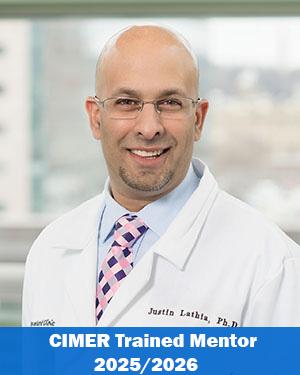
Featured Experts
Justin Lathia Headshot
Justin
Lathia, PhD
News Category
news
Related News
Connecting the Dots Between Diet, the Gut Microbiome and CancerA compound in elderberries may help gut microbes fight insulin resistanceProcessing flavonoids, nutritional components of “superfoods,” requires specific gut bacteria

Research areas

Cardiovascular & Metabolic Sciences

Want To Support Ground-Breaking Research at Cleveland Clinic?

Discover how you can help Cleveland Clinic save lives and continue to lead the transformation of healthcare.

Give to Cleveland Clinic

About Cleveland Clinic Research

About Us Careers Contact Us Donate People Directory

Science

Clinical & Translational Research Core Services Departments, Centers & Programs Laboratories Research News

Education & Training

Graduate Programs Global Research Education Molecular Medicine PhD Program Postdoctoral Program RISE Program Undergraduate & High School Programs

Site Information & Policies

Privacy Policy Search Site Site Map Social Media Policy

9500 Euclid Avenue, Cleveland, Ohio 44195 | © 2025 Cleveland Clinic Research