04/23/2026
How Cleveland Clinic helped this cancer researcher find her niche, one mentor at a time

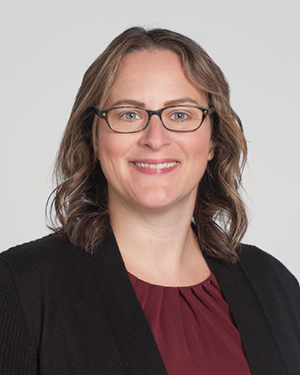
From her early days as an undergraduate researcher to her current postdoctoral work in the laboratory of Natalie Silver, MD, Kala Mahen, PhD, came of age as a scientist within Cleveland Clinic’s research community. She was guided by mentors who pushed her thinking, opened doors and helped her realize where she could make a difference.
Dr. Mahen recently earned a competitive NIH T32 fellowship to further support her training as an independent scientist. The award is a milestone shaped by years of hands‑on research experience and mentorship across multiple Cleveland Clinic Research laboratories.
In the conversation below, she discusses her training journey, the mentors who influenced her development and the personal motivation driving her commitment to improving outcomes for patients with head and neck cancer. Her path was shaped by people who believed in her potential and a community that helped her pursue it.
What first got you interested in research?
I started here at Cleveland Clinic as an undergraduate research student in 2018, working with Steve Dombrowski, PhD, on pediatric brain tumor research. After I graduated, I came back as a technician in George Stark, PhD’s, lab for a gap year before what I thought would be medical school. Once you work under George Stark, you don’t ever want to leave research. He really taught me how to love it and how to think critically, and that changed my whole direction.
My direction changed again when my dad passed away from head and neck cancer in December 2021. That loss motivates everything I do now. I want to understand why some people respond to treatment and some don’t. Once we figure that out, we can tailor treatment better and improve survival.
You’ve trained at Cleveland Clinic in several different labs. Can you walk through that path?
I joined the Molecular Medicine PhD program in 2021. During my PhD, I worked under Mark Brown, PhD, on projects related to the circadian rhythm metabolism, which had a strong focus on the gut microbiome. At the same time, I continued working on PALA (N-phosphonacetyl-L-aspartate) with Dr. Stark. Eventually I combined the cancer biology from that project and my new knowledge of the microbiome from the Brown Lab for a VeloSano grant. That funding meant a lot to me, because I ride every year with my husband in honor of my dad.
After graduating in 2025, I joined Dr. Natalie Silver’s lab because I wanted to connect all those experiences and move into head and neck cancer.
What kept you at Cleveland Clinic this whole time?
I’ve stayed because it’s been a great place for me! I’ve made a lot of wonderful connections. I know who to go to when I have questions, and people know they can come to me. And I’ve had amazing mentors here. I would love to stay at Cleveland Clinic and eventually become a PI if I can.
Congratulations again on receiving the T32! What is the focus of your current research?
Thanks! When I joined Dr. Silver’s lab, I told her my goal was to fund myself and be as independent as I can. Applying for the T32 was part of that. The program is very focused on bench‑to‑bedside—how what we do in the lab can eventually affect patient care—and that matches exactly what we do in the lab.
We’re looking at how the bacteria in a tumor influence the recruitment of immunosuppressive cells in head and neck cancer. This is the project that my T32 is funding. It fits well with the Silver Lab since we have lab models and an active clinical trial, so we can think about what’s happening in both settings.
How did your past research experiences shape your current project?
Everything ended up tying together. In Dr. Stark’s lab, I learned how to think like a scientist, and I worked on cancer therapies throughout my PhD with Dr. Brown's permission. In the Brown Lab, I worked on circadian metabolism and microbiome projects, and that provided me with a whole new perspective.
What has it been like working with a surgeon as your PI?
It’s been wonderful. Dr. Silver always thinks of the patient first—what drugs patients are on, what they’re going through, what might affect what we’re seeing. I bring the basic science perspective: experimental design, controls, lab work. We look at things differently, and that helps us come together with a more well‑rounded idea. It’s very symbiotic.
Looking ahead, what impact do you hope your work will have?
If I can stop one daughter from losing her dad like I did, that would mean everything to me.