03/26/2026
Meet a medical student whose research advances connections between carpal tunnel and heart disease

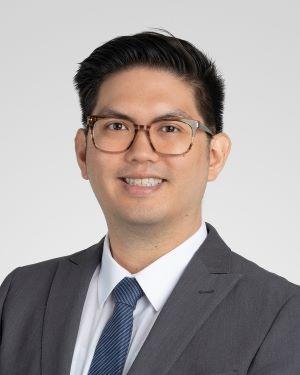
Medical student Fayez Kanj came to Case Western Reserve University knowing he wanted hands‑on research experience that most medical programs don’t require. His interest in cardiology made Cleveland Clinic—one of the premier heart institutes in the world for cardiovascular treatment and discovery—the first place he looked.
In Christopher Nguyen, PhD’s cardiac imaging laboratory, Kanj worked on a project that established diffusion tensor MRI as a tool for detecting early cardiac amyloidosis. After a years-long process of experimental design, data collection and peer review, Kanj’s paper is now published.
He focused on a high‑risk patient group whose carpal tunnel surgery unexpectedly revealed a buildup of proteins called amyloids in their wrists. This group highlights the emerging connection between carpal tunnel syndrome and heart disease: deadly amyloid accumulation in the heart may be preceded by a buildup in the carpal tunnel. In this Q&A, Kanj reflects on the project and the immersive research experience he gained at Cleveland Clinic.
What initially sparked your interest in research?
I’ve always loved biology, but my interest in research grew during and after college. I studied computational and systems biology at UCLA, which exposed me to a lot of scientific literature and analytical thinking. Around the same time, my family went through some major health issues, and I saw how much their doctors relied on research to guide decisions.
That combination made me want to understand how new medical knowledge is created, and I wanted to learn how to participate in that process, not just read about it.
So, what is the connection between carpal tunnel syndrome and heart disease?
Sometimes during carpal tunnel surgery, surgeons discover amyloid deposits in the wrist tissue. That can be an early warning sign for transthyretin amyloidosis—a systemic condition that, over time, can involve the heart and cause cardiac amyloidosis.
Not every carpal tunnel patient is at risk, but in patients with amyloid found in the wrist, the risk of eventual cardiac involvement is significantly higher. Right now, the gold standard for confirming cardiac amyloidosis is a heart biopsy. That’s highly invasive and not something most patients are willing to undergo, especially if their only symptom so far was carpal tunnel. So most caregivers will do something called a pyrophosphate scintigraphy scan, but that exposes patients to radiation. There’s a huge gap in care. We need a way to identify who’s actually at risk.
Our goal was to see whether diffusion tensor imaging could detect early heart changes even when standard tests were normal.
What did your day‑to‑day work involve?
It was extremely hands‑on, especially for a first‑year medical student. I identified and reached out to patients directly. The technologists performed the MRIs, but after that, I handled everything: pulling and processing the imaging data, performing the analysis, generating the figures and writing the manuscript.
What did you find the most meaningful about interacting with patients during the study?
It made the research feel very personal. Many of the participants were older adults, and they were incredibly willing to volunteer for something that might help future patients. Some even asked for the final paper.
It also showed me how variable the disease can be. Some people had only carpal tunnel, while others had multiple medical conditions. Every patient added a new layer to my understanding.
How does this project fit into your path as you approach residency?
I learned how to design a study, work with human subjects, analyze MRI data and structure a scientific argument. I also gained a deeper appreciation for the level of rigor needed to support even a single new idea in medicine. This project took two years to complete, and another to publish.
I’m finishing my third year now and will apply for residency in September. I’m interested in emergency medicine and cardiology. Both rely heavily on understanding and applying evidence thoughtfully in clinical care.
Who were the key mentors who supported you?
Cleveland Clinic gave me a wonderful support network to conduct my research. Dr. Nguyen guided the scientific direction and mentored me throughout the process. Danielle Kara, our MRI scientist and second author, taught me the imaging principles, helped me learn the analysis tools and worked closely with me on the manuscript.
Emma Wexler, our research coordinator, helped with patient recruitment and scheduling. Finally, Mazen Hanna, MD, provided the patient database and contributed clinical expertise on cardiac amyloidosis.
What do you hope people take away from your work?
That the connection between carpal tunnel and heart disease is an area worth paying attention to, and that early, noninvasive imaging like diffusion tensor MRI might eventually help identify high‑risk patients sooner.
And personally, I want people to know that medical students can make meaningful contributions in research when they’re trusted with responsibility and supported by strong mentors.