06/18/2026
New labs mark growth for Cleveland Clinic's Global Center for Pathogen & Human Health Research

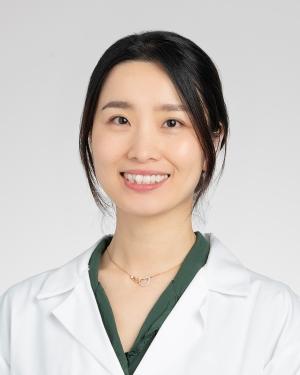
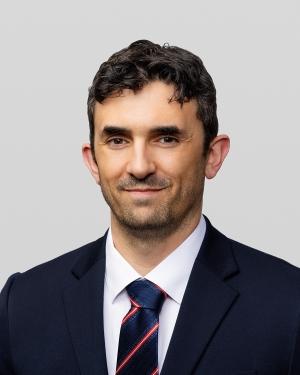
Cleveland Clinic’s Florida Research & Innovation Center (FRIC) is welcoming two new laboratories. Each principal investigator— Juyeun Lee, DVM, PhD, and Michael Nicosia, PhD—is building their research program on discoveries that began as early-stage projects supported by the Sheikha Fatima bint Mubarak Global Center for Pathogen & Human Health Research (the "Pathogen Center") Young Investigator Awards.
These labs represent a new phase of growth for the Pathogen Center. From its birth, the Pathogen Center brought established labs together to hit the ground running as a command center that addresses current and future global health threats. The Pathogen Center quickly introduced programs like the Young Investigator Awards to drive workforce development and support early-stage ideas.
That foundation has matured into an infrastructure of discovery that generates independent research programs and top-tier talent.
“Funds provided by the Pathogen Center are critically important for our mission of advancing novel immune-based strategies,” says Michaela Gack, PhD, Scientific Director of FRIC. “These new laboratories are exactly what that investment was meant to enable.”
From early support to independent investigators
The two new laboratories are led by Drs. Lee and Nicosia, who developed their research programs as trainees under the mentorship of Justin Lathia, PhD, and Anna Valujskikh, PhD, respectively. The couple, who are married, bring complementary expertise in immunology to FRIC.
The financial support from the pairs’ Young Investigator Awards enabled them to explore risky ideas.
“Science is really just exploring your creativity to solve problems that haven’t been solved before," Dr. Nicosia says. "My award let me explore that creativity in ways I otherwise wouldn’t have been able to with traditional funding. I took all kinds of unconventional approaches to try my ideas out."
Dr. Nicosia discovered key inhibitory immune pathways in organ transplantation, which earned him an NIH R01 grant. This early milestone will let the Nicosia Lab begin work at full scale to reduce transplant rejection while minimizing side effects of immunosuppression.
Dr. Lee, meanwhile, used her funds to support research that challenges a widely accepted theory of how biological sex hormones influence glioblastoma.
“I had to repeat the experiment quite a lot to make sure that my results were real at first, because they were the opposite of what we expected,” she says. “My philanthropic support helped cover those additional experiments and strengthen my results.”
Dr. Lee also used some of her award to hire a technician during her last year in the Lathia Lab. The extra help let her generate preliminary data for her lab, which aims to develop personalized, sex-informed cancer treatments.
“The Pathogen Center was created to identify exceptional young scientists early and support ambitious ideas. The recruitment of Drs. Lee and Nicosia to FRIC reflects how that vision is becoming reality,” says Jae Jung, PhD, Director of the Pathogen Center. “What began as seed funding is now growing into a strong pipeline of discovery, talent and translational research at Cleveland Clinic.”