Cleveland Clinic Research Logo
  • About
  • Science
    • Laboratories
    • Office of Research Development
    • Clinical & Translational Research
      Participating in Research
    • Departments
      Biomedical Engineering Cancer Biology Cardiovascular & Metabolic Sciences Florida Research & Innovation Center Genomic Medicine Immunotherapy & Precision Immuno-Oncology
      Infection Biology Inflammation & Immunity Neurosciences Ophthalmic Research Quantitative Health Sciences Translational Hematology & Oncology Research
    • Centers & Programs
      Advanced Musculoskeletal Imaging Angiogenesis Center Cardiovascular Diagnostics & Prevention Computational Life Sciences Consortium for Pain Genitourinary Malignancies Research Genome Center
      Microbiome & Human Health Musculoskeletal Research Northern Ohio Alcohol Center Pathogen & Human Health Research Populations Health Research Quantitative Metabolic Research Therapeutics Discovery
  • Core Services
    • Ohio
      3D Printing Bioimage AnalysisBioRobotics & Mechanical Testing Cell Culture Cleveland Clinic BioRepository Computational Oncology Platform Computing Services Discovery Lab Electron Microscopy Electronics Engineering
      Flow CytometryGenomic Medicine Institute Biorepository Genomics Glassware Histology Hybridoma Immunohistochemistry Immunomonitoring Lab Instrument Refurbishing & Repair Laboratory Diagnostic
      Lerner Research Institute BioRepository Light MicroscopyMechanical Prototyping Microbial Culturing & Engineering Microbial Sequencing & Analytics Resources Media Preparation Molecular Biotechnology Nitinol Polymer Proteomics & Metabolomics SomaScan & Biomarker Therapeutics Discovery
    • Florida
      Bioinformatics & Protein Engineering
      Flow Cytometry
      Imaging
  • Education & Training
    • Graduate Programs Molecular Medicine PhD Program Postdoctoral Program
      Global Research Education Research Intensive Summer Experience (RISE) Undergraduate & High School Programs
  • News
  • Careers
    • Faculty Positions Research Associate & Project Staff Postdoctoral Positions Technical & Administrative Engagement
  • Donate
  • Contact
  • About
  • Science
    • Scientific Programs
    • Laboratories
    • Office of Research Development
    • Clinical & Translational Research
      Participating in Research
    • Departments
      Biomedical Engineering Cancer Biology Cardiovascular & Metabolic Sciences Florida Research & Innovation Center Genomic Medicine Immunotherapy & Precision Immuno-Oncology
      Infection Biology Inflammation & Immunity Neurosciences Ophthalmic Research Quantitative Health Sciences Translational Hematology & Oncology Research
    • Centers & Programs
      Advanced Musculoskeletal Imaging Angiogenesis Center Cardiovascular Diagnostics & Prevention Computational Life Sciences Consortium for Pain Genitourinary Malignancies Research Genome Center
      Microbiome & Human Health Musculoskeletal Research Northern Ohio Alcohol Center Pathogen & Human Health Research Populations Health Research Quantitative Metabolic Research Therapeutics Discovery
  • Core Services
    • All Cores
    • Ohio
      3D Printing Bioimage Analysis BioRobotics & Mechanical Testing Cell Culture Cleveland Clinic BioRepository Computational Oncology Platform Computing Services Discovery Lab Electron Microscopy Electronics Engineering
      Flow CytometryGenomic Medicine Institute BiorepositoryGenomics Glassware Histology Hybridoma Immunohistochemistry Immunomonitoring Lab Instrument Refurbishing & Repair Laboratory Diagnostic
      Lerner Research Institute BioRepository Light MicroscopyMechanical Prototyping Microbial Culturing & Engineering Microbial Sequencing & Analytics Resources Media Preparation Molecular Biotechnology Nitinol Polymer Proteomics SomaScan & Biomarker Therapeutics Discovery
    • Florida
      Bioinformatics & Protein Engineering
      Flow Cytometry
      Imaging
  • Education & Training
    • Research Education & Training Center
    • Graduate Programs Molecular Medicine PhD Program Postdoctoral Program
      Global Research Education Research Intensive Summer Experience (RISE) Undergraduate & High School Programs
  • News
  • Careers
    • Faculty Positions Research Associate & Project Staff Postdoctoral Positions Technical & AdministrativeEngagement
  • Donate
  • Contact
  • Search

Research News

❮News Two scientists’ creative research explores how to detect liver cancer early

12/12/2025

Two scientists’ creative research explores how to detect liver cancer early

The new biomarkers may change what we know about how to detect liver cancer early and improve screening.

Courtney (left) and Noah (Right) wear white coats and stand in a research lab, smiling at the camera
Left: Courtney Hershberger, PhD. Right: Noah Daniels, PhD

Cleveland Clinic researchers Courtney Hershberger, PhD, and Noah Daniels, PhD, have discovered biomarkers with potential to dramatically improve early liver cancer detection. These biomarkers were found by using a different approach to analyzing existing data from patient blood samples. They diagnosed early-stage liver cancer about twice as accurately as current tests, demonstrating potential to improve liver cancer screening.  

Current liver cancer screenings measure how much Alpha-Fetoprotein (AFP) protein we have in our blood. AFP tests, when elevated, serve as a good indicator that someone has liver cancer. However, about half of people with liver cancer do not have elevated AFP, which results in later diagnoses. This is critical as liver cancer is highly treatable in its early stages but becomes extremely difficult to manage later on. 

Drs. Hershberger and Daniels studied a process most researchers overlook called alternative splicing. Few researchers explore this process's role in disease because it requires deep, specialized knowledge. Drs. Hershberger and Daniels saw an opportunity and took the risk. Their previous training in the laboratory of splicing expert Richard Padgett, PhD, gave them the expertise they needed. 

What is alternative splicing? 

Alternative splicing describes how our cells cut and process RNA from one gene to make multiple versions of a protein. Depending on how those pieces are combined, one gene can produce many variants of proteins.  

To illustrate, imagine a gene whose DNA sequence says NXXOTXXEXXBOXOXK, which makes a protein called NOTEBOOK. Alternative splicing could remove the X’s (and even other letters) to make words like NOTE, BOOK, TOOK and TO. It can also create nonsense like XXB or TEB.  

Different cells choose which sequences they need and break down the ones they don't. During disease, these patterns can shift. For example, a liver cell that normally makes the TO protein might start making BOOK instead, which can lead to excessive growth and potentially drive cancer. 

Looking at alternative splicing may improve early liver cancer screening 

In her study, Dr. Hershberger identified splicing patterns in the blood that could distinguish between individuals with liver cancer and those with other liver diseases, like cirrhosis. The patterns came from the patients’ tumors, which processed their genes differently and shed RNA into the bloodstream. Meanwhile, Dr. Daniels found that healthy white blood cells changed their splicing patterns in response to cancer.   

Adding Dr. Hershberger's splicing biomarkers to the standard AFP diagnostic test significantly improved early liver cancer detection, catching about 50% more cases. Dr. Daniel’s study identified splicing markers in white blood cells that identified nearly all (93%) liver cancer cases, and 81% of early cases – a dramatic increase from the 50% success rate of AFP tests. 

To find these alternative splicing patterns, Drs. Daniels and Hershberger used artificial intelligence to analyze splicing patterns in hundreds of publicly available RNA sequencing results from tumors and blood samples collected over the past several years.  

The duo’s respective findings were published in Hepatology Communications and Biochemistry and Biophysics Reports. The next step is to validate these biomarkers before use in patient care. Drs. Hershberger and Daniels credit their success to strong support from their mentor, Daniel Rotroff, PhD, who encouraged them to pursue high-risk ideas, and to the financial support provided by VeloSano, Cleveland Clinic's cancer research fundraising movement. VeloSano supports groundbreaking research by directing funds to the highest priorities—accelerating the delivery of lifesaving treatments to patients as swiftly as possible.

“I never would have thought to do this if Courtney and Noah hadn’t come to me with the idea because I didn’t know much about alternative splicing,” says Dr. Rotroff, who is chair of the Department of Quantitative Health Sciences and director of the Center for Quantitative Metabolic Research. “I told them, ‘You both are experts in this field. Go for it, and you’ll be my mentors instead of my mentees.’” 
Featured Experts
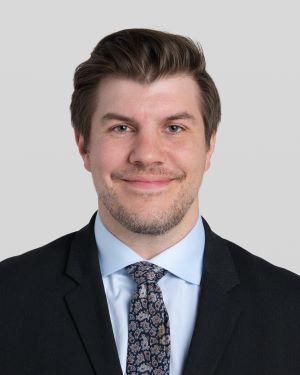
Daniel  Rotroff Headshot
Daniel
Rotroff, PhD
News Category
Big data
Related News
Connecting the Dots Between Diet, the Gut Microbiome and CancerA compound in elderberries may help gut microbes fight insulin resistanceProcessing flavonoids, nutritional components of “superfoods,” requires specific gut bacteria

Research areas

Quantitative Health Sciences

Want To Support Ground-Breaking Research at Cleveland Clinic?

Discover how you can help Cleveland Clinic save lives and continue to lead the transformation of healthcare.

Give to Cleveland Clinic

About Cleveland Clinic Research

About Us Careers Contact Us Donate People Directory

Science

Clinical & Translational Research Core Services Departments, Centers & Programs Laboratories Research News

Education & Training

Graduate Programs Global Research Education Molecular Medicine PhD Program Postdoctoral Program RISE Program Undergraduate & High School Programs

Site Information & Policies

Privacy Policy Search Site Site Map Social Media Policy

9500 Euclid Avenue, Cleveland, Ohio 44195 | © 2025 Cleveland Clinic Research