02/23/2026
Heart Month 2026: Living our mission by 'researching for health'

February’s renewed focus on heart health is a reminder of the mission Cleveland Clinic researchers and clinician scientists live all year. In the form of personal stories, heart health reminders and heart-friendly diets, this month’s conversations show why consistent, rigorous research is so important.
Investigators across Cleveland Clinic Research examine data collected in the past to reflect on what it shows about patient populations. They explore the heart’s structure and function to discover new methods of treatment. Encouraged by the organization’s approach to “team science,” many researchers work across departments to learn how laboratory results translate to patient experiences, and how heart conditions may impact other organs in the body, including the kidneys and the brain.
A few of our researchers provide an update on what their teams are working on, why they are proud of being at Cleveland Clinic and how to sort through all the health-focused information out there.
Chasing what we need to know

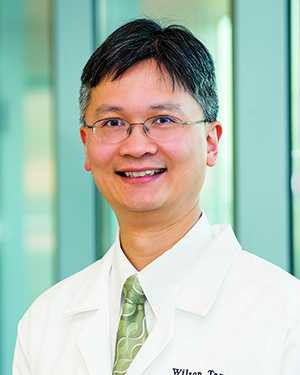
Wai Hong Wilson Tang, MD, never planned to lead a laboratory in addition to treating patients with heart failure and cardiomyopathy. He didn’t even plan to remain so connected to research after medical school. His drive to find answers to unanswered clinical questions is what led him back to research. This sense of persistence and curiosity is also what he encourages his team members and Cleveland Clinic Lerner College of Medicine students to retain.
Dr. Tang’s lab focuses on advancing the understanding of cardiovascular disease as a dynamic, multi-organ process. While his team’s work is important for the future of patient care, Dr. Tang believes that “research” is only a name until there is a true purpose behind it.
“For some physicians, research isn’t what you train to do—it’s what you realize you need to learn along the way to answer the questions that come up,” he says. “And in a time where there is so much data out there for people to read about heart health, like blood pressure numbers and diet regulation, the role of the researcher is even more important.”
Hoping to rescue heart failure

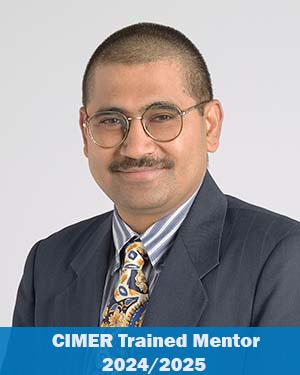
Sathyamangla Prasad, PhD, knows that heart failure cannot be reversed, and that current treatments for it can only delay the process. His lab studies inhibited (or blocked) signaling pathways in heart failure, in contrast to the forward-focused pathways that many other researchers study. Current treatments are based on what pathways are activated during heart disease and failure. By taking this unique approach, Dr. Prasad’s team is gathering information to shape entirely new treatment approaches. Dr. Prasad’s laboratory is one of only two in the world studying these pathways—and the teams are collaborating to amplify and accelerate this research.
The resources available to researchers at Cleveland Clinic, including human samples collected by the Genomic Medicine BioRepository, enable cutting-edge research, Dr. Prasad says.
“What we do in the lab has important implications for patient care. The collegiality we show each other across departments as we collaborate sets us apart,” Dr. Prasad adds. “Research is half of the circle when it comes to advancements in heart care, and developing treatments is the other half—and at Cleveland Clinic, we can do both.”
Collaborative research to benefit patients’ lives

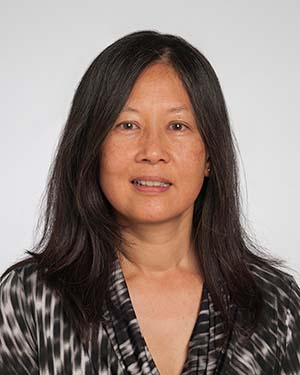
The work that Mina Chung, MD, and her lab do with collaborators David Van Wagoner, PhD; Jonathan Smith, PhD; John Barnard, PhD; and Robert Koeth, MD, PhD, illustrates her conviction that Cleveland Clinic enables meaningful research by connecting so many types of heart health experts. Together, these researchers are using large-scale biological data and advanced computer modeling to better understand the complex network of genes and proteins involved in atrial fibrillation (AFib). Their findings help them identify existing or potential drugs that might correct the underlying problems of AFib, which they then test in a laboratory model made from human heart cells.
“Researching for health means engaging in work that will help our patients live longer, healthier lives—and that includes our focus on understanding AFib,” Dr. Chung says. “Cleveland Clinic Research enables us to bring together clinicians and basic and translational scientists to design relevant research, bring it to the bedside as soon as possible and create better treatments.”
Reverse translation and understudied diseases

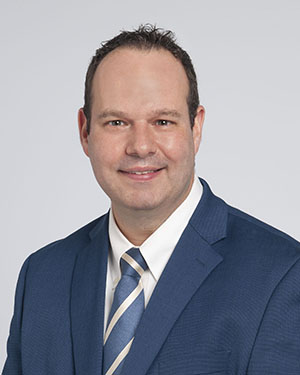
Unlike the paths of some other physician-researchers, Scott Cameron, MD, PhD, was trained as a researcher first, and then went to medical school. He regularly lives in both of those worlds, which means spending time in (and walking to and from) buildings on opposite sides of Carnegie Avenue every week. Most research starts in the lab and then moves to clinical trials; Dr. Cameron’s, by contrast, starts with his patient encounters in Cardiovascular Medicine.
“I look for unanswered questions in the clinic, especially with diseases overlooked like fibromuscular dysplasia (FMD) and spontaneous coronary artery dissection,” Dr. Cameron says. “Access to patients means I can then take the patterns I observe, validated by human samples, to the lab through reverse translation.”
Dr. Cameron and his lab, often collaborating with other researchers across Cleveland Clinic Research, are working to build on previous discoveries about FMD and the role of platelets. A recent finding focuses on olfactory receptors as part of post-heart attack care. He and his team, in collaboration with Stanley Hazen, MD, PhD, are also continuing their work on aneurysms and TMAO, a compound found in breakdown products of red meat and egg yolks.
“Here, we don’t just treat heart and vascular diseases,” Dr. Cameron explains. “We go beyond that to ask why they happen.”